外尺寸、内尺寸和箱门
外观示意
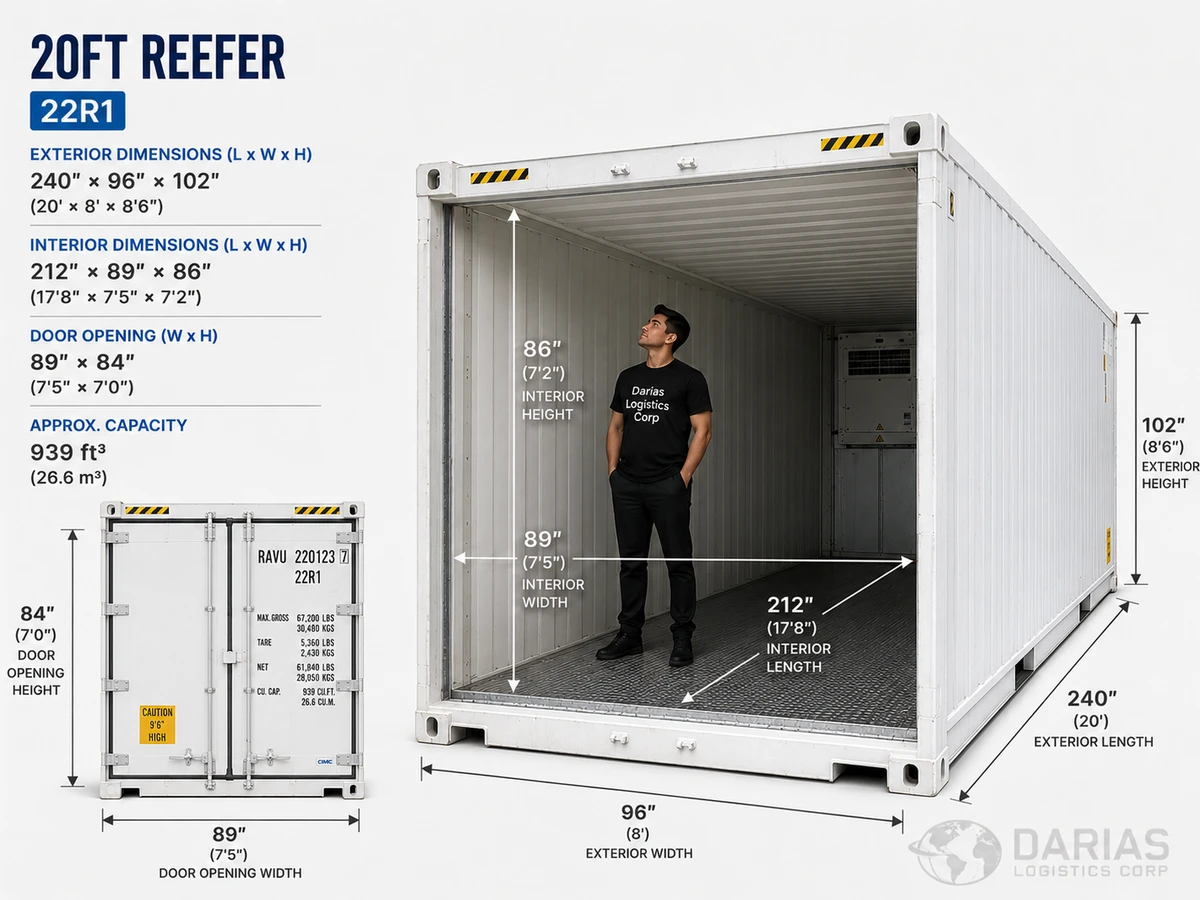
规格参数
| 项目 | 20英尺冷藏箱 |
|---|---|
| 外长 | 238.5″ 19′ 10.5″ |
| 外宽 | 96″ 8′ |
| 外高 | 102″ 8′ 6″ |
| 内长 | 212″ 17′ 8″ |
| 内宽 | 89″ 7′ 5″ |
| 内高 | 86″ 7′ 2″ |
| 门宽 | 89″ 7′ 5″ |
| 门高 | 84″ 7′ |
| 皮重 | 6,600 lb |
| 最大载重 | 60,600 lb |
| 公路合法最大载重 | 34,000 lb |
| 最大总重 | 67,200 lb |
| 容积 | 939 立方英尺 |
| 底盘车 | Standard 20ft, plus a genset |
这些是该类设备的标称数据。 实际箱子会因厂家、船公司和年份而不同,皮重以您拿到那只箱子门上的钢印为准。把箱号发给我们,我们按实际箱子核对。
What a 20ft reefer is
A 20ft reefer is a refrigerated container in the short box: an insulated steel shell with a refrigeration unit built into the front wall and a T section floor that delivers air along the deck. Outside it matches a dry 20, about 19 ft 10.5 in long, 8 ft wide and 8 ft 6 in tall. Inside, the nominal figures are roughly 17 ft 8 in by 7 ft 5 in by 7 ft 2 in, with a door opening around 7 ft 5 in wide by 7 ft tall, and about 939 cu ft of space.
Those interior numbers are the point of the page. A fifth of the box is gone before any freight goes in, taken by the machinery at one end and the insulation everywhere else. Typical tare is near 6,600 lb against a dry 20's 4,850, and the tare stencilled on the door of the unit you receive is the one to plan against.
When a 20ft reefer is the right box
It is for temperature controlled freight that is dense, or small in volume, or going somewhere a longer box cannot reach. Seafood, pharmaceuticals, specialist produce, anything where the pallet count is modest and the value is high. Against a 40ft reefer it gives you 939 cu ft rather than 2,002, and against a 40ft high cube reefer less again, so the choice follows the cargo rather than habit.
Against a reefer trailer, the difference is what the freight is doing. A container is the right answer when the cold chain starts or ends at sea and the same box moves through. A reefer trailer is the right answer for a domestic run, and transloading a container into one at a dock near the port can be the cheaper way to get freight up the state, since it releases the line's box and stops the per diem clock on it.
What people get wrong: the genset, and the weight
A reefer is only refrigerated while it is plugged in. At the terminal that is shore power. On the road it is a clip on genset, and that genset weighs something: plan on roughly 3,000 lb with fuel. The published road figure for this box is about 36,000 lb of cargo on a standard chassis and around 40,000 lb on a tri-axle, and both are written as though nothing were hanging off the container. Fit a genset and each is about three thousand pounds optimistic.
The weight also lands badly. A 20 rides forward and puts its load over a single set of tandems, so the tandem cap and the bridge formula stop it long before the combination reaches 80,000 lb. That is why a 20 has a tri-axle figure at all. The second common error is loading: stack above the load line and you close the air return, and a unit that cannot circulate will hold a perfect set point at the machinery end while the door end drifts.
What to send to get it booked
The container number, the steamship line and the terminal, as with any box, and then the things that belong to a reefer. The set point and the units it is written in. What the commodity is. Whether the freight is already at temperature or expects to be pulled down, since a reefer holds a temperature rather than creating one.
Say whether a genset is needed and for how long, because it is equipment that has to be on the chassis before the truck reaches the gate rather than found afterwards. Add the cargo weight from the bill of lading, remembering the genset comes out of the same 80,000 lb. And say whether the delivery has a plug: a box that arrives before the receiver can take it either keeps running on diesel or starts losing the cold chain.
提自
运往
常见问题
直接回答
Does a 20ft reefer need a genset?
Once it leaves the terminal, yes, if the cargo has to stay cold. Inside the terminal the box is plugged into shore power. The moment it comes off that plug the refrigeration unit needs its own diesel generator, normally a clip on genset hung on the container or the chassis. A reefer with no power is an insulated box, and insulation slows a temperature change in South Florida heat rather than preventing one.
How much does a genset take off the payload?
Plan on roughly 3,000 lb, since a clip on unit with fuel generally runs somewhere between 2,500 and 3,300 lb depending on the model and how full its tank is. That weight is part of the combination, so it comes straight out of what you can legally load. Every road weight figure for a reefer is written as though the genset were not there, which means it is about three thousand pounds optimistic the moment one is fitted.
Why is a 20ft reefer so much smaller inside than a 20ft dry?
Because of the two things that make it a reefer: insulation in every wall, and the refrigeration machinery built into the front end. The machinery takes well over a foot of length on its own, which is why the interior runs about 17 ft 8 in against a dry 20's 19 ft 4 in, and the insulation narrows and lowers the rest. The result is roughly 939 cu ft against 1,172, a fifth of the box gone before anything is loaded.
Does a reefer hold temperature while it is on the road?
Only while it has power. Running on a genset the unit holds the set point the same way it does on shore power, and the set point should already be right before the freight goes in rather than being used to pull warm cargo down. Without a genset the box coasts on its insulation, which buys hours rather than days, and in Miami summer heat that window is shorter than most shippers assume.
Can I load a 20ft reefer to the ceiling?
No, and this is the loading mistake that spoils cargo rather than the one that breaks a law. Cold air is delivered along the floor through the T section decking and has to return over the top of the load to the machinery end. Stack past the load line marked inside and the return path closes, so the unit reads its own delivered air, thinks it has done its job and lets the far end of the box warm up.
20英尺冷藏箱 的内尺寸是多少?
内长、内宽和内高都列在本页的规格表里,外尺寸和箱门开口也在同一张表上。真正决定一台机器进不进得去的是箱门开口,它比内尺寸更小。
20英尺冷藏箱 需要什么底盘车?
Standard 20ft, plus a genset. 底盘车由我们自备,所以订不订得成,不取决于码头那天早上有什么车。
超重的能拉吗?
能,用对的底盘车,配上对的许可。超重和箱型尺寸是两个分开的问题,而且各港口在州的限值之外还有自己的限值。
你们从哪里提 20英尺冷藏箱?
Port of Miami, Port Everglades, Port of Palm Beach, POMTOC, South Florida Container Terminal, Seaboard Marine, Florida International Terminal, Port Everglades Terminal, Crowley, King Ocean, MSC, Tropical Shipping, Antillean Marine, FEC Port Everglades ICTF, FEC Hialeah rail ramp and CSX ramp.
什么是免堆期最后一天(last free day)?
您的箱子可以免费停在码头里面的最后一天。过了这一天,滞港费就开始按天累计,所以提前提箱几乎总是比干等便宜。
什么是提前提箱(pre-pull)?
在您准备好收货之前,我们先把箱子从码头提出来,放在堆场上。这样滞港费就不会按码头的费率往上跑,您的收货安排也不用再赶。
滞港费、滞箱费和车辆滞留费有什么区别?
这是三笔来自不同收费方的费用。滞港费是码头向您收的,因为超过免费时间之后货还留在闸口里面。滞箱费是船公司向您收的,因为超过免费时间之后您还占着他们的箱子。车辆滞留费是卡车方的时间成本,司机在您的月台等候超过免费时段之后开始计算。这三笔可以同时在跑,账单就是这样很快变得难看的。
怎么拿到运价?
把线路、设备、集装箱尺寸和港口发过来,我们回一个数字。报价和调度24小时都有人,邮箱 quotes@dariaslogistics.com。
一份拖车报价里到底包含什么?
运输本身,加上那些事后最容易让人措手不及的附加费:底盘车、提前提箱、滞箱费、滞港费、车辆滞留费和仓储费。我们宁可一开始就把它们说清楚,也不愿意事后加到账单上。