Leistung
Pritschentransporte
Offene Ladung, die nicht in einen geschlossenen Auflieger passt oder dort nichts zu suchen hat.
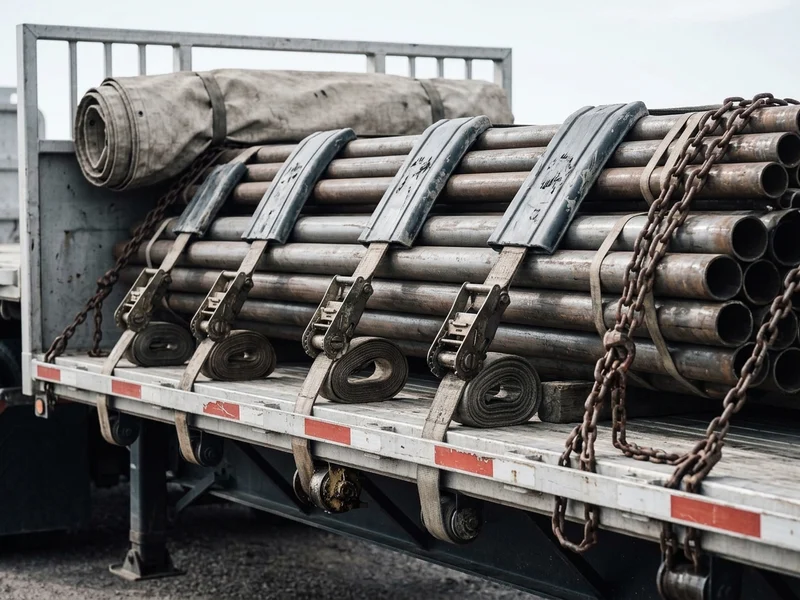
Wenn die Ladung nicht in einen geschlossenen Auflieger geht
Offene Ladefläche ist für alles, was von der Seite oder von oben geladen werden muss, für einen dry van zu hoch oder zu breit ist, oder schlicht eine Form hat, die eine Aufliegertür nicht verzeiht. Maschinen, Stahl, Rohre, Holz, Anlagen auf Kufen, alles, was mit dem Kran aufgesetzt wird.
Der Auflieger richtet sich nach der Ladung und nicht umgekehrt. Eine normale Pritsche, ein step deck für die Höhe, oder ein lowboy, wenn das Teil so hoch ist, dass selbst ein step deck es nicht legal hält.
Ladungssicherung und Wetter sind die Arbeit
Offene Ladung wird mit Gurten, Ketten und Unterlagen gehalten, und der Ladeplan ist kein Nebengedanke: er ist das, was das Teil auf dem Auflieger und den Fahrer legal hält. Das Abplanen zählt ebenfalls, und ob eine Ladung es braucht, ändert den Preis, sagen Sie also, wenn sie nicht nass werden darf.
Sobald ein Teil die zulässige Breite, Höhe, Länge oder das zulässige Gewicht überschreitet, ist es kein gewöhnlicher Pritschentransport mehr, sondern genehmigungspflichtig, streckengeprüft und manchmal begleitet. Das ist Schwer- und Großraumtransport, und darüber entscheiden die Maße, nicht die Beschreibung.
What it costs
Work it out first
Long-haul lanes out of Miami
Equipment
Häfen
Fragen
Klare Antworten
When do I need a flatbed instead of a dry van?
When the freight has to be loaded from the side or the top, when it is too tall or too wide for a van, or when it is simply built in a shape a van door does not forgive. Machinery, steel, pipe, lumber, equipment on skids and anything craned on all live on open deck. The trailer then follows the load rather than the other way round: a standard flatbed, a step deck for height, or a lowboy when the piece is tall enough that even a step deck will not keep it legal.
What is the difference between a flatbed and a step deck?
Deck height, and what that buys you in cargo height. A step deck drops behind the gooseneck, so a taller piece still comes in under Florida's 13 foot 6 inch limit without a permit. A standard flatbed carries a higher deck and suits freight that is long or awkward rather than tall. When even a step deck will not keep the piece legal, the next moves are a lowboy or an RGN. Measure the piece as it will actually sit, including any skid or crate underneath it.
Does my flatbed load need to be tarped?
Say so at the rate request if it cannot get wet, because tarping changes both the price and the loading time. Open deck freight travels exposed unless it is covered, and tarps are labor as well as material. Steel and machinery are usually tarped as a matter of course; lumber and pipe often are not. The securement plan, the straps, chains and dunnage that keep the piece on the trailer and the driver legal, gets built with the tarping question settled rather than after it.
Where does flatbed freight go from Miami?
Anywhere in Florida and out to the other 47 states. Geography shapes the answer: almost everything leaving Florida travels north through a narrow corridor before it goes anywhere, so a run out of Miami carries several hundred miles before it is really on its way, and honest transit times start from that rather than from a mileage calculator. Local open-deck work around PortMiami, Port Everglades and the Hialeah rail ramps is the other half of the board.
When does flatbed work become heavy haul?
The moment the piece goes past legal width, height, length or weight. Then it is permitted, routed and sometimes escorted, and the dimensions decide that rather than the description. Two pieces that read the same on a packing list can be an ordinary flatbed lane and a permitted job with pilot cars. Send measured length, width, height and gross weight with the request and the answer comes back with the right trailer and the right paperwork already worked out.
Wie bekomme ich einen Preis?
Schicken Sie Strecke, Equipment, Containergröße und Hafen, dann kommt eine Zahl zurück. Angebote und Disposition laufen rund um die Uhr unter quotes@dariaslogistics.com.
Was ist in einem drayage-Angebot wirklich enthalten?
Der Transport selbst, dazu die Nebenkosten, die später überraschen: Chassis, pre-pull, per diem, demurrage, detention und Lagerung. Wir nennen sie lieber vorher, als sie später auf eine Rechnung zu setzen.