Leistung
Schwer- und Großraumtransport
Übergroße Ladung und Ladung mit Übergewicht: mit Genehmigung, mit Routenplanung und mit Begleitfahrzeugen, wenn die Strecke sie verlangt.
Aus PortMiami heraus darf eine übergroße Ladung nicht durch den Tunnel
Der PortMiami Tunnel ist für übergroße Ladung und für placardiertes hazmat gesperrt, eine Box mit Übermaß verlässt den Hafen also über den Port Boulevard, über die Biscayne und durch die Innenstadt von Miami. Ein Höhenmelder und eine Wendespur liegen vor dem Tunnelmund, sodass ein zu hoher Lkw erkannt und zur Brücke geschickt wird, statt es erst am Tunnel zu merken.
Das vor dem Transport zu wissen, ist der Unterschied zwischen einer geplanten Fahrt und einem Lkw, der am Tunnelportal steht. Und es ist der Grund, warum wir die Maße vor dem Angebot erfragen und nicht danach.
Zu schwer und zu groß sind zwei verschiedene Probleme
Übergewicht ist eine Frage des Gewichts. Ein Container, der schwer läuft, braucht ein Tri-Axle- oder Quad-Chassis und eine Genehmigung, und die Häfen haben zusätzlich zu den Grenzen des Bundesstaats ihre eigenen, aber darunter bleibt es ein gewöhnlicher Containertransport.
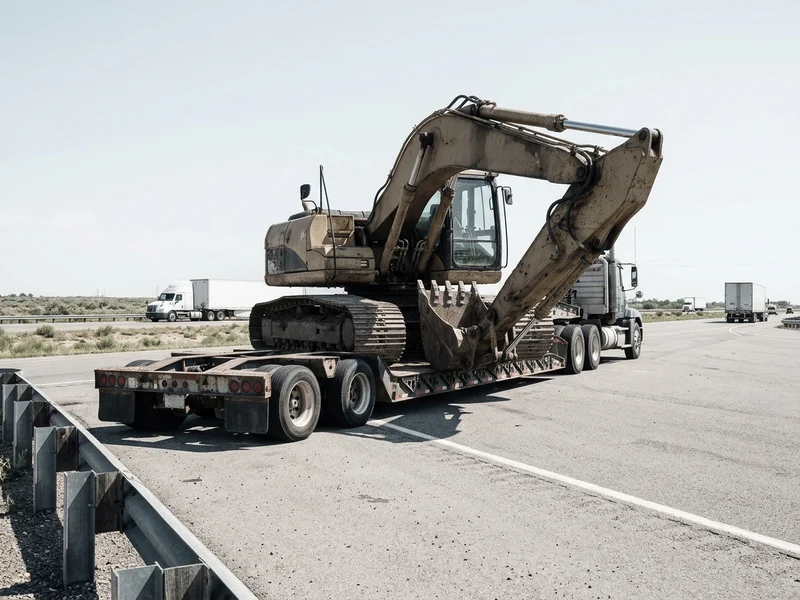
Übermaß ist eine Frage der Form, und es ändert den Auflieger. Eine normale Pritsche, bis das Teil zu hoch ist, dann ein step deck, dann ein lowboy oder ein RGN, wenn selbst ein step deck es nicht mehr legal hält. Eine Ladung kann beides zugleich sein, und beides wird getrennt kalkuliert, weil es getrennt gelöst wird.
What it costs
Work it out first
Long-haul lanes out of Miami
Equipment
Häfen
Fragen
Klare Antworten
What happens to an over-height truck at the PortMiami Tunnel?
It gets caught before the portal. An over-height detector and a turnaround ramp sit ahead of the tunnel entrance, so a truck that is too tall is sent back to the bridge rather than finding out at the tunnel mouth. The tunnel is closed to oversized loads and to placarded hazmat either way, so an over-dimensional box leaves the port over Port Boulevard, across Biscayne and through downtown Miami. Knowing that before the load moves is the difference between a routed job and a truck parked at a portal.
What is the difference between overweight and over-dimensional?
Overweight is a weight question and over-dimensional is a shape question. They are solved separately, which is why they are priced separately. A container running heavy needs a tri-axle or quad chassis and a permit, and the ports carry their own limits on top of the state's, but underneath it is still an ordinary container move. An over-dimensional piece changes the trailer instead: a standard flatbed until it is too tall, then a step deck, then a lowboy or an RGN when even a step deck will not keep it legal. A load can be both at once.
What is the legal height limit for a truck in Florida?
13 feet 6 inches, and that single number decides more heavy haul questions than anything else. It sets where a standard flatbed stops working and a step deck or a lowboy starts, because deck height is the lever: a lower deck buys cargo height. Anything above the limit needs a permit and a surveyed route, since the permit says what you may move on the road and says nothing at all about the bridges, the wires and the tunnels that are actually in the way of it.
What do you need to quote a heavy haul move?
Dimensions and weight before anything else, which is why they get asked for before the quote rather than after. Length, width, height and gross weight decide the trailer, the permit, whether escorts are needed and which route is legal. Add the pickup and delivery points, whether either end has a crane or a forklift, and whether the piece has lifting points. A description is not enough on its own: two pieces that sound identical on paper can be a plain flatbed lane and a permitted, escorted job.
Can an overweight container move without transloading?
Yes, on a tri-axle or quad chassis and under a permit, with the port's own weight limits applying on top of the state's. Whether it should is the separate question. Transloading splits the contents across legal truckloads, takes the permit out of the inland leg entirely, and gets the container back to the line early so per diem stops. For a short local delivery the permit route is usually simpler and cheaper. For a long run the transload usually wins, and by a wide margin.
Wie bekomme ich einen Preis?
Schicken Sie Strecke, Equipment, Containergröße und Hafen, dann kommt eine Zahl zurück. Angebote und Disposition laufen rund um die Uhr unter quotes@dariaslogistics.com.
Was ist in einem drayage-Angebot wirklich enthalten?
Der Transport selbst, dazu die Nebenkosten, die später überraschen: Chassis, pre-pull, per diem, demurrage, detention und Lagerung. Wir nennen sie lieber vorher, als sie später auf eine Rechnung zu setzen.