Leistung
Bonded and in-bond trucking in Miami
Freight that has not cleared customs, moving legally anyway: off PortMiami or Port Everglades to a bonded warehouse or a container freight station, port to port across the country, or straight back out of it. Sealed, under bond, on a deadline.
The three in-bond entries, in plain words
An Immediate Transportation entry, an IT, moves uncleared freight from the port where it arrived to another port, where it will actually be entered and cleared. A Transportation and Exportation entry, a T&E, moves freight through the United States to be exported from a different port; it was never destined for the US market at all. An Immediate Exportation entry, an IE, sends freight back out from the same port it arrived at.
Your customs broker or forwarder files the in-bond in ACE. The carrier hauls it. Out of PortMiami and Port Everglades the short IT runs a few miles to a bonded warehouse or a container freight station in Miami-Dade or Broward; the long one runs up the state to Jacksonville or beyond, and a T and E leaves the country from a port somewhere else entirely. Knowing which of the three you are holding tells everyone what happens at the far end, and it is the first thing to say when you ask for a rate.
The clock and the bond
In-bond freight has 30 days to be delivered to CBP at the destination or export port, 60 by barge. Time the government spends examining the freight does not count against it, but nothing else stops the clock, and diverting the move or filing a new in-bond does not restart it. Arrival must be reported to CBP within two business days. Miss the window and it becomes what the regulation calls an irregular delivery, which means liquidated damages assessed against the bond.
The bond is the other half. Moving in-bond freight requires a CBP custodial bond, the Activity Code 2 bond that covers bonded carriers, cartmen and warehouses, and every in-bond move on this network runs under one. It is also why the cheapest quote in your inbox may not be a legal option for this particular load: plenty of perfectly good drayage outfits simply cannot touch bonded freight.
The 2017 rewrite, and the second deadline nobody mentions
The in-bond process people describe from memory is usually the pre-2017 one. CBP Decision 17-13, published September 28, 2017, rewrote it. The paper CBP Form 7512 was eliminated and the in-bond application became an electronic filing in ACE. The transit time was standardised at 30 days for every mode except pipeline, with barge at 60, replacing a patchwork of port-by-port practice. Arrival has to be reported to CBP within two business days, along with the FIRMS code for where the freight physically is, and failing to report it is itself an irregular delivery even if the truck was on time. ACE now links each leg to the last, so a second in-bond closes the first automatically and a diversion is visible rather than quiet.
Here is the part that catches people, because the 30-day transit clock gets all the attention: once the shipment arrives, you have 15 calendar days to enter it, export it or admit it to a foreign-trade zone. Arriving inside the window is not the finish line. A box that lands at a bonded warehouse on day 12 of 30 and then sits while someone decides what to do with it has a second deadline running that nobody set a reminder for, and that one is measured from arrival.
Neither clock is ours to file against, and neither is your warehouse's. The in-bond belongs to whoever filed it. What we can do is tell you the arrival date we reported and hold you to the calendar, which is usually all it takes.
Seals, and why the driver will not just open the doors
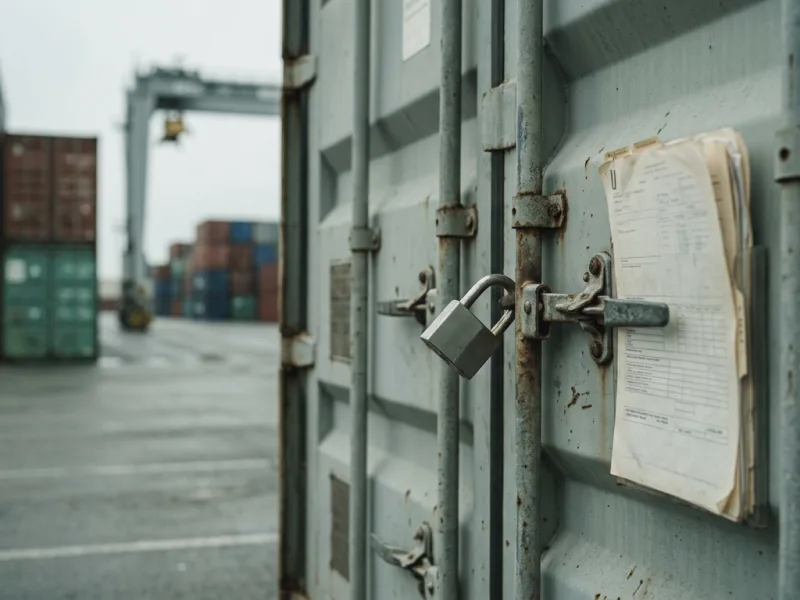
The container is sealed at origin and the seal must arrive intact. Only a responsible agent of the carrier may break a seal in transit, only for safety or preservation of the freight, and the replacement seal gets reported to CBP. Bonded cargo sharing a trailer with ordinary freight carries warning labels so nobody handles it as ordinary freight by mistake.
This is why a bonded move is planned rather than improvised. The receiver cannot peek, the driver cannot cross-load at will, and a well-meaning warehouse that opens the box early has just created a customs problem where there was none.
Where it goes when it is not going far
A lot of in-bond freight is not crossing the country; it is going a few miles, off PortMiami or Port Everglades to a bonded warehouse or a container freight station somewhere in Miami-Dade or Broward, to sit until someone clears it or re-exports it. Our warehouse sits a short run from the ports with over 50 dock doors, which makes the short bonded shuttle, terminal to door, one of the most routine moves we run.
If the freight has already cleared and just needs to move, none of this applies and you want ordinary container drayage. If you are not sure whether it has cleared, say so and it gets checked before anyone books a truck, rather than found out at the gate.
Where in-bond moves go wrong, and how each one is avoided
The wrong entry type. Someone files an IT because the freight is moving, when the freight is actually leaving the country and wanted a T&E, or the reverse. Changing it afterwards is a filing problem at the far end and it does not restart the clock. Say what happens to the freight at destination when you ask for the rate, not what vehicle you want, and the entry type follows from that.
The seal. It has to arrive intact, only a responsible agent of the carrier may break one in transit and only for safety or preservation, and a replacement gets reported. The failure mode is almost never a driver: it is a well-meaning warehouse that opens the box on arrival because the paperwork looked like an ordinary delivery. Tell the receiving facility in writing that the freight is in-bond before it arrives, and mark the delivery order.
The quiet delay. In-bond freight that sits waiting on a customs decision, a payment, or a warehouse slot is still burning the 30-day transit clock and then the 15-day clock after arrival. Government examination time does not count against transit, but nothing else stops it, and diverting the move or filing a fresh in-bond does not reset it. If a move is going to stall, the answer is usually to arrive and start the second clock deliberately rather than to leave the freight in transit hoping.
The one that actually costs money is an irregular delivery: late arrival, an unreported arrival, a broken seal without a report, freight that cannot be accounted for. It is assessed as liquidated damages against the custodial bond, which means it lands on the bonded party rather than on whoever caused it, and it is a slow, documented argument to mitigate afterwards. Every item above is cheaper to prevent than to petition, which is the entire reason a bonded move is planned in advance instead of improvised at the gate.
The three in-bond entries, and where each one ends
| Entry | What it moves | Where it ends |
|---|---|---|
| ITImmediate Transportation | Uncleared freight to another US port | Entered and cleared at the second port |
| T&ETransportation and Exportation | Freight passing through the United States | Exported from a different port |
| IEImmediate Exportation | Freight going straight back out | Exported from the port it arrived at |
Two clocks, not one
The transit clock gets all the attention. The second one starts the moment the freight arrives, and it is the one that catches people, because arriving on time feels like finishing.
| Requirement | Window | Counted from |
|---|---|---|
| Deliver to CBP at destination | 30 days | Departure. 60 days by barge. Government exam time does not count |
| Report arrival, with FIRMS code | 2 business days | Arrival. Not reporting is itself an irregular delivery |
| Enter, export or admit to an FTZ | 15 days | Arrival of the whole shipment. This is the one nobody diaries |
Miss any of these and it becomes an irregular delivery, assessed as liquidated damages against the custodial bond. That lands on the bonded party rather than on whoever caused it, which is why the calendar matters more here than in ordinary drayage. Rules at 19 CFR 18.1, rewritten by CBP Decision 17-13 in September 2017.
What it costs
The rest of the customs side
Going deeper
Around the move
Fragen
Klare Antworten
Do you have a bonded warehouse in Miami?
Yes, we handle bonded freight and bonded storage in Miami. Your freight moves in bond and under seal, off PortMiami or Port Everglades, to bonded storage, a container freight station or a foreign-trade zone, whichever your entry names, and the storage is arranged together with the truck. If the destination is not picked yet, say so when you ask and the options get named with the rate.
What does a trucking company need to haul bonded freight in Miami?
A CBP custodial bond, the Activity Code 2 bond that covers bonded carriers, cartmen and warehouses, and every in-bond move on this network runs under one. That is why bonded freight cannot simply be handed to whichever truck is free, and why the cheapest drayage quote in your inbox may not be a legal option for this particular box. Say the freight is in-bond when you ask for the rate: the answer tells you quickly whether you are talking to the right company.
Can in-bond freight move from Miami to Jacksonville or out of state?
Yes, and that is exactly what an immediate transportation entry is for: the box lands at PortMiami or Port Everglades and travels under bond to the port or authorized facility where the entry will actually be made, Jacksonville and Savannah as readily as anywhere further. The 30-day transit clock and the two-business-day arrival report run the whole way, so the destination and the deadline belong on the file before the truck is booked rather than after.
Is bonded drayage different from an ordinary PortMiami pull?
The truck and the chassis are the same. What differs is everything around them: the movement is authorized before it starts, the container travels sealed to a named destination rather than a convenient one, the arrival has to be reported, and nobody may open the box on the way. That is why a bonded pull is planned rather than improvised at the gate, and why saying the freight is in-bond at the first ask changes how the move is built.
Was ist ein in-bond-Transport?
Ladung, die noch nicht verzollt ist und unter Zollverschluss zwischen einem Terminal, einer container freight station oder einem Zolllager läuft. Sie muss den ganzen Weg in-bond bleiben, was einschränkt, wer sie fahren darf und wo sie halten kann.
How long can freight stay in bond?
Two clocks, and the second one catches people. In-bond freight has 30 days to reach CBP at the destination or export port, 60 by barge, and government examination time does not count against it. Arrival must then be reported within two business days, and from arrival you have only 15 calendar days to enter the goods, export them, or admit them to a foreign-trade zone. Missing any of these is an irregular delivery, assessed as liquidated damages against the custodial bond.
My container has a customs hold. What do I do?
First find out which hold, because each has a different owner. Your customs broker can see the status: CBP clears its own exams and enforcement holds, while FDA, USDA and Fish and Wildlife holds wait on that agency, and nobody at the terminal can hurry any of them. What you control is what happens after release, so have the trucking and the appointment plan ready before the box is free.
Wie bekomme ich einen Preis?
Schicken Sie Strecke, Equipment, Containergröße und Hafen, dann kommt eine Zahl zurück. Angebote und Disposition laufen rund um die Uhr unter quotes@dariaslogistics.com.
Was ist in einem drayage-Angebot wirklich enthalten?
Der Transport selbst, dazu die Nebenkosten, die später überraschen: Chassis, pre-pull, per diem, demurrage, detention und Lagerung. Wir nennen sie lieber vorher, als sie später auf eine Rechnung zu setzen.