Servizio
Trasporti pesanti ed eccezionali
Carichi fuori sagoma e in sovrappeso: permessi, studio del percorso e scorte dove il percorso lo richiede.
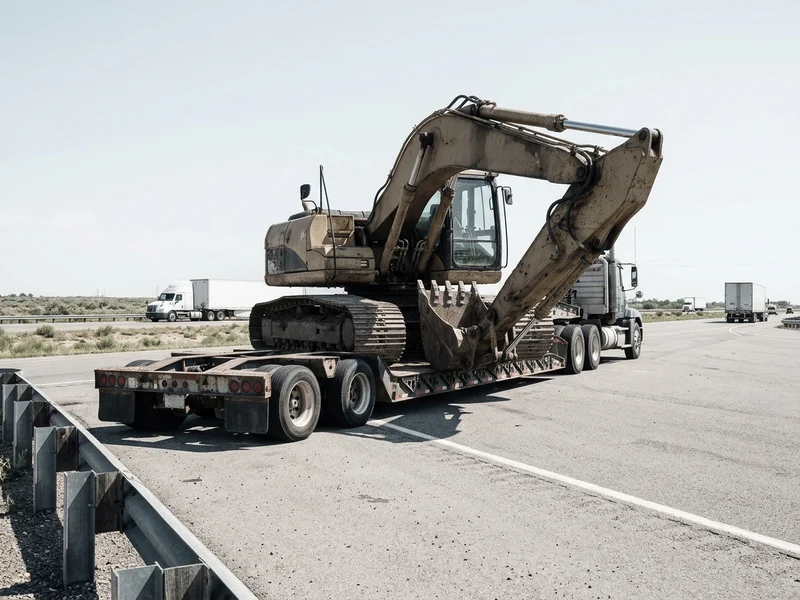
Da PortMiami, un carico fuori sagoma il tunnel non lo può fare
Il PortMiami Tunnel è chiuso ai carichi fuori sagoma e all'hazmat con placche, quindi una cassa fuori sagoma esce dal porto da Port Boulevard, attraversa Biscayne e passa per il centro di Miami. Un rilevatore di altezza e una rampa di inversione stanno prima dell'imbocco, così un camion troppo alto viene intercettato e mandato al ponte invece di accorgersene all'ingresso.
Saperlo prima che il carico si muova è la differenza tra un lavoro instradato e un camion fermo all'imbocco di un tunnel. Ed è anche il motivo per cui chiediamo le misure prima di fare il preventivo, e non dopo.
Troppo pesante e troppo grande sono due problemi diversi
Il sovrappeso è una questione di peso. Un container che viaggia pesante ha bisogno di uno chassis tri-axle o quad e di un permesso, e i porti hanno limiti propri oltre a quelli dello stato, ma sotto sotto resta un normale movimento di container.
Il fuori sagoma è una questione di forma, e cambia il semirimorchio. Un pianale normale finché il pezzo non è troppo alto, poi uno step deck, poi un lowboy o un RGN quando nemmeno uno step deck lo tiene in regola. Un carico può essere tutte e due le cose insieme, e si quotano separatamente perché si risolvono separatamente.
What it costs
Work it out first
Long-haul lanes out of Miami
Mezzi
Porti
Domande
Risposte dirette
What happens to an over-height truck at the PortMiami Tunnel?
It gets caught before the portal. An over-height detector and a turnaround ramp sit ahead of the tunnel entrance, so a truck that is too tall is sent back to the bridge rather than finding out at the tunnel mouth. The tunnel is closed to oversized loads and to placarded hazmat either way, so an over-dimensional box leaves the port over Port Boulevard, across Biscayne and through downtown Miami. Knowing that before the load moves is the difference between a routed job and a truck parked at a portal.
What is the difference between overweight and over-dimensional?
Overweight is a weight question and over-dimensional is a shape question. They are solved separately, which is why they are priced separately. A container running heavy needs a tri-axle or quad chassis and a permit, and the ports carry their own limits on top of the state's, but underneath it is still an ordinary container move. An over-dimensional piece changes the trailer instead: a standard flatbed until it is too tall, then a step deck, then a lowboy or an RGN when even a step deck will not keep it legal. A load can be both at once.
What is the legal height limit for a truck in Florida?
13 feet 6 inches, and that single number decides more heavy haul questions than anything else. It sets where a standard flatbed stops working and a step deck or a lowboy starts, because deck height is the lever: a lower deck buys cargo height. Anything above the limit needs a permit and a surveyed route, since the permit says what you may move on the road and says nothing at all about the bridges, the wires and the tunnels that are actually in the way of it.
What do you need to quote a heavy haul move?
Dimensions and weight before anything else, which is why they get asked for before the quote rather than after. Length, width, height and gross weight decide the trailer, the permit, whether escorts are needed and which route is legal. Add the pickup and delivery points, whether either end has a crane or a forklift, and whether the piece has lifting points. A description is not enough on its own: two pieces that sound identical on paper can be a plain flatbed lane and a permitted, escorted job.
Can an overweight container move without transloading?
Yes, on a tri-axle or quad chassis and under a permit, with the port's own weight limits applying on top of the state's. Whether it should is the separate question. Transloading splits the contents across legal truckloads, takes the permit out of the inland leg entirely, and gets the container back to the line early so per diem stops. For a short local delivery the permit route is usually simpler and cheaper. For a long run the transload usually wins, and by a wide margin.
Come ottengo una tariffa?
Ci mandi la tratta, il mezzo, la dimensione del container e il porto, e le rispondiamo con un numero. Preventivi e dispatch 24 ore su 24 a quotes@dariaslogistics.com.
Cosa comprende davvero un preventivo di drayage?
Il trasporto in sé, più gli accessori che poi sorprendono: chassis, pre-pull, per diem, demurrage, detention e stoccaggio. Preferiamo indicarli subito piuttosto che aggiungerli a una fattura.