Servizio
Customs clearance coordination
Yes, we handle customs clearance, and it is arranged together with the truck, so the day your freight clears is the day it moves. You do not have to go and find anyone. A box that sits released is burning money for no reason at all.
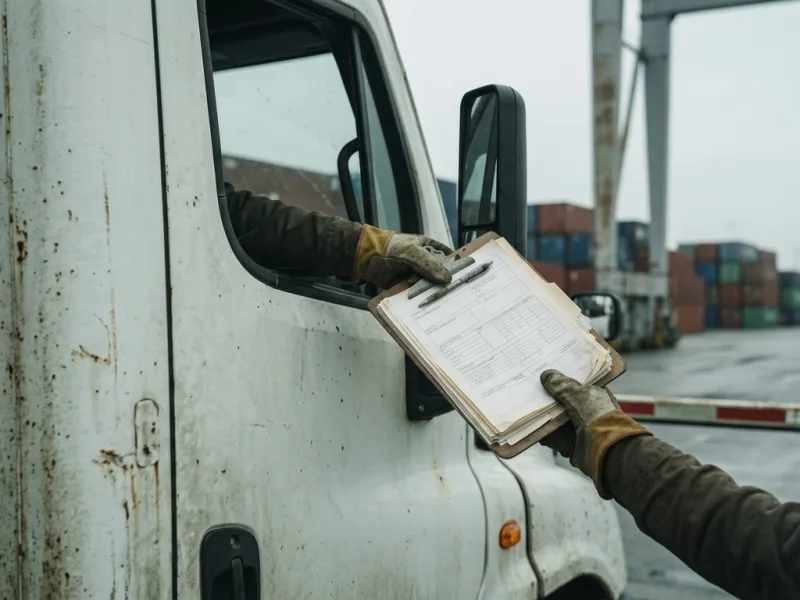
What a broker does, and what a carrier does
A customs broker classifies your goods, files the entry, pays the duties, answers CBP, and gets the release. A carrier gets the freight. The two jobs meet at a single moment, the release, and almost all of the money lost around clearance is lost right there, in the gap between the freight being free to move and the freight actually moving.
Most of our work arrives through brokers and forwarders and we speak their language: delivery orders, holds, last free day, appointments. If you are importing without a broker, you do not need to go and find one: we handle the customs clearance, and the entry, the release and the truck are arranged on one thread instead of across three phone calls.
What clearance actually costs, line by line
Four charges show up on almost every ocean import and they are frequently confused with each other. The duty itself, which depends on the classification and the origin. The merchandise processing fee: 0.3464 percent of entered value, with a floor and a ceiling that move every October, 33.58 and 651.50 dollars through September 2026 and 34.58 and 670.86 from October 1. The harbor maintenance fee: 0.125 percent of value, ocean only, unchanged since 1987. And the broker's own fee for filing, which is the only one of the four that is a price rather than a rate.
On top of those, a bond. Either a single transaction bond for an occasional import or a continuous bond if you import regularly, and the continuous one is usually cheaper by the second or third entry of the year. Then whatever trade remedy applies to the goods: Section 301, Section 232, antidumping. Those are the numbers that actually move a landed cost, and they are decided by the classification, which is the broker's work and worth paying properly for.
The point of listing them is that only some are avoidable and people usually attack the wrong one. Haggling a broker's filing fee saves tens of dollars. Getting the classification right, or catching that a duty was refundable, saves thousands. The tariff and duty refunds page covers which of these come back and under what.
The clock starts before the ship sails
The importer security filing, the one everyone calls ISF or 10+2, is due no later than 24 hours before the container is loaded onto the vessel at origin. Not before arrival, before loading, which for an Asia lane means the deadline passes weeks before anyone in Miami thinks about the freight. Late, incomplete or inaccurate filings draw liquidated damages of 5,000 dollars per violation, generally capped at 10,000 on a single filing, and CBP can hold the container on arrival regardless of who made the error.
You can hire that out and most importers do, but the responsibility does not transfer: the ISF importer remains liable for accuracy and timeliness even when a broker or forwarder files it. The practical consequence is that the supplier data has to reach your filer before the vessel loads, and the reason ISF problems are so common is that it is the one deadline that lands while the freight still feels like somebody else's problem.
The entry itself is a different filing on a different clock and can be made in advance of arrival. Doing so is usually free and buys you the release on the day of discharge rather than several days after, which is the cheapest single change most importers can make.
Release to gate, where the days actually go
The release lands quietly. Nobody calls you. If the truck gets arranged after someone notices, you have already lost a day, and if the terminal needs an appointment, you may have lost two, because a slot has to exist before a truck is any use. Meanwhile the last free day was set by the vessel discharge, not by your paperwork, so a slow clearance eats your free time before the freight can even leave.
Coordinated properly it runs the other way around. We watch the shipment alongside your broker, the appointment and the chassis are arranged against the expected release rather than after it, and if clearance is going to outlive the free time we say so early, while a pre-pull can still save the demurrage instead of merely ending it.
When it does not clear on time
Sometimes the entry is fine and the freight is just flagged. That becomes an exam or a hold, each with its own owner: CBP for its exams, FDA or USDA or Fish and Wildlife for theirs, and each clears on its own logic. The customs exam drayage page walks through every type, what each costs, and who can actually release what.
What we contribute while it is stuck is knowing the status without being asked, keeping the appointment and equipment plan alive so release day is a movement day, and being honest about which charges are avoidable and which are already spent. A hold is a bad week. An uncoordinated hold is a bad month.
The problems we see most, and how to get ahead of each
Nobody owns the release. The broker's job ends when CBP releases, the trucker's begins when someone asks for a truck, and the hours in between belong to whoever notices first. Name the person who watches for the release and tell both sides who it is. In practice this is the single cheapest fix on the whole page, and it is free.
The paperwork mismatch. The commercial invoice, the packing list, the bill of lading and the ISF have to describe the same shipment, and when they disagree the entry stalls before it ever reaches a hold. The description that causes the most trouble is the vague one: "parts", "samples", "gift items". Ask the supplier for a description a stranger could classify, before the goods ship, because after the vessel loads every correction becomes an amendment.
The harder problem is a last free day set by a vessel discharge you did not control. Free time starts when the container is available at the terminal, not when your entry clears, so a slow clearance eats the free days before the freight is even movable. If clearance is going to run past the last free day, a pre-pull moves the box to our yard where terminal demurrage stops, and it only works if the decision is made days early rather than on the last afternoon.
The hardest is an entry that needs something you cannot get quickly: a missing certificate, an FDA prior notice, a classification ruling, a supplier who does not answer. There is no coordination trick that fixes it, and pretending otherwise is how a bad week becomes a bad month. What we do instead is stop the meter where it can be stopped, tell you plainly which charges are now unavoidable and which are still in play, and keep the equipment plan alive so the day it clears is the day it moves.
What lands on the bill, and who sets each one
Four charges show up on almost every ocean import and they are constantly confused with each other. Only some can be argued with, and people usually attack the wrong one.
| Charge | Rate | Set by | Can you move it |
|---|---|---|---|
| Duty | By classification and origin | Law and the tariff schedule | Only by classifying correctly |
| Merchandise processing fee | 0.3464% | CBP | No, but the cap limits it |
| Harbor maintenance fee | 0.125% | CBP | No |
| Broker filing fee | A price, not a rate | Your broker | Yes, and it is the smallest number here |
| Customs bond | Single entry or continuous | Your surety | Yes: continuous pays off by the second or third entry |
| Trade remedy: 301, 232, AD/CVD | By product and origin | Proclamation or order | Sometimes, by exclusion or drawback |
The clearance timeline, in order
The expensive deadline is the first one, and it falls weeks before anyone at this end is thinking about the container.
| Stage | When | If it slips |
|---|---|---|
| Importer security filing, 10+2Filed at origin, on supplier data | 24 hours before loading | $5000 per violation, and a hold on arrival |
| Customs entry | Any time before arrival, and it should be | Release lands days after discharge instead of on the day |
| Vessel discharge | Sets your last free day | Nothing you control. The clock starts here regardless |
| CBP release | Silently, in your broker's system | A day per person who did not notice |
| Appointment and pickup | Needs a slot to exist first | Demurrage, then per diem on top |
If the freight has not cleared yet
The rest of the customs side
Going deeper
Around the move
Domande
Risposte dirette
When is the ISF due, and what happens if it is late?
The importer security filing is due no later than 24 hours before the container is loaded onto the vessel at origin, which is not the same as before it arrives, and on an Asia lane that deadline passes weeks before anyone here thinks about the freight. Late, incomplete or inaccurate filings draw liquidated damages of $5,000 per violation, generally capped at $10,000 on a single filing, and the responsibility stays with the ISF importer even when a broker files it.
My container has a customs hold. What do I do?
First find out which hold, because each has a different owner. Your customs broker can see the status: CBP clears its own exams and enforcement holds, while FDA, USDA and Fish and Wildlife holds wait on that agency, and nobody at the terminal can hurry any of them. What you control is what happens after release, so have the trucking and the appointment plan ready before the box is free.
How much is the merchandise processing fee?
It is 0.3464 percent of entered value, a rate unchanged since 2011, but it cannot fall below a floor or rise above a ceiling and those move every October. Through September 2026 they are $33.58 and $651.50; from October 1, 2026 they become $34.58 and $670.86 under CBP Decision 26-14. The ceiling is reached at about $193,700 of entered value, so above that the fee is effectively flat.
Cos'è il last free day?
L'ultimo giorno in cui il suo container può restare dentro il terminal prima che partano gli addebiti di stoccaggio. Se lo si supera, il demurrage matura ogni giorno, ed è per questo che un pre-pull costa quasi sempre meno dell'attesa.
Cos'è un pre-pull?
Ritiriamo il container dal terminal prima che lei sia pronto e lo teniamo in un piazzale. Ferma il demurrage a tariffe di terminal e toglie pressione ai suoi orari di ricevimento.
Come ottengo una tariffa?
Ci mandi la tratta, il mezzo, la dimensione del container e il porto, e le rispondiamo con un numero. Preventivi e dispatch 24 ore su 24 a quotes@dariaslogistics.com.
Cosa comprende davvero un preventivo di drayage?
Il trasporto in sé, più gli accessori che poi sorprendono: chassis, pre-pull, per diem, demurrage, detention e stoccaggio. Preferiamo indicarli subito piuttosto che aggiungerli a una fattura.