Servizio
Trasporti su pianale
Merce su pianale aperto che non entra, o non conviene, in un dry van.
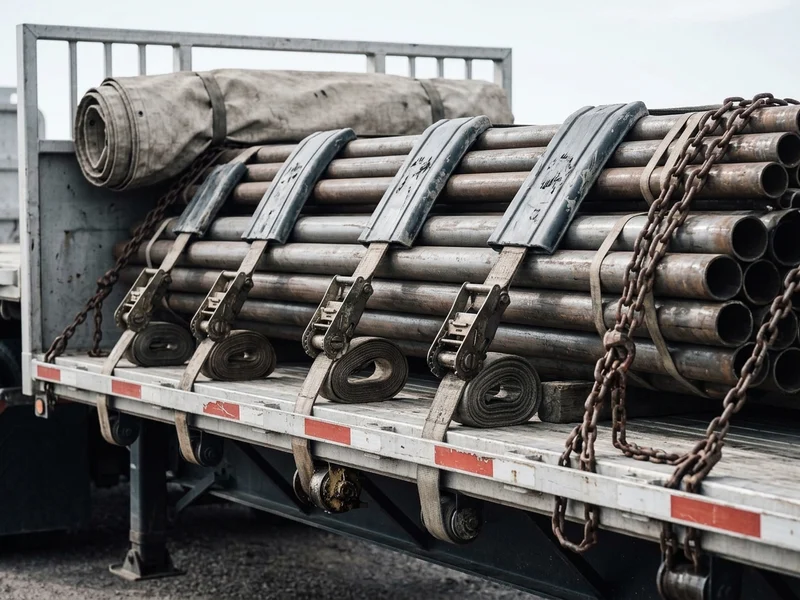
Quando la merce in un semirimorchio chiuso non ci va
Il pianale aperto è per tutto quello che va caricato dal lato o dall'alto, è troppo alto o troppo largo per un dry van, o è semplicemente fatto in una forma che una porta di semirimorchio non perdona. Macchinari, acciaio, tubi, legname, attrezzature su slitte, tutto quello che si carica con la gru.
È il carico a decidere il semirimorchio, non il contrario. Un pianale normale, uno step deck per l'altezza, o un lowboy quando il pezzo è così alto che nemmeno uno step deck lo tiene in regola.
Il fissaggio e il tempo sono il lavoro
La merce su pianale aperto sta ferma grazie a cinghie, catene e dunnage, e il piano di carico non è un dettaglio dell'ultimo momento: è quello che tiene il pezzo sul semirimorchio e l'autista in regola. Conta anche l'intelonatura, e il fatto che un carico ne abbia bisogno cambia il prezzo, quindi ci dica se non può bagnarsi.
Quando un pezzo supera i limiti di legge di larghezza, altezza, lunghezza o peso, smette di essere normale lavoro su pianale e diventa un carico da permesso, da studio del percorso e a volte da scorta. Quello è trasporto pesante ed eccezionale, e a decidere sono le misure, non la descrizione.
What it costs
Work it out first
Long-haul lanes out of Miami
Mezzi
Porti
Domande
Risposte dirette
When do I need a flatbed instead of a dry van?
When the freight has to be loaded from the side or the top, when it is too tall or too wide for a van, or when it is simply built in a shape a van door does not forgive. Machinery, steel, pipe, lumber, equipment on skids and anything craned on all live on open deck. The trailer then follows the load rather than the other way round: a standard flatbed, a step deck for height, or a lowboy when the piece is tall enough that even a step deck will not keep it legal.
What is the difference between a flatbed and a step deck?
Deck height, and what that buys you in cargo height. A step deck drops behind the gooseneck, so a taller piece still comes in under Florida's 13 foot 6 inch limit without a permit. A standard flatbed carries a higher deck and suits freight that is long or awkward rather than tall. When even a step deck will not keep the piece legal, the next moves are a lowboy or an RGN. Measure the piece as it will actually sit, including any skid or crate underneath it.
Does my flatbed load need to be tarped?
Say so at the rate request if it cannot get wet, because tarping changes both the price and the loading time. Open deck freight travels exposed unless it is covered, and tarps are labor as well as material. Steel and machinery are usually tarped as a matter of course; lumber and pipe often are not. The securement plan, the straps, chains and dunnage that keep the piece on the trailer and the driver legal, gets built with the tarping question settled rather than after it.
Where does flatbed freight go from Miami?
Anywhere in Florida and out to the other 47 states. Geography shapes the answer: almost everything leaving Florida travels north through a narrow corridor before it goes anywhere, so a run out of Miami carries several hundred miles before it is really on its way, and honest transit times start from that rather than from a mileage calculator. Local open-deck work around PortMiami, Port Everglades and the Hialeah rail ramps is the other half of the board.
When does flatbed work become heavy haul?
The moment the piece goes past legal width, height, length or weight. Then it is permitted, routed and sometimes escorted, and the dimensions decide that rather than the description. Two pieces that read the same on a packing list can be an ordinary flatbed lane and a permitted job with pilot cars. Send measured length, width, height and gross weight with the request and the answer comes back with the right trailer and the right paperwork already worked out.
Come ottengo una tariffa?
Ci mandi la tratta, il mezzo, la dimensione del container e il porto, e le rispondiamo con un numero. Preventivi e dispatch 24 ore su 24 a quotes@dariaslogistics.com.
Cosa comprende davvero un preventivo di drayage?
Il trasporto in sé, più gli accessori che poi sorprendono: chassis, pre-pull, per diem, demurrage, detention e stoccaggio. Preferiamo indicarli subito piuttosto che aggiungerli a una fattura.