Service
Heavy haul and oversize trucking in Miami
Over-dimensional and overweight loads: permitted, routed, and escorted where the route demands it.
Off PortMiami, an oversized load cannot take the tunnel
The PortMiami Tunnel is closed to oversized loads and to placarded hazmat, so an over-dimensional box leaves the port over Port Boulevard, across Biscayne and through downtown Miami instead. An over-height detector and a turnaround ramp sit ahead of the portal, so a truck that is too tall gets caught and sent back to the bridge rather than finding out at the tunnel mouth.
Knowing that before the load moves is the difference between a routed job and a truck parked at a tunnel portal. It is also why we ask for dimensions before quoting rather than after.
Too heavy and too big are two different problems
Overweight is a weight question. A container running heavy needs a tri-axle or quad chassis and a permit, and the ports carry their own limits on top of the state's, but it is still an ordinary container move underneath.
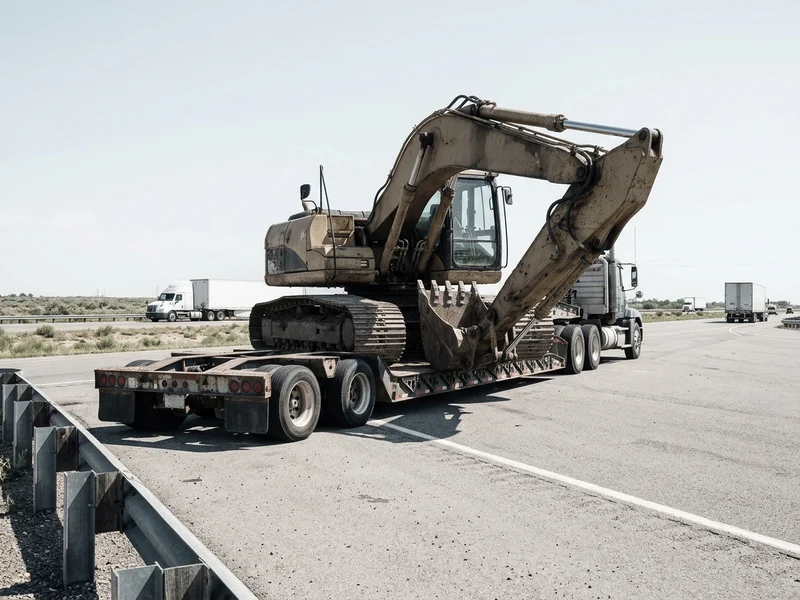
Over-dimensional is a shape question, and it changes the trailer. A standard flatbed until the piece is too tall, then a step deck, then a lowboy or an RGN when even a step deck will not keep it legal. A load can be both at once, and the two are priced separately because they are solved separately.
The trailer ladder, from flatbed to multi-axle
Open deck equipment is a ladder and the piece climbs it. A standard flatbed carries the highest deck and suits freight that is long, wide or awkward rather than tall. A step deck drops behind the gooseneck and buys cargo height. A double drop lowers the middle section further again. A lowboy lowers it further still, and an RGN is a lowboy whose gooseneck comes off so a machine can drive on at the front instead of being craned over the side, which on a tracked machine is the difference between a load and a lifting job.
Past that, multi-axle configurations and stretch trailers answer weight and length rather than height. More axles spread a heavy piece across more of the road so no single group is overloaded, and a stretch extends to carry something longer than a fixed deck will hold safely. Every rung of the ladder costs more than the one below it, so the honest answer to a heavy haul question is the lowest rung the piece will legally sit on, not the largest trailer that exists.
Deck height is the lever
Florida's height limit is 13 ft 6 in, and almost every trailer decision is arithmetic against that one number. The cargo height you can carry is the limit minus the deck height, so every inch the deck comes down is an inch the piece is allowed to be taller before a permit is in the conversation at all. That is the entire reason the ladder exists.
Which makes the measurement the thing that matters most. Measure the piece as it will actually sit: the piece itself, plus the skid, crate or pallet under it, plus any dunnage, plus anything bolted to the top of it that nobody counted. A machine listed at 11 ft on its own datasheet is not 11 ft tall on a trailer. Get that number right and the trailer is settled in one step. Get it wrong and the load either meets something on the route it does not fit under, or stands in a yard while a different trailer is found for it.
Weight, axle groups, and the two problems again
Weight is never one number. A load can be under the gross limit and still illegal because too much of it is sitting over one axle group, so where the piece sits on the deck matters as much as what it weighs. Spreading the load, sliding the axles, or moving to a trailer with more of them is how that gets solved, and it is decided with a load plan before the piece is lifted rather than at a weigh station afterwards.
Overweight and over-dimensional stay separate all the way through the job. Overweight is answered with a permit and, on a container, with a tri-axle or quad chassis, while the move underneath stays an ordinary container move. Over-dimensional is answered by changing the trailer and, once it is far enough over, by surveying the route and adding escorts. A piece that is both gets both answers, and the reason they appear as two lines rather than one is that they are two different problems that happened to arrive on the same trailer.
What it costs
Work it out first
Long-haul lanes out of Miami
Equipment
Ports
Questions
Straight answers
What happens to an over-height truck at the PortMiami Tunnel?
It gets caught before the portal. An over-height detector and a turnaround ramp sit ahead of the tunnel entrance, so a truck that is too tall is sent back to the bridge rather than finding out at the tunnel mouth. The tunnel is closed to oversized loads and to placarded hazmat either way, so an over-dimensional box leaves the port over Port Boulevard, across Biscayne and through downtown Miami. Knowing that before the load moves is the difference between a routed job and a truck parked at a portal.
What is the difference between overweight and over-dimensional?
Overweight is a weight question and over-dimensional is a shape question. They are solved separately, which is why they are priced separately. A container running heavy needs a tri-axle or quad chassis and a permit, and the ports carry their own limits on top of the state's, but underneath it is still an ordinary container move. An over-dimensional piece changes the trailer instead: a standard flatbed until it is too tall, then a step deck, then a lowboy or an RGN when even a step deck will not keep it legal. A load can be both at once.
What is the legal height limit for a truck in Florida?
13 feet 6 inches, and that single number decides more heavy haul questions than anything else. It sets where a standard flatbed stops working and a step deck or a lowboy starts, because deck height is the lever: a lower deck buys cargo height. Anything above the limit needs a permit and a surveyed route, since the permit says what you may move on the road and says nothing at all about the bridges, the wires and the tunnels that are actually in the way of it.
What do you need to quote a heavy haul move?
Dimensions and weight before anything else, which is why they get asked for before the quote rather than after. Length, width, height and gross weight decide the trailer, the permit, whether escorts are needed and which route is legal. Add the pickup and delivery points, whether either end has a crane or a forklift, and whether the piece has lifting points. A description is not enough on its own: two pieces that sound identical on paper can be a plain flatbed lane and a permitted, escorted job.
Can an overweight container move without transloading?
Yes, on a tri-axle or quad chassis and under a permit, with the port's own weight limits applying on top of the state's. Whether it should is the separate question. Transloading splits the contents across legal truckloads, takes the permit out of the inland leg entirely, and gets the container back to the line early so per diem stops. For a short local delivery the permit route is usually simpler and cheaper. For a long run the transload usually wins, and by a wide margin.
How do I get a rate?
Send the lane, the equipment, the container size and the port, and we come back with a number. Quotes and dispatch run 24 hours a day at quotes@dariaslogistics.com.
What does a drayage quote actually include?
The move itself, plus the accessorials people get surprised by later: chassis, pre-pull, per diem, demurrage, detention and storage. We would rather name them up front than add them to an invoice.