Service
Shipping and receiving in Miami
Freight received, checked in, held, and shipped back out under your name. For shippers with no dock of their own.
What shipping and receiving is
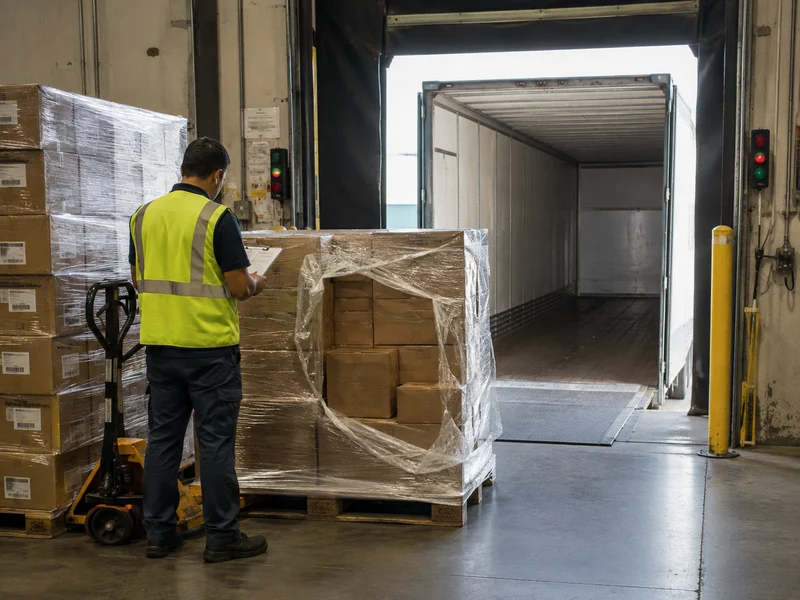
Shipping and receiving is the plainest thing a warehouse can do, and the one least often explained. Freight arrives, we receive it under your name, check it in against your paperwork, tell you what actually turned up, hold it, and ship it back out when you say.
It exists for a specific problem: you have freight moving through South Florida and no dock, no staff and no reason to rent either. A pallet does not need a lease.
What you get that a storage unit does not give you
Someone checks the count and the condition on arrival and tells you before it becomes your problem. Damage found at receiving is a claim; damage found by your customer is a refund.
You get a real address with real dock doors rather than a unit you have to drive to, and outbound goes on a truck the same day it is ready. If all you need is space and nobody touching it, that is warehousing and storage instead.
Receiving in your name, step by step
You give the shipper a delivery address that is the Hialeah Gardens dock, with your company name on the paperwork. The freight arrives and is checked in against what you sent ahead: what should be turning up, how many pieces, on how many pallets, from whom. The driver is signed for, the bill of lading is noted, and the freight comes off.
Then you are told what actually arrived, which is the part a delivery address on its own does not buy you. Counts against the packing list, the condition of the pallets and the cartons, and photographs of anything that does not look right. From there it goes on the floor or on a rack and waits for your instruction.
The check-in record, and why the photographs matter
A count and a condition note made at the door is a document with a date on it. Damage found at receiving is a claim against the carrier who brought it. The same damage found by your customer three weeks later is a refund, and by then nobody can say which leg of the trip caused it.
So the record is made at the door rather than reconstructed afterwards: piece count, pallet condition, obvious carton damage, the seal if it came out of a container, and photographs of the exceptions. You get it the same day, while the carrier's claim window is still open and while you can still tell your customer something true about their order.
Over, short and damaged
OS&D is the trade's name for the three ways a delivery fails to match its paperwork: more arrived than was listed, less arrived than was listed, or what arrived is not in a condition to sell. All three get noted at receiving rather than at shipping, because at shipping it is too late to say where it happened.
Shorts get flagged before you have promised the goods to anybody. Overs get held rather than quietly absorbed, since freight that is not yours sitting on a pallet that is means somebody else is short somewhere. Damage gets photographed and set aside, and what happens to it, refused, returned, repacked or shipped anyway, stays your call rather than a decision made for you on the dock.
Shipping it back out, and who books the truck
You say what goes, where, and when. If you have your own carrier, send the collection details and the freight is staged, loaded and signed out to them. If you do not, the outbound gets booked from here: LTL for a few pallets, a full truckload out of South Florida to any of the 48 states, or drayage back to a port if it is going into a container.
The dock runs 8 to 5 Monday to Friday, first come first served, with no appointment system. A live dry van needs to be here by 3pm to load the same day and drops are taken until 4pm, so a release that lands by 4pm goes out that day. Later than that and it goes out first thing.
Equipment
Ports
Questions
Straight answers
What does it cost to unload a container?
It depends on one thing more than any other: whether the freight is on pallets or stacked loose on the floor. Palletized is a forklift job. Floor-loaded is a crew by hand, and a floor-loaded 40ft is roughly double a 20ft because it is roughly double the box. The published rates are on the warehousing cost page, and they are separated exactly that way rather than hidden behind one devanning number.
Do you unload floor-loaded containers?
Yes, and it is worth telling us before you book rather than after. Nobody can tell from a packing list whether a container is floor-loaded; if it lists cartons with no pallet count, assume it is, because discovering it at the dock costs an afternoon and a crew.
Can you restack or rework a damaged pallet load?
Yes. Pallet restacking and rework is ordinary work here: a load that shifted, a pallet built too high for the receiver, cartons that need re-squaring and re-wrapping before anyone will take them. It is also the moment to photograph what arrived, while the container it came out of is still in front of us.
Does unloading here get the container back to the line faster?
That is usually the whole reason to do it here. Per diem runs the entire time the box is out of the terminal, including the days it waits at your dock for a crew. Minutes from the port, the container is emptied and returned the same day and the freight waits on your schedule instead of the line's.
Is there a 45ft standard height container?
No, not in practice. 20ft and 40ft boxes come in both 8ft 6in standard and 9ft 6in high cube, but the 45 standardised on high cube only, which is why its ISO code is L5G1: the 5 is the 9ft 6in height. If someone quotes you a 45, it is a high cube. The real question on a 45 is the width, because the 102in wide body is common on the South Florida trades and it is 7in wider inside than the ISO box.
How do I get a rate?
Send the lane, the equipment, the container size and the port, and we come back with a number. Quotes and dispatch run 24 hours a day at quotes@dariaslogistics.com.