Equipment
Equipment
Containers from 20ft to 45ft, reefer, flat rack and overweight, plus flatbed, step deck, lowboy, RGN and double drop. Dimensions and limits for each.
In the container
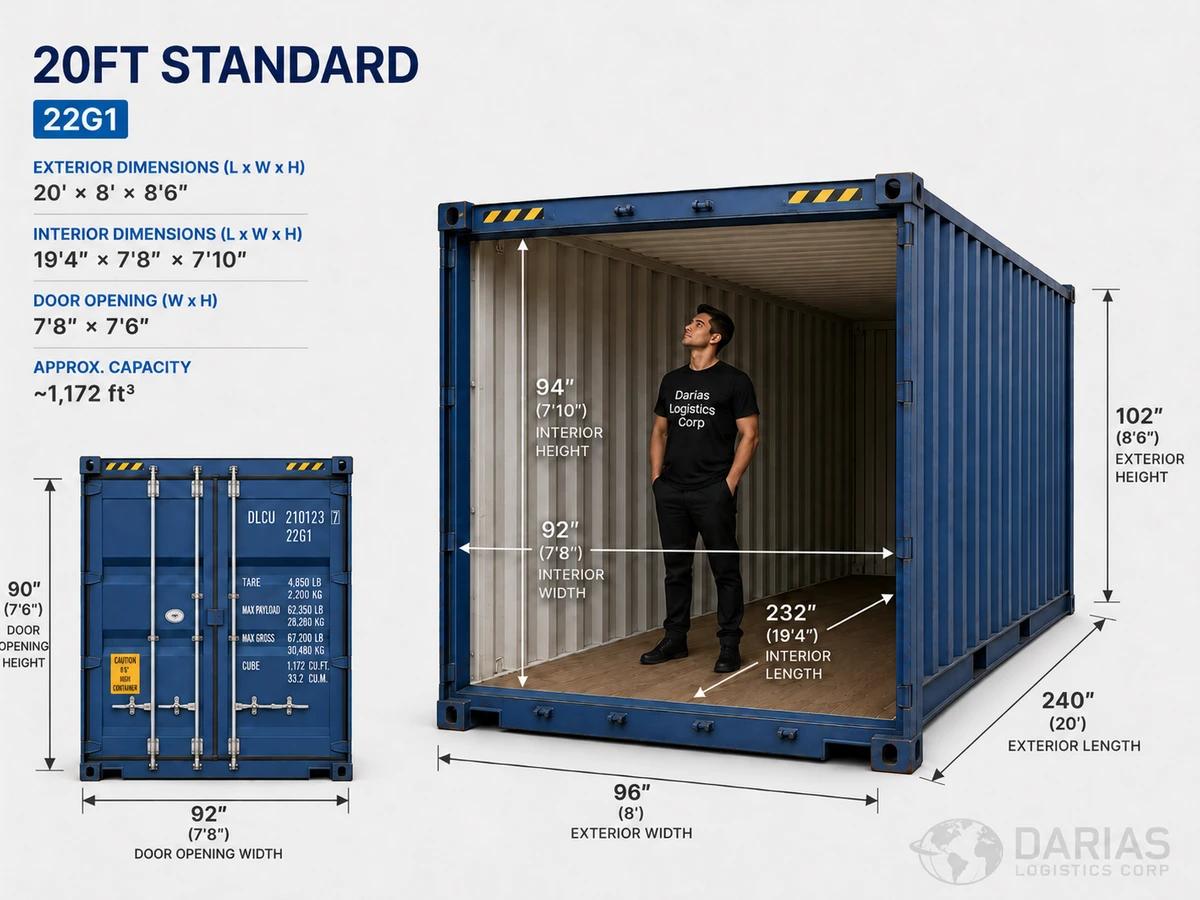
20ft standard
20' GP / 22G1
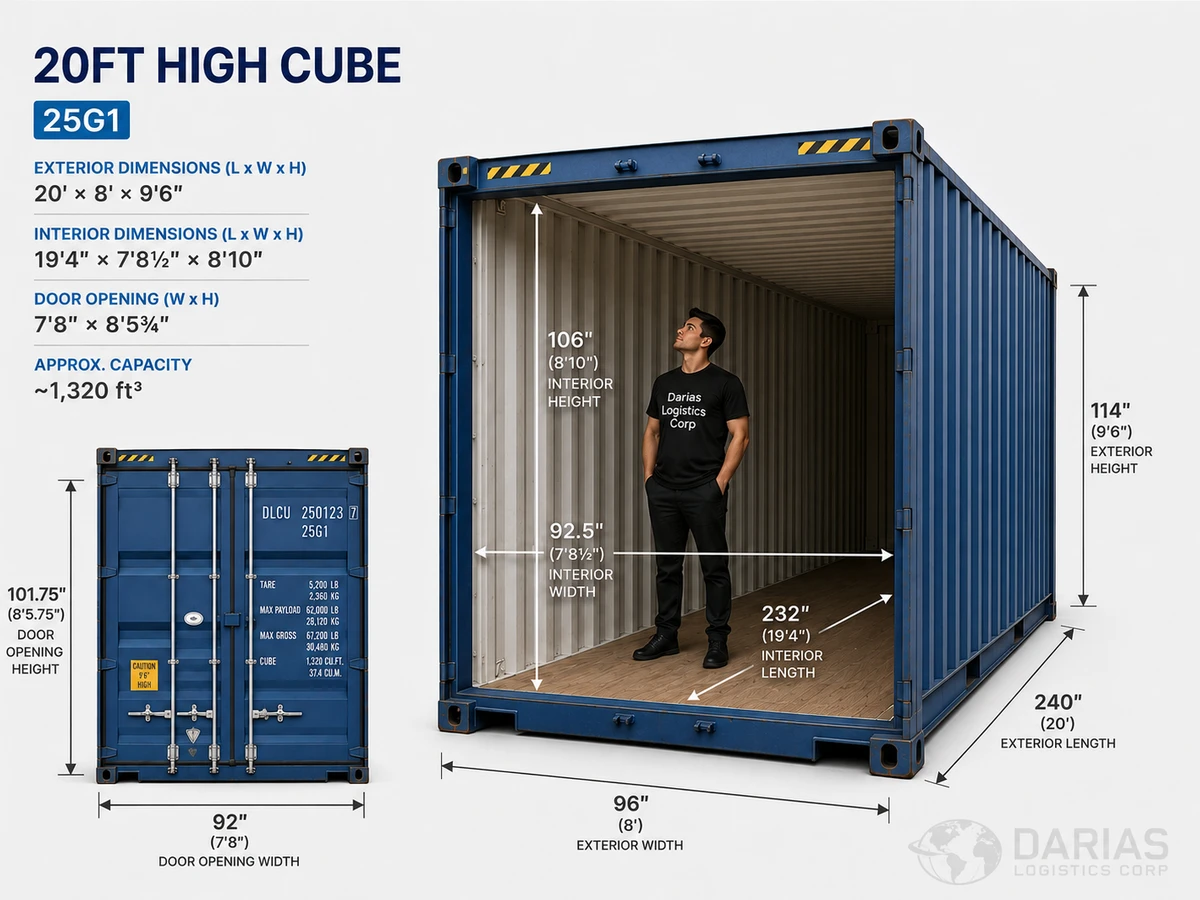
20ft high cube
20' HC / 25G1
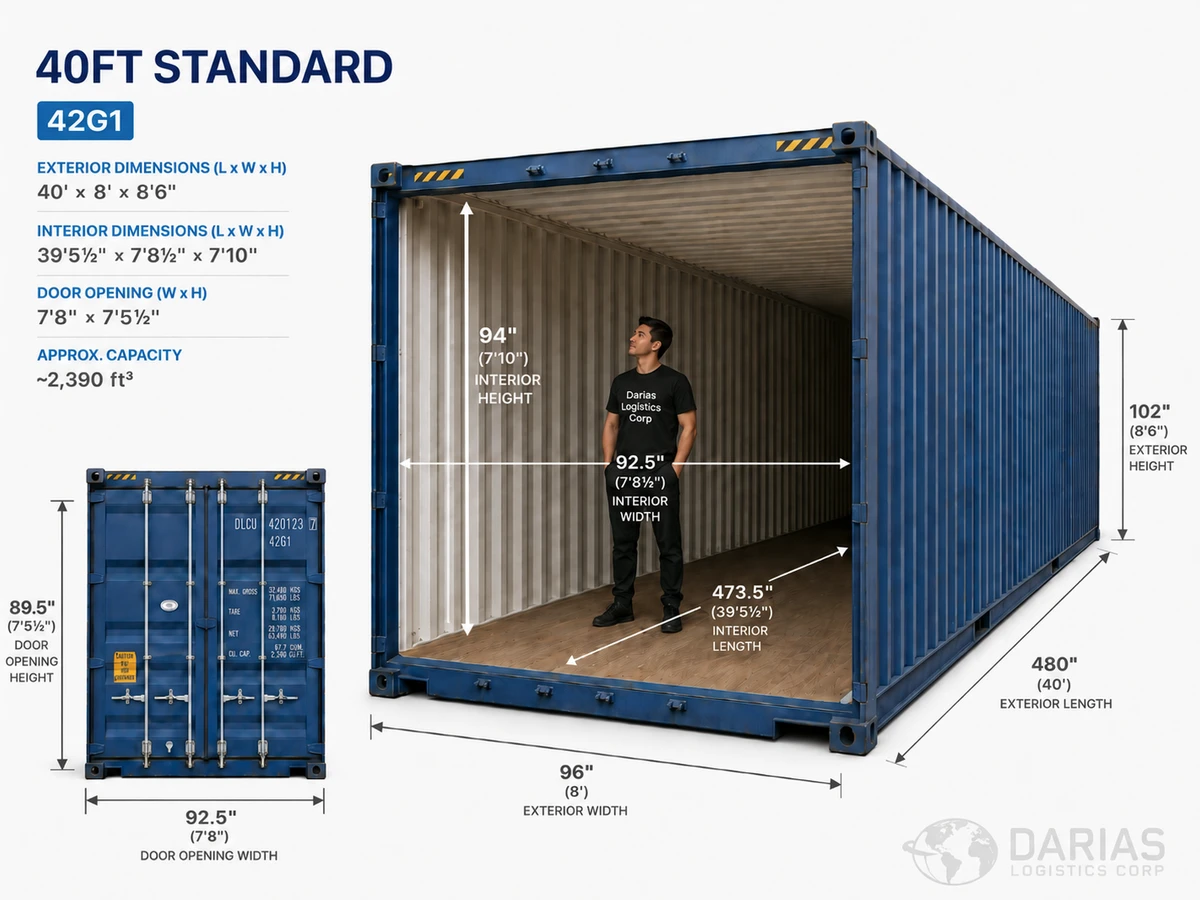
40ft standard
40' GP / 42G1
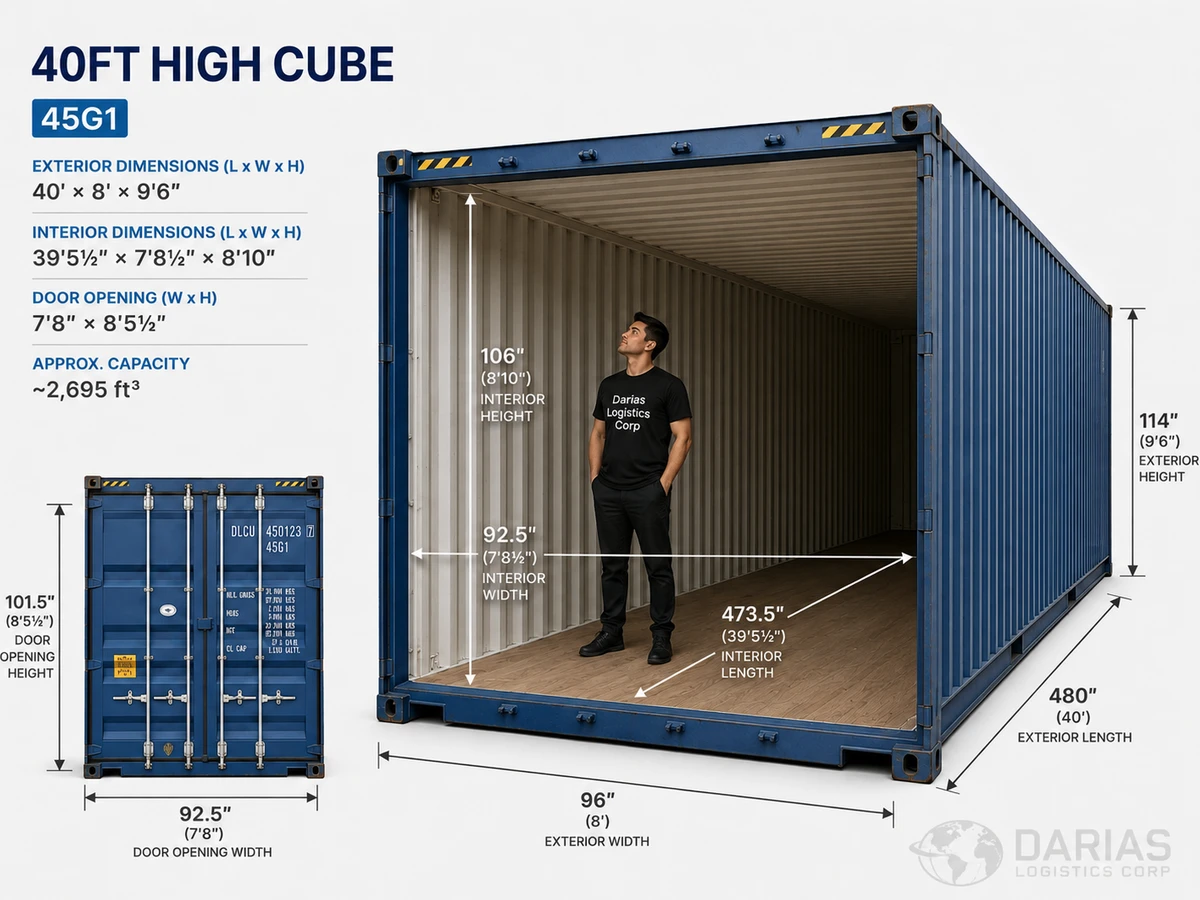
40ft high cube
40' HC / 45G1
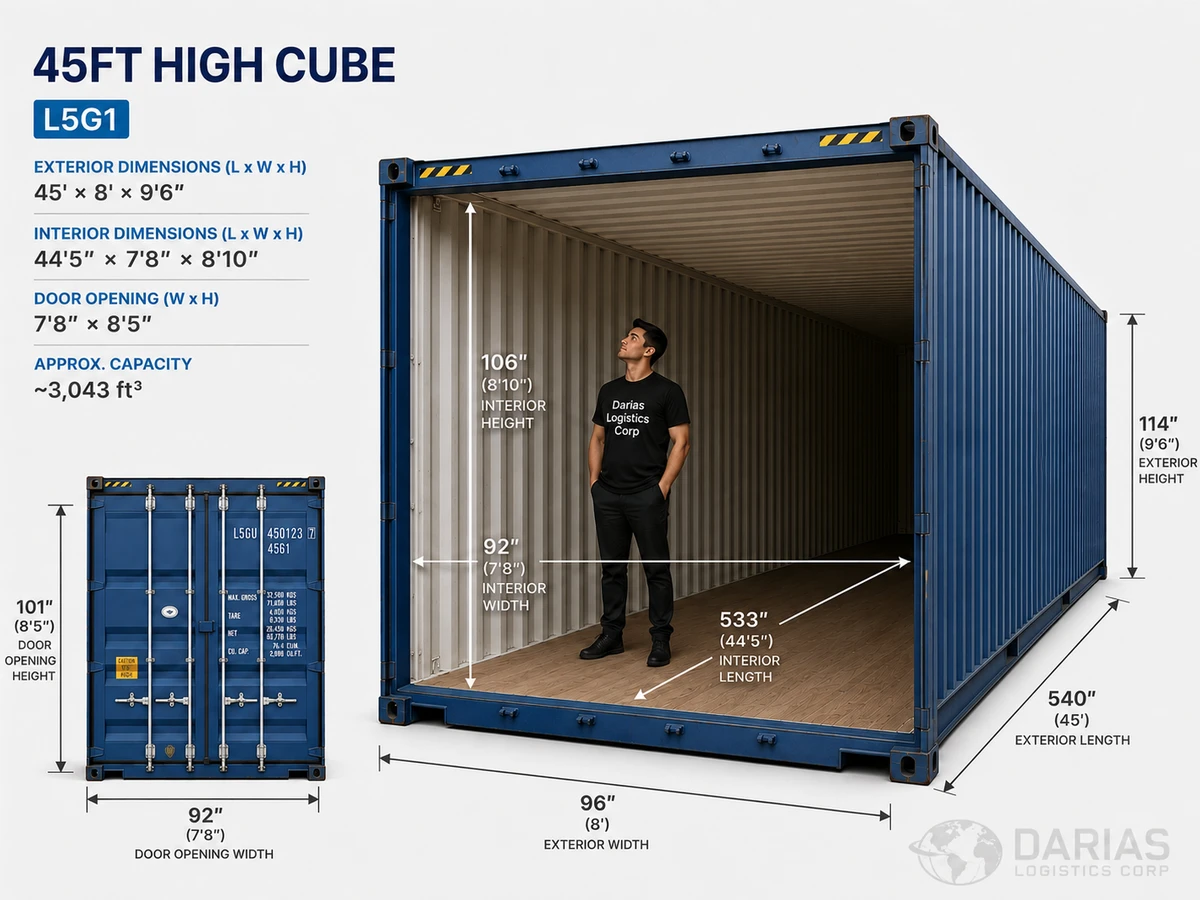
45ft high cube
45' HC / L5G1
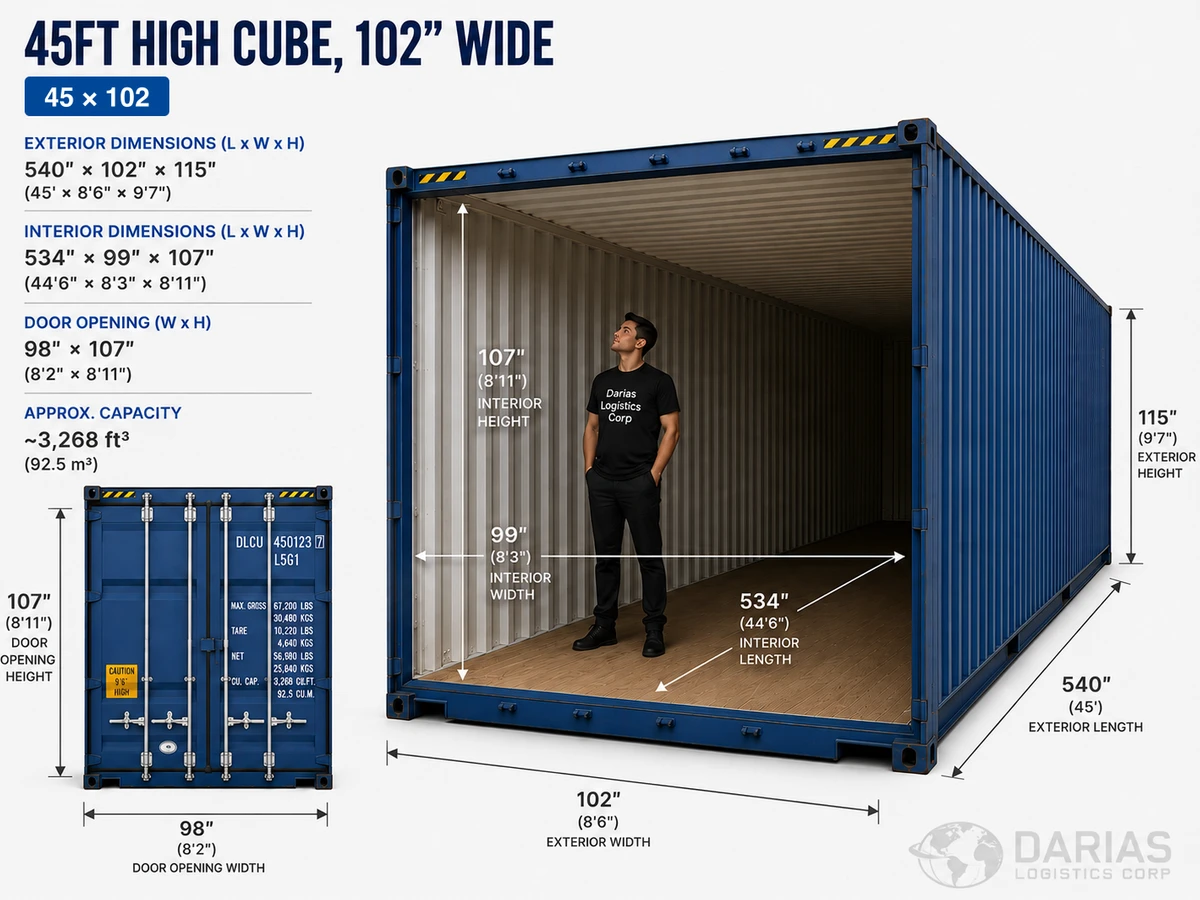
45ft high cube, 102in wide
45' HC wide body, 102in
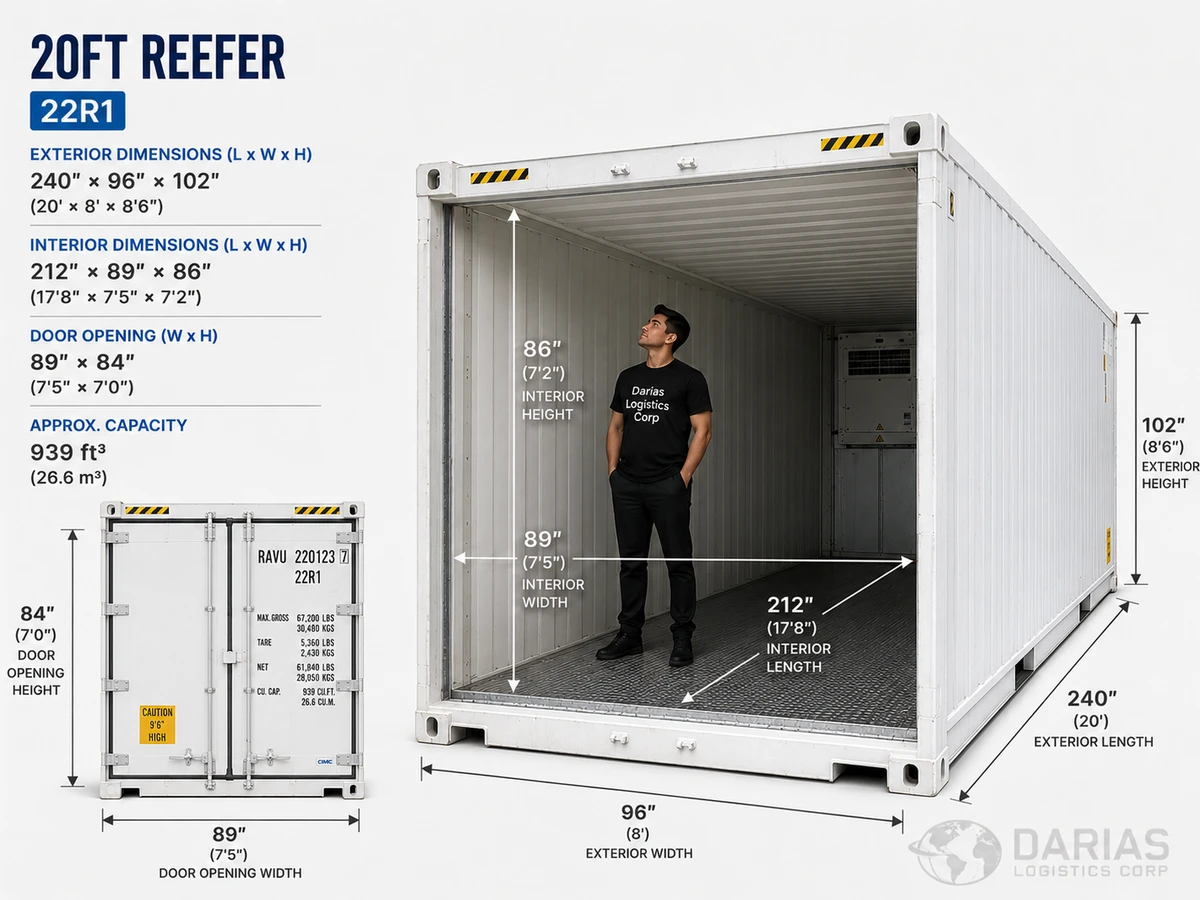
20ft reefer
20' RF / 22R1
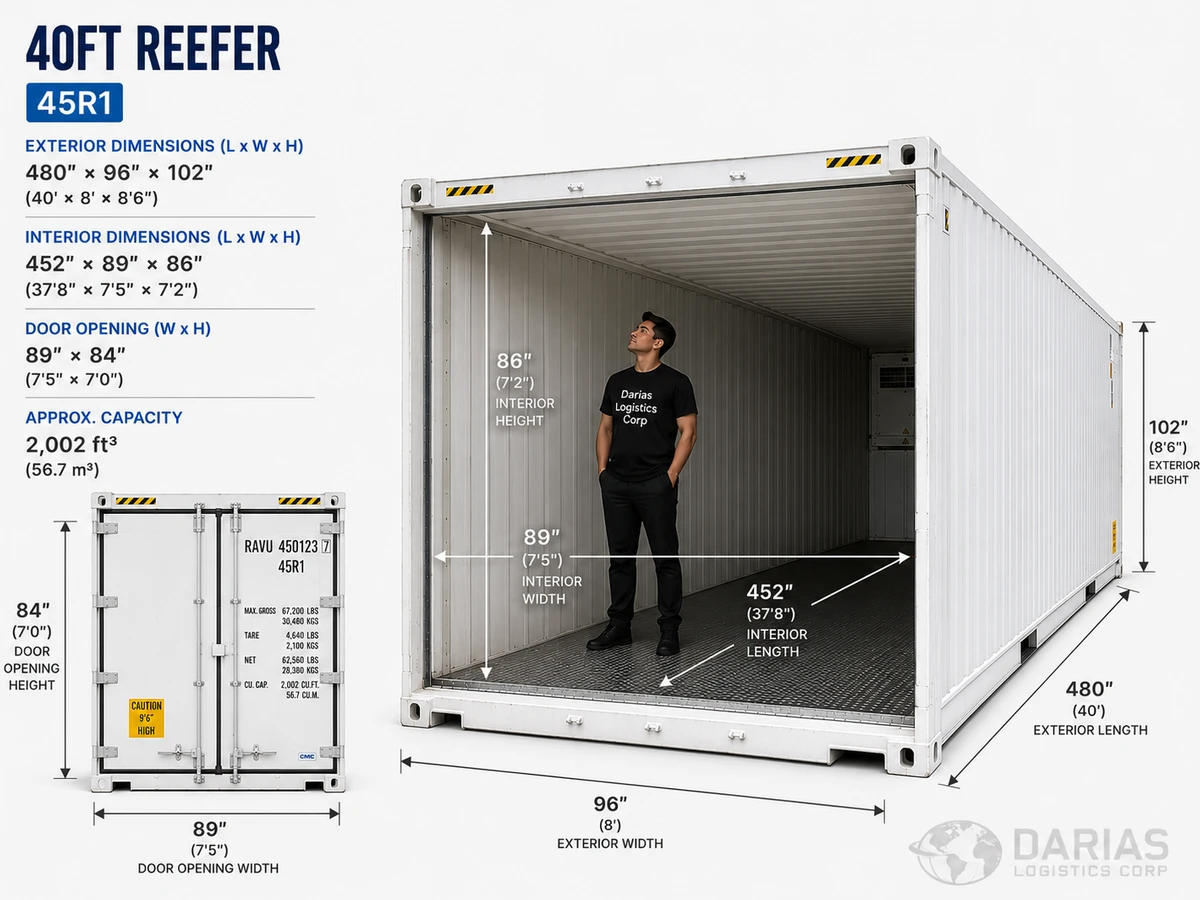
40ft reefer
40' RF / 42R1
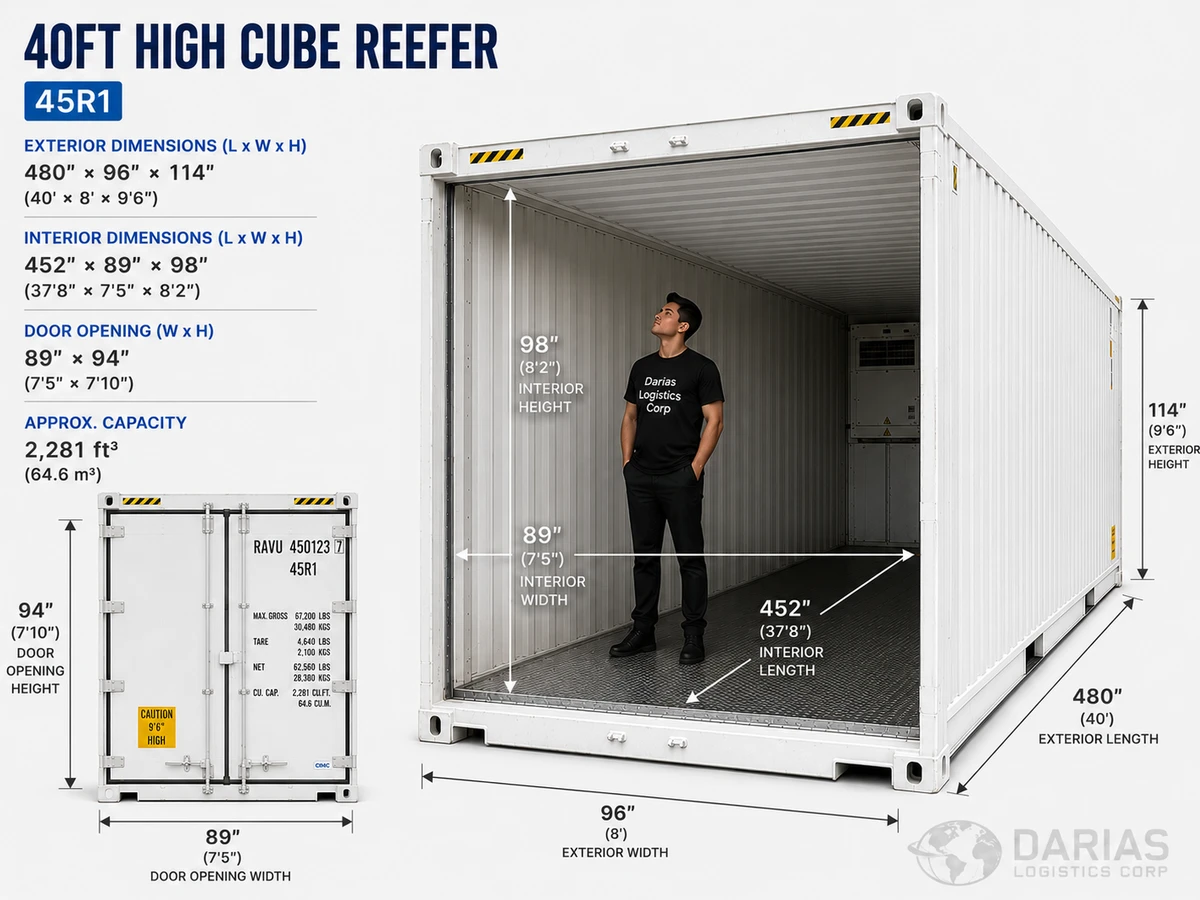
40ft high cube reefer
40' RH / 45R1
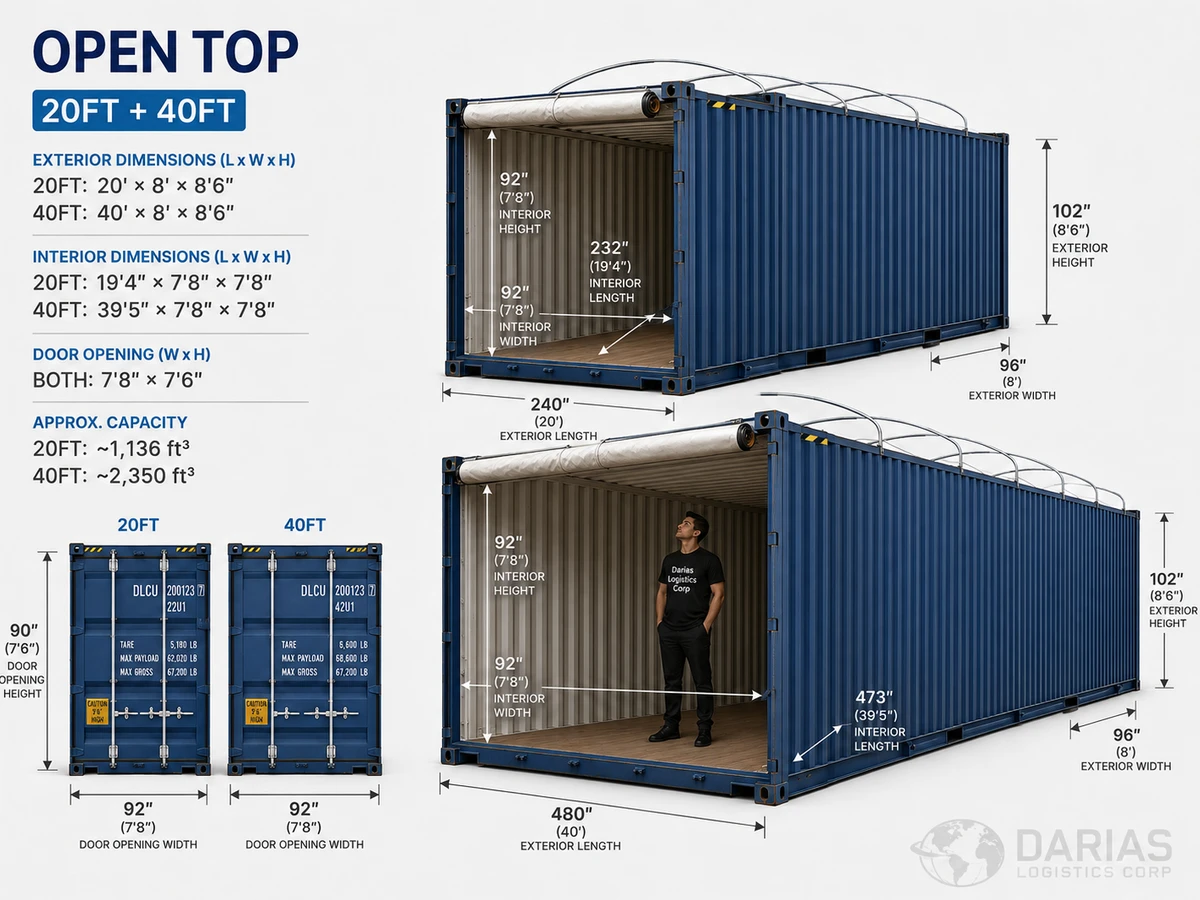
Open top
20' 22U1 / 40' 42U1
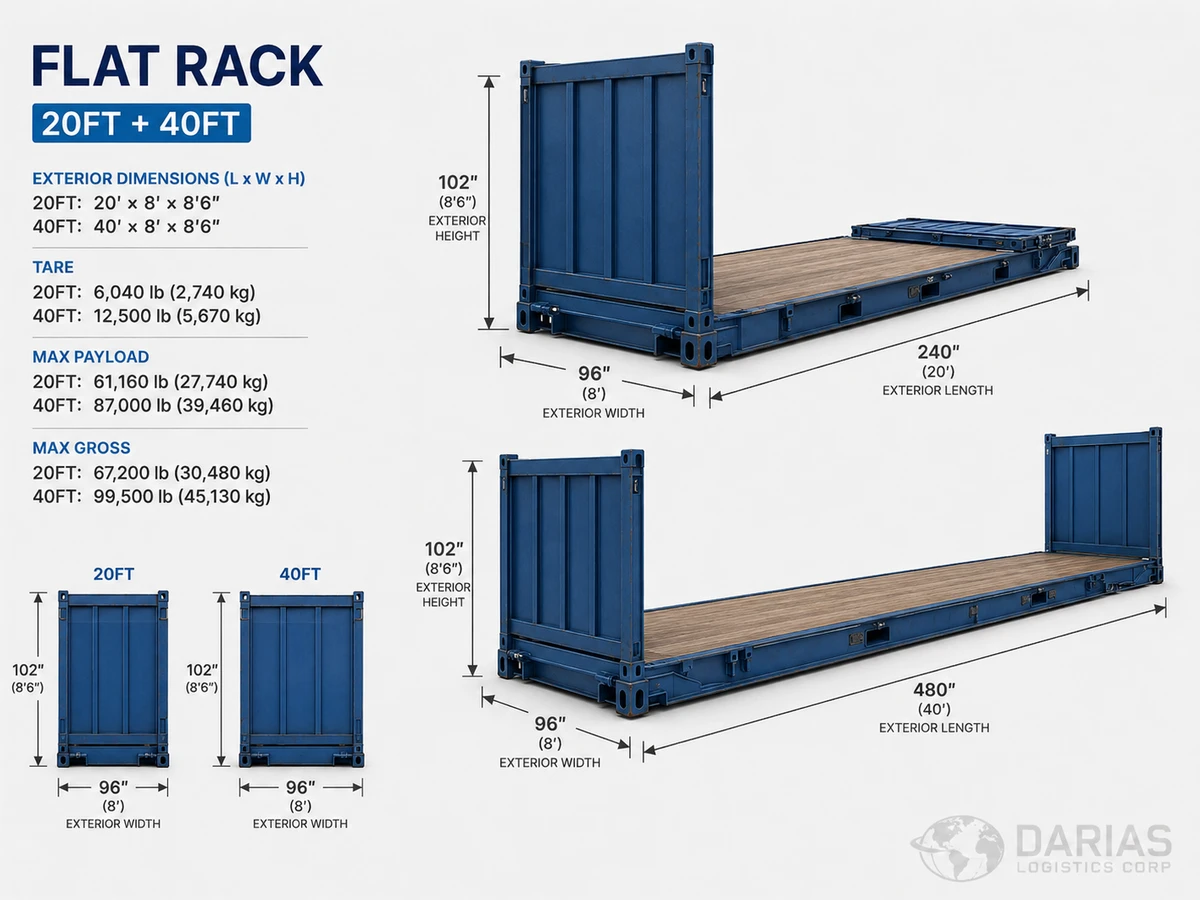
Flat rack
20' / 40' FR
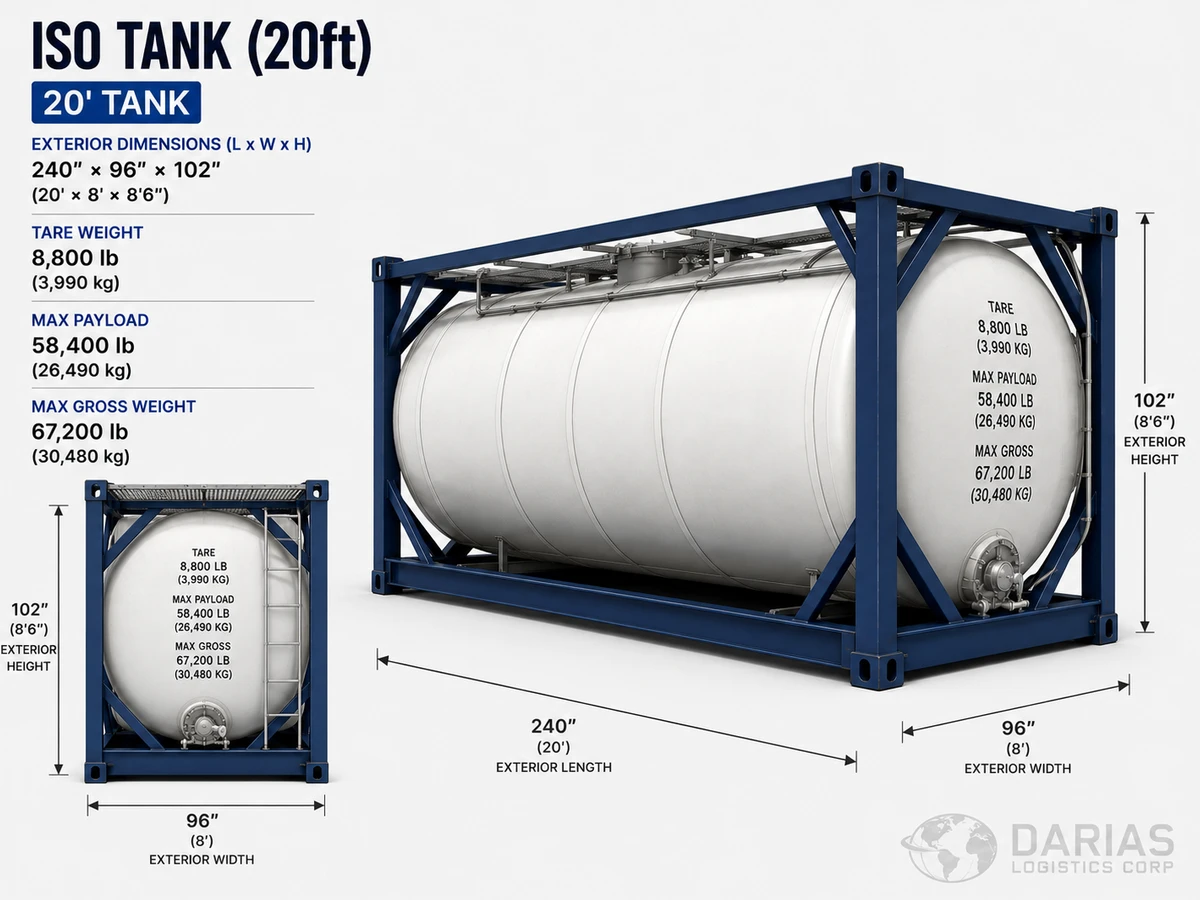
ISO tank
20' tank
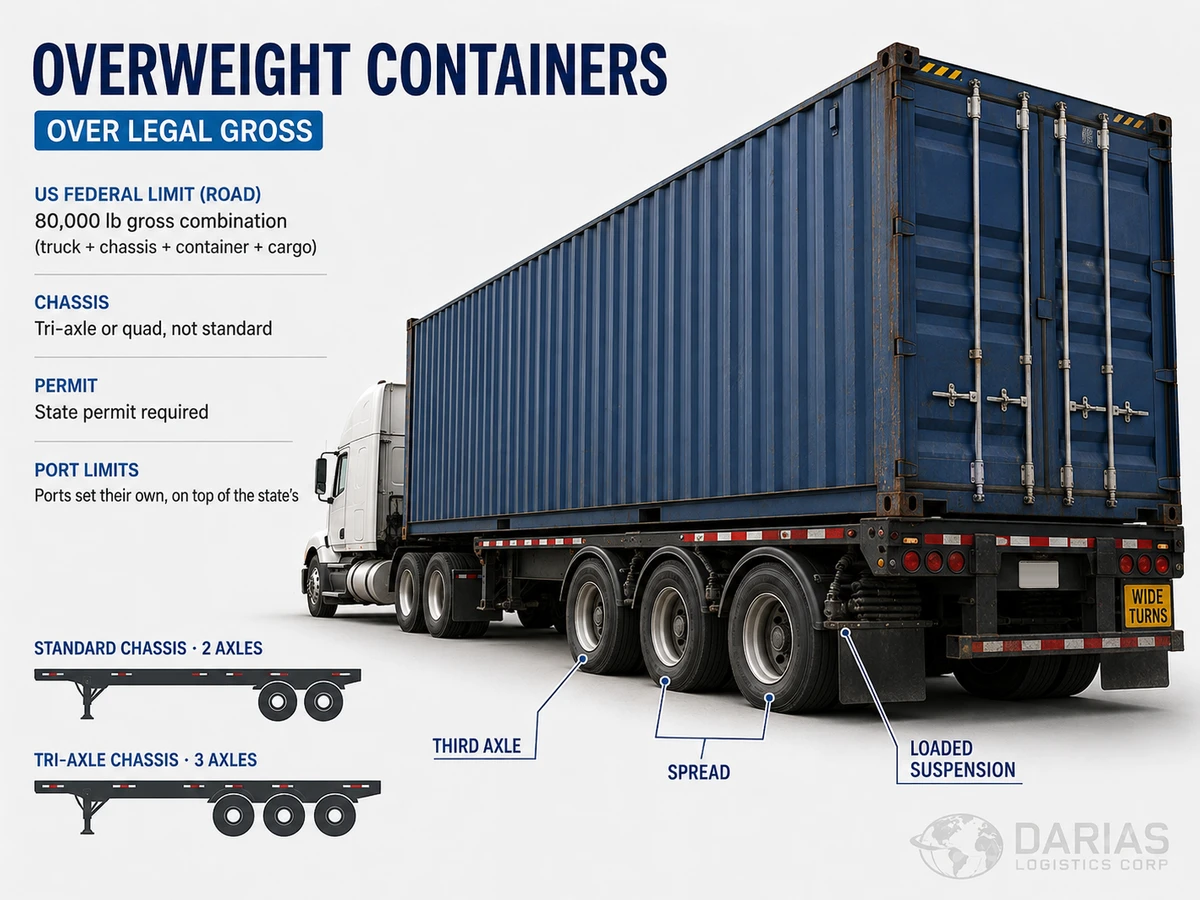
Overweight containers
any, over legal gross
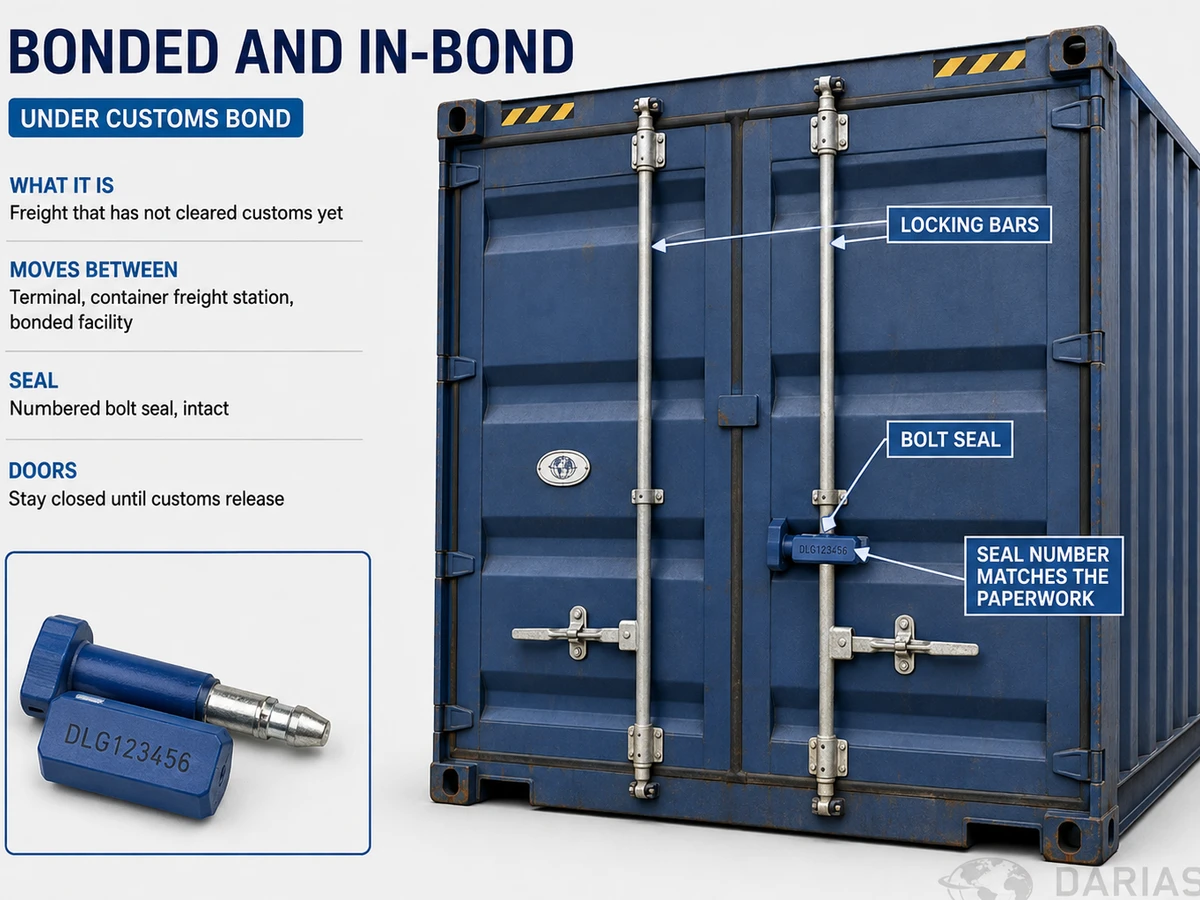
Bonded and in-bond
any, under customs bond
On a trailer
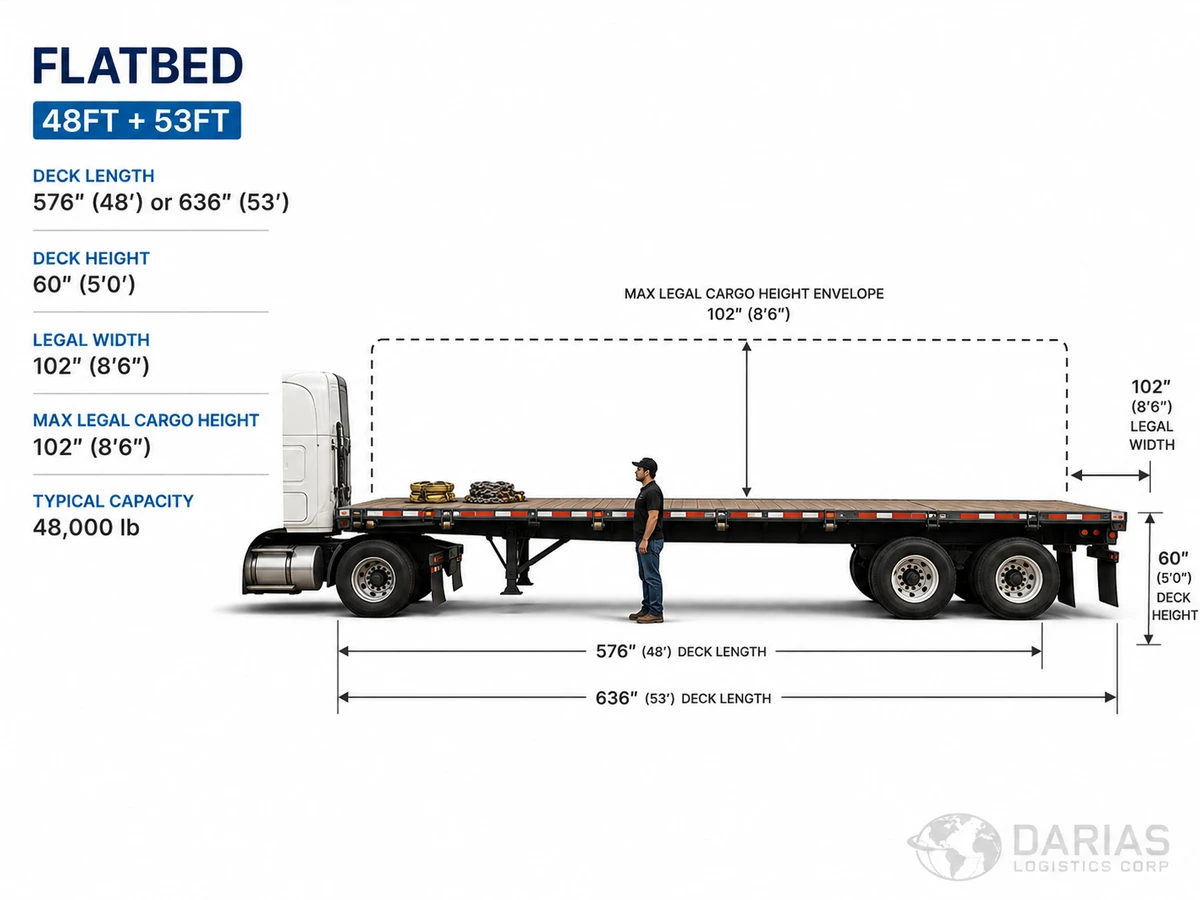
Flatbed
The default open deck, in 48ft and 53ft. Loads from the side, the top or the back, and anything over 8ft 6in of cargo height starts needing a permit.
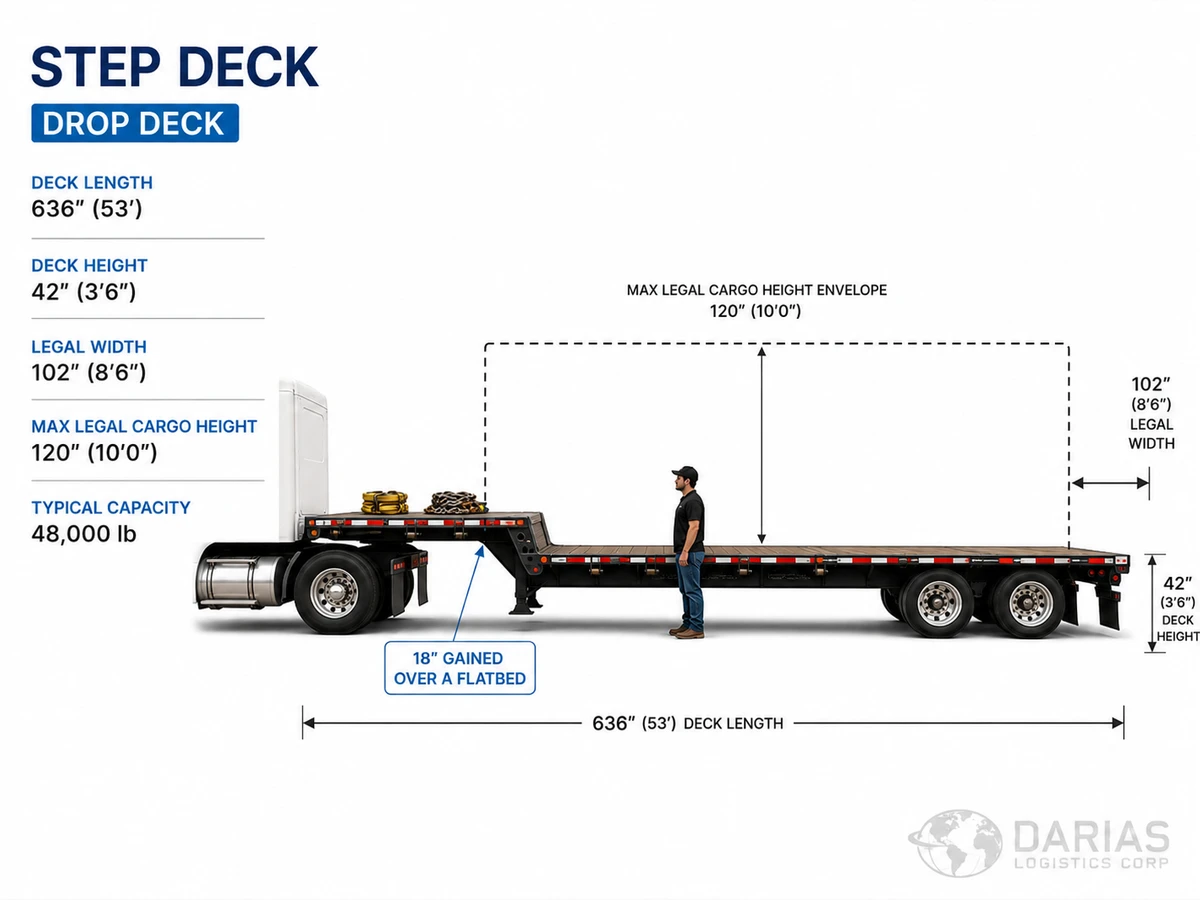
Step deck
A dropped main deck buys about 18 inches of legal cargo height over a flatbed. Also called a drop deck.
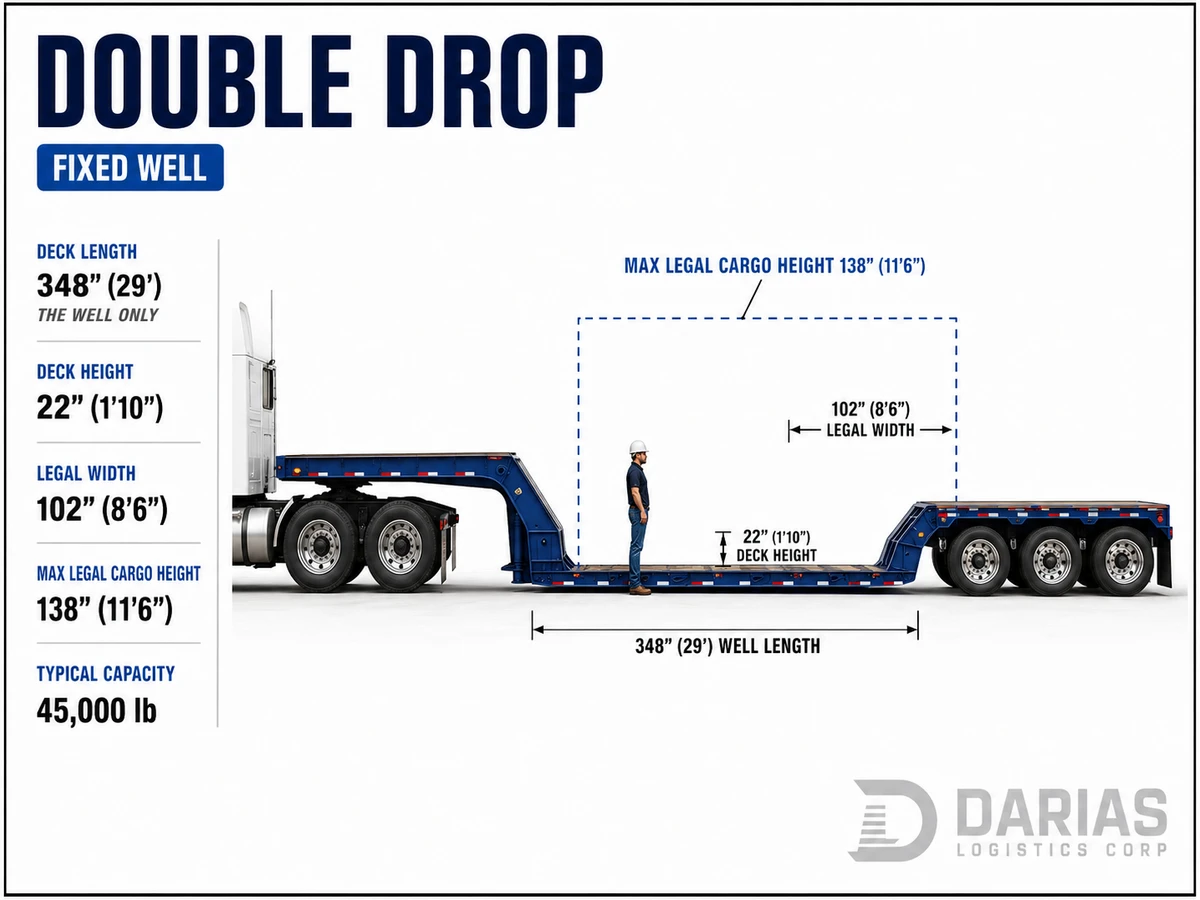
Double drop
A fixed well between two raised decks, for tall freight that does not need to be driven on.
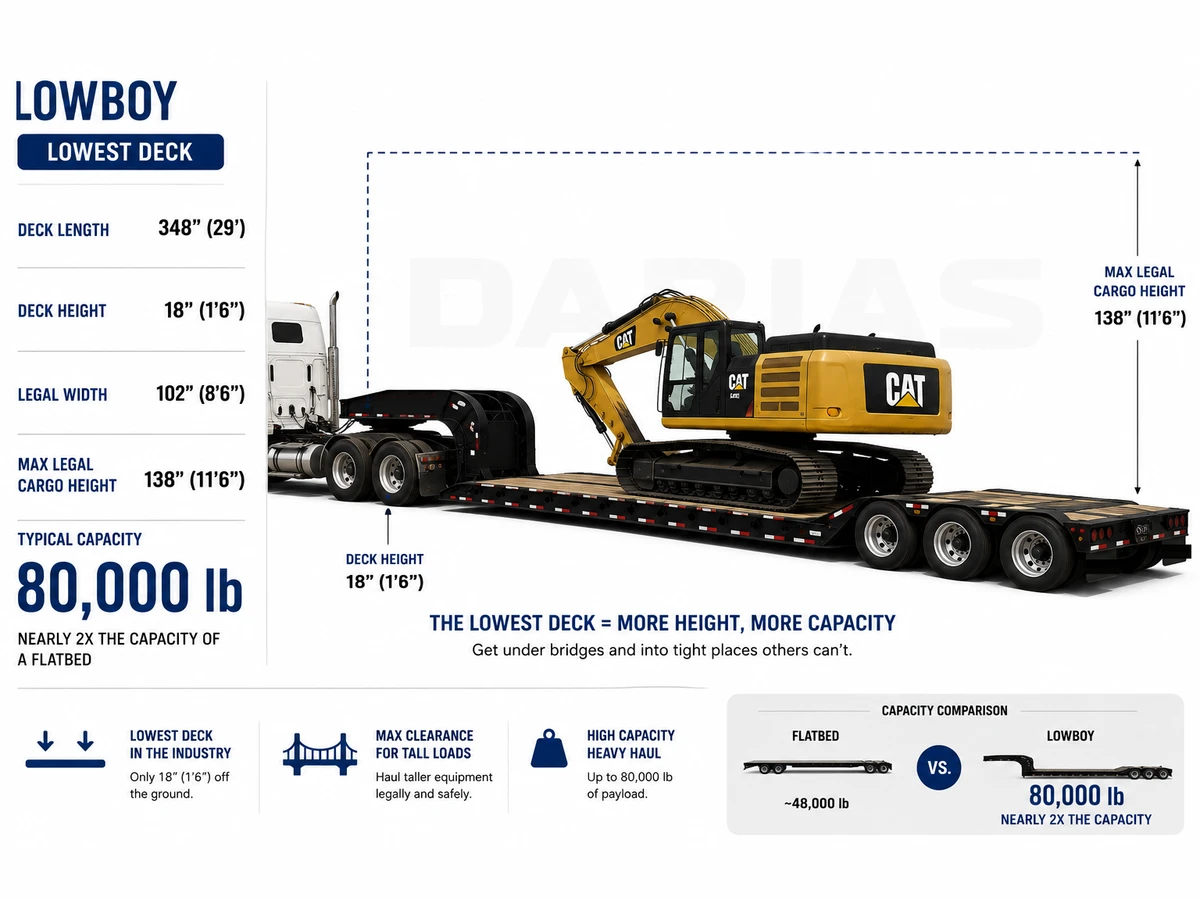
Lowboy
The lowest deck there is, for tall and heavy machines. Short well, so length is usually the constraint rather than weight.
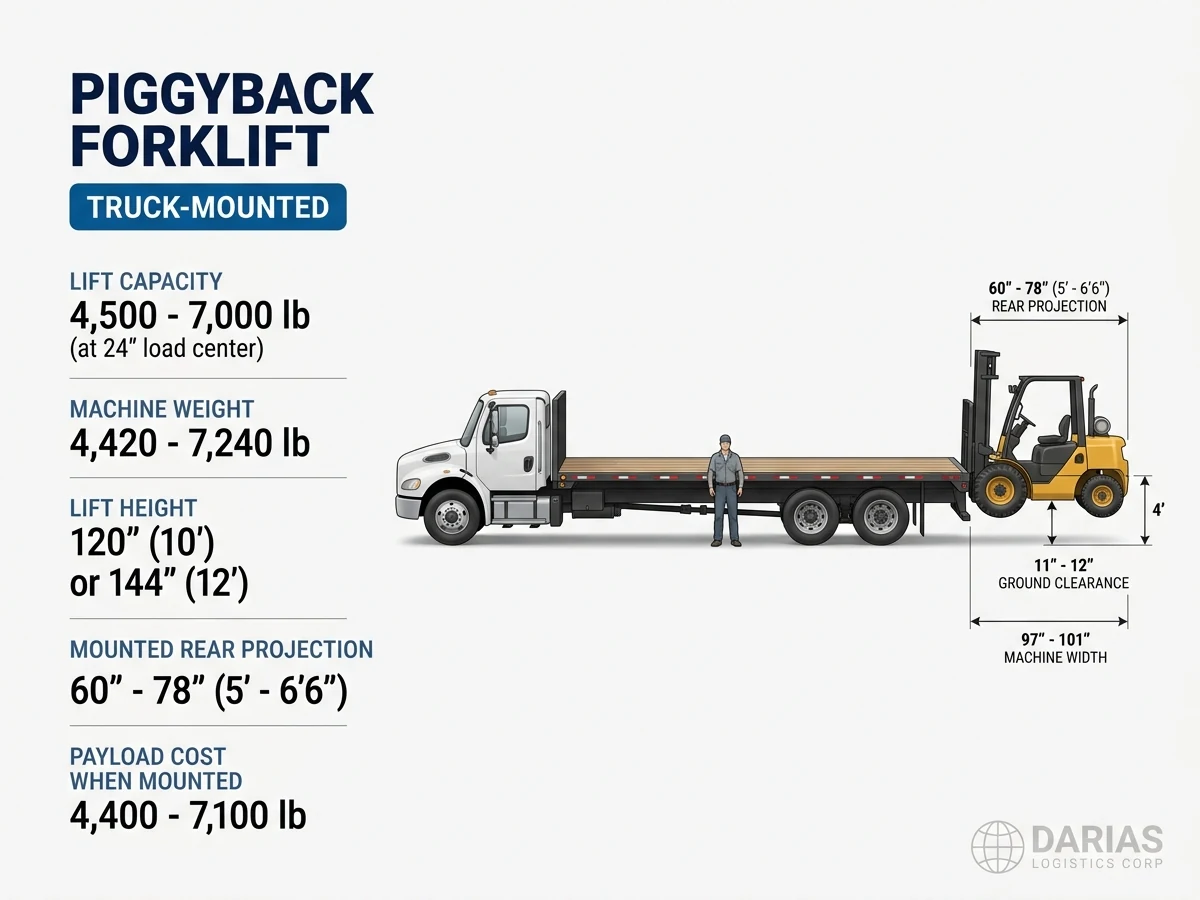
Piggyback forklift
A rough-terrain forklift that rides on a mounting kit at the rear of the flatbed and unloads where there is no dock and no site equipment. The freight pays for it twice: in the surcharge and in the payload its weight displaces, which is why it is quoted only where it saves more than it costs.
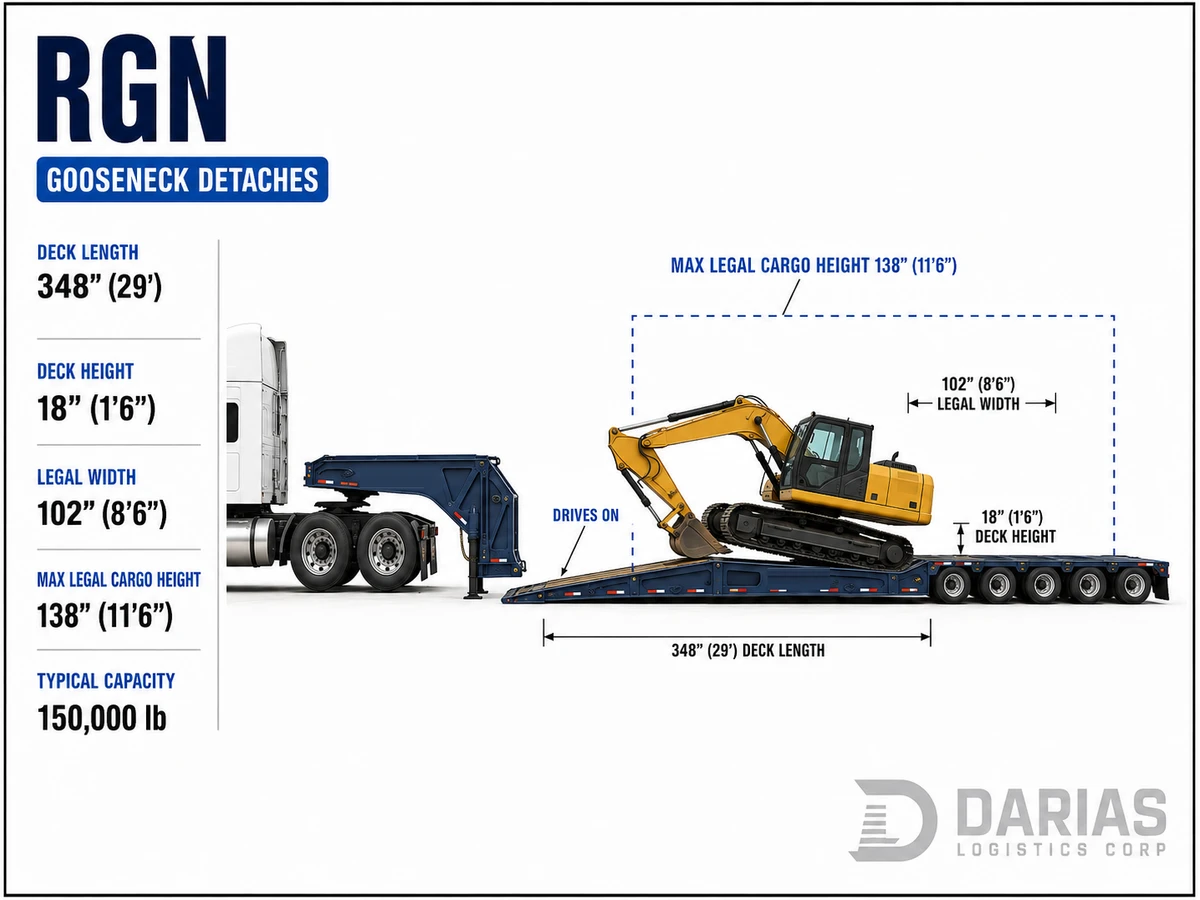
RGN, removable gooseneck
The gooseneck detaches so the deck becomes a ramp and the machine drives on. Extendable and multi-axle versions carry the heaviest and longest loads we handle.
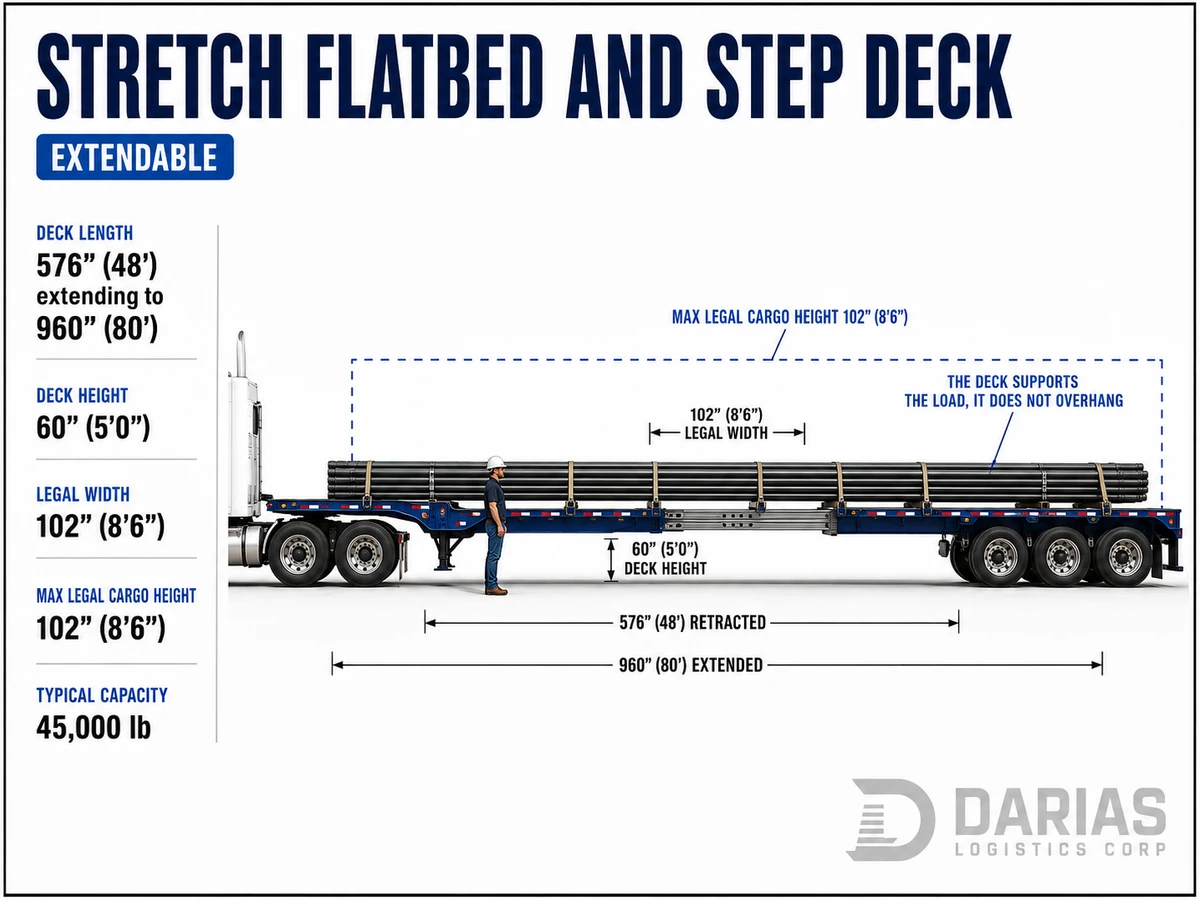
Stretch flatbed and step deck
Extendable decks for freight that is legal on weight but far too long, like beams, blades and pipe. The deck stretches to support the load rather than letting it overhang.
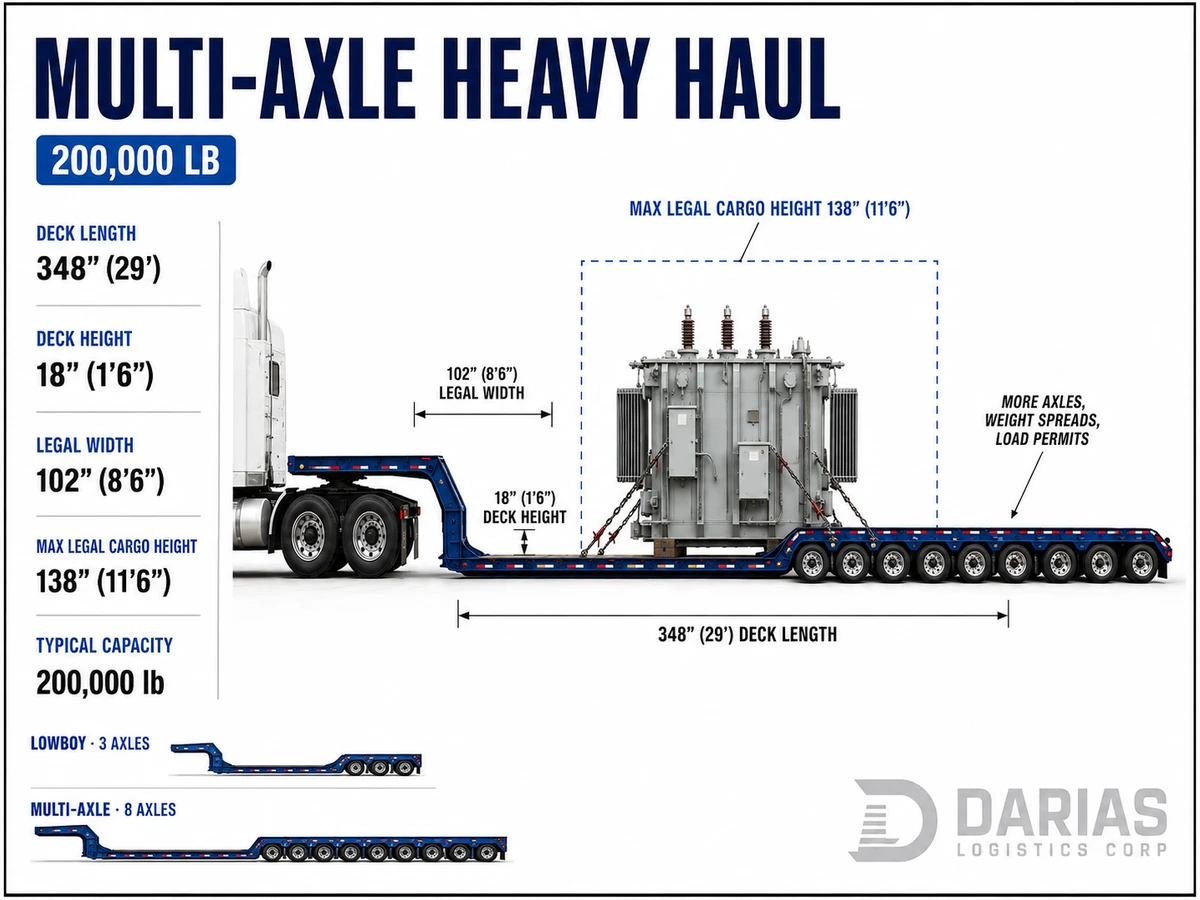
Multi-axle heavy haul
More axles under the same deck, so the weight spreads far enough to permit. This is where transformers, presses and plant equipment ride.
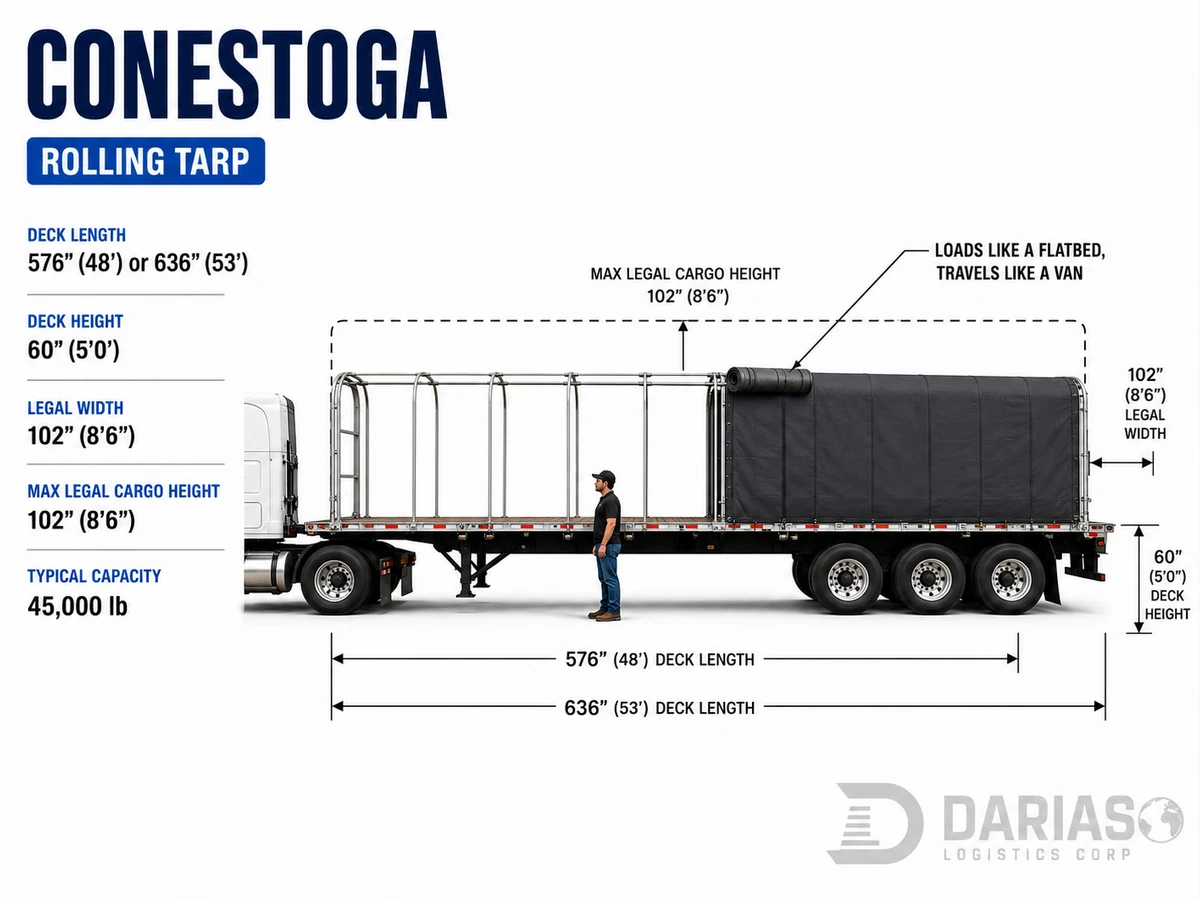
Conestoga
A rolling tarp on a frame, so freight loads from the side like a flatbed but travels covered like a van. No tarping crew, no weather risk.
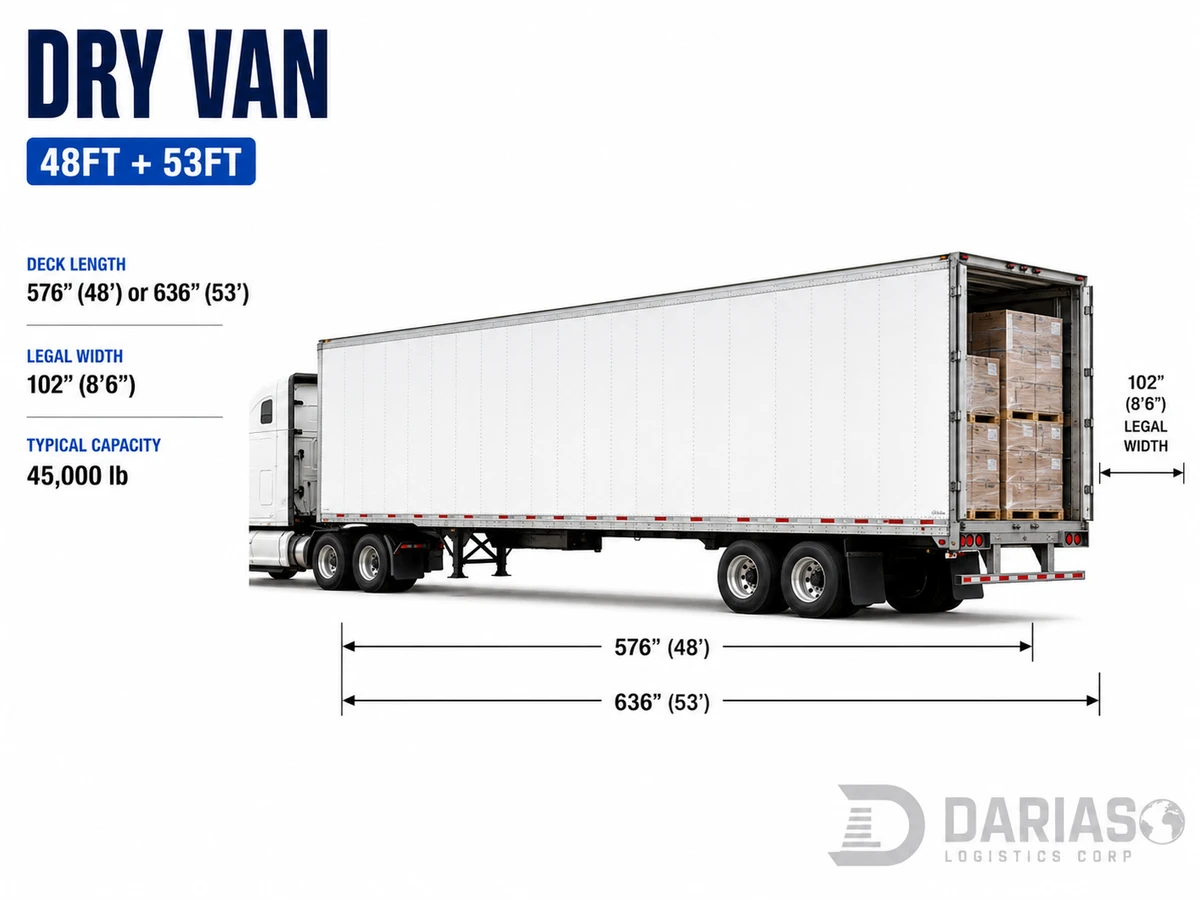
Dry van
Enclosed, palletized freight, in 48ft and 53ft. The default for anything transloaded out of a container for an inland run.
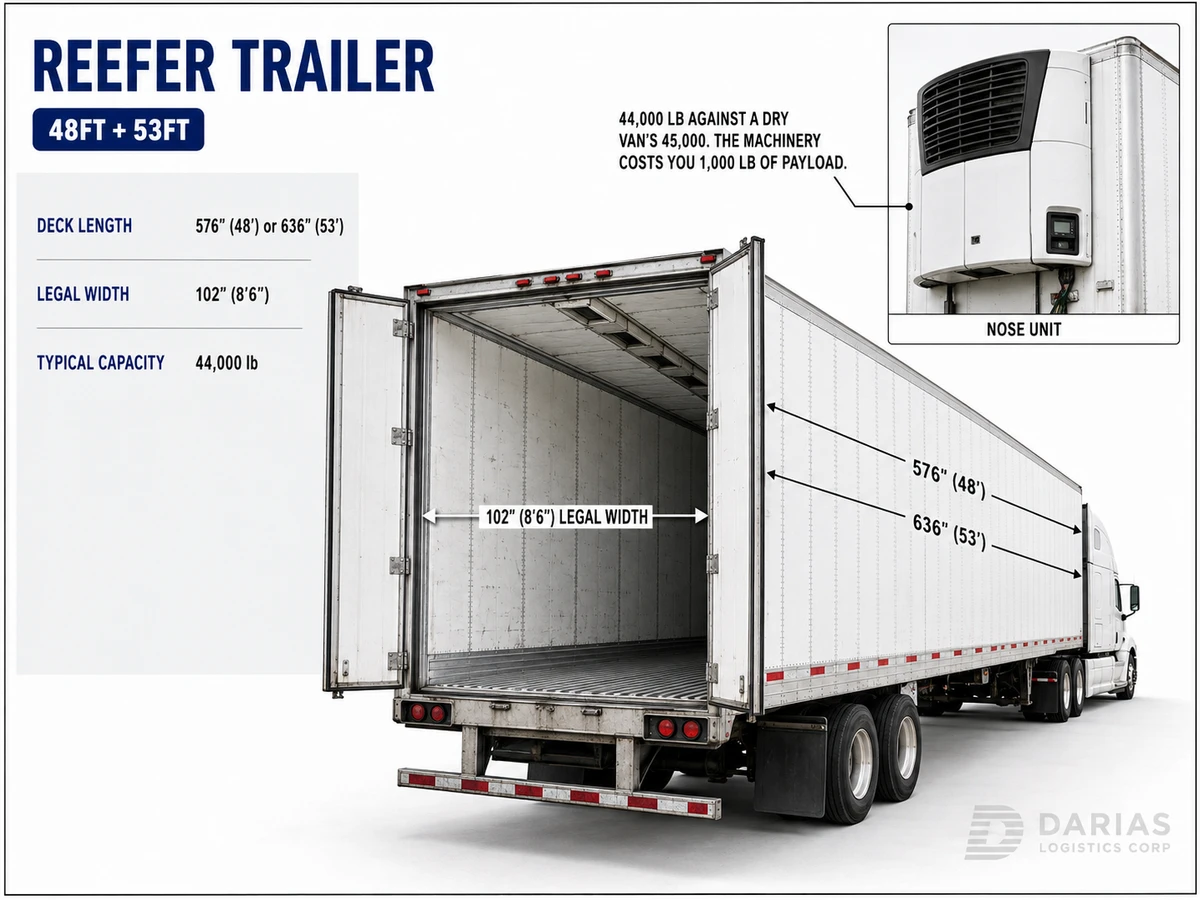
Reefer trailer
Temperature-controlled van, in 48ft and 53ft. What a reefer container becomes when the freight transloads for an inland run.
What pulls it
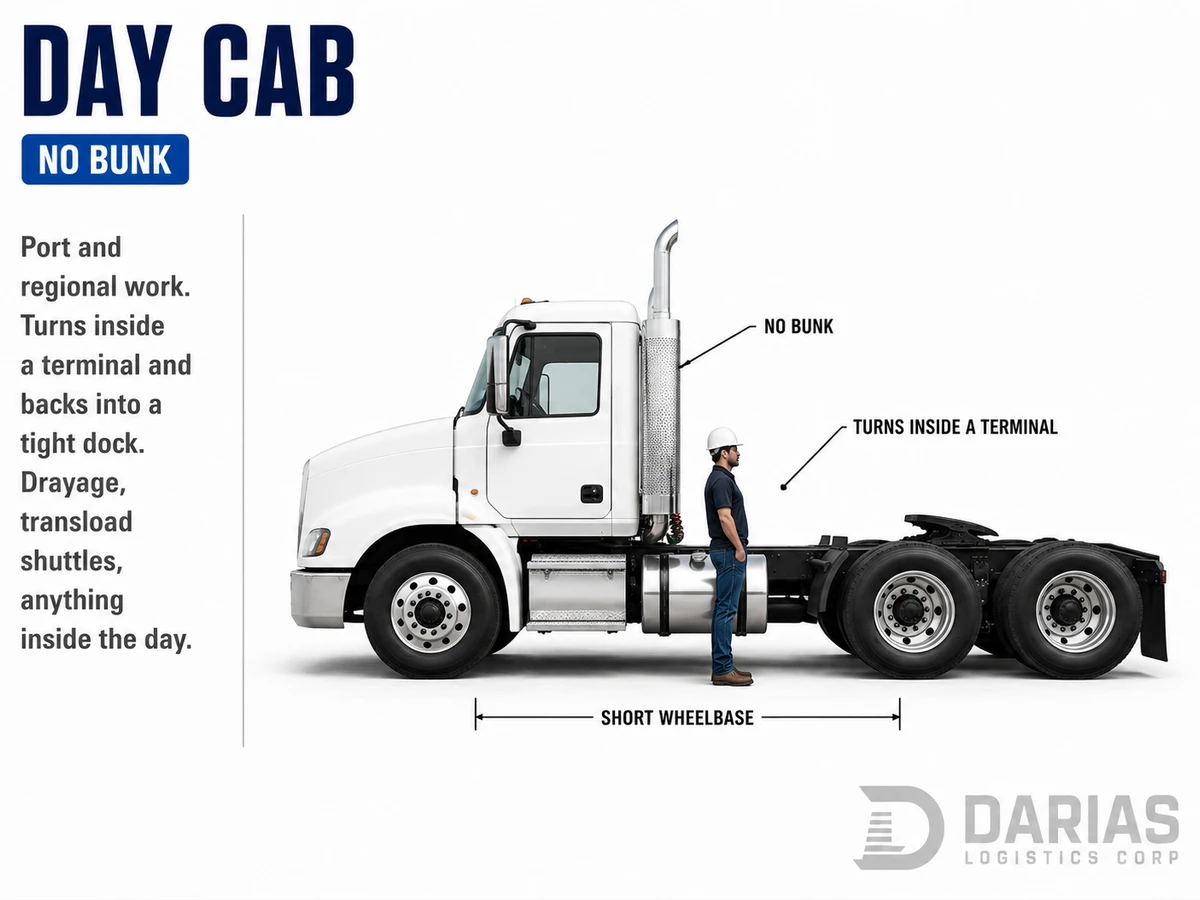
Day cab
Port and regional work. No bunk, shorter wheelbase, turns inside a terminal and backs into a tight dock.
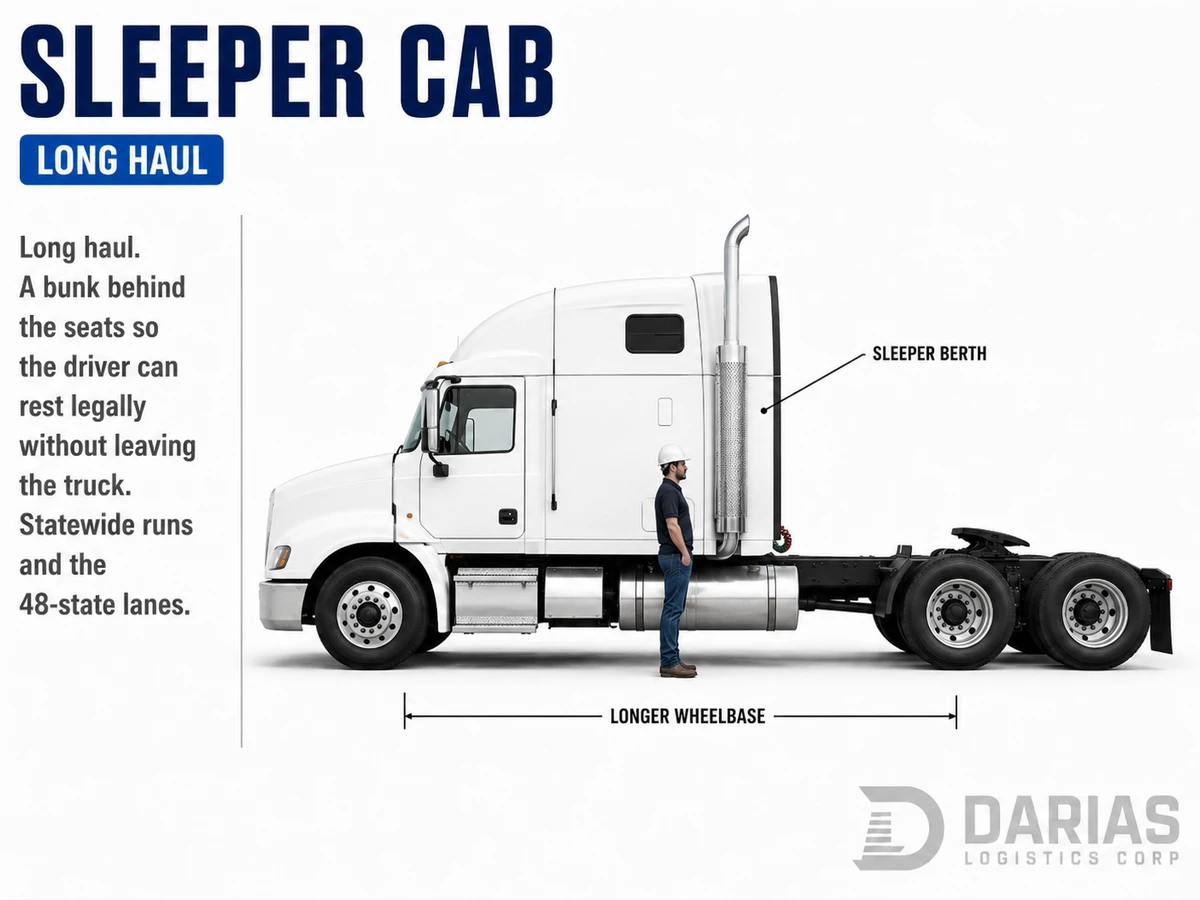
Sleeper cab
Long haul. A bunk behind the seats so the driver can rest legally without leaving the truck.
Questions
Straight answers
How do I get a rate?
Send the lane, the equipment, the container size and the port, and we come back with a number. Quotes and dispatch run 24 hours a day at quotes@dariaslogistics.com.
What does a drayage quote actually include?
The move itself, plus the accessorials people get surprised by later: chassis, pre-pull, per diem, demurrage, detention and storage. We would rather name them up front than add them to an invoice.
Can I call?
Yes. Everything is still confirmed in writing: the rate you are quoted is the rate in your inbox, with the accessorials listed, so nothing depends on who remembers what was said on a call.
How much notice do you need to book a container?
The sooner the better, especially if the last free day is close. Same-day is often possible; a day or two gives us the pick of the appointment windows.
What do you need from me to release a container?
The container number, the bill of lading or booking number, the delivery order from the line or your forwarder, customs release, and the delivery address with receiving hours.
Do you work with freight forwarders and customs brokers?
Yes, most of our work comes through them. We take the delivery order, handle the terminal, and report back to whoever is coordinating.
How many containers do you move?
More than 300 a day across PortMiami, Port Everglades and the South Florida rail ramps, which is around 100,000 a year, more than 150,000 TEU in the measure ports use. That volume is why a chassis or an appointment window is usually there when your box needs one.
Capacity is tight and no carrier will take my load. Can you?
That is a call we like. Send the load, even if everyone else said next week: with more than 300 containers a day moving through the network there is usually a truck, and when there truly is not, you hear it in minutes instead of silence. No contract and no minimum volume; one load, quoted in writing, is how most of our broker relationships started.
How fast does a quote come back?
Usually within 10 minutes, in writing, any hour of the day. The desk that prices your move is the desk that dispatches it, so a quote never waits for a morning shift. A superload or a multi-stop move can take longer, and we say so up front instead of going quiet.
What is the last free day?
The last day your container can sit inside the terminal before storage charges start. Miss it and demurrage begins accruing daily, which is why a pre-pull is almost always cheaper than waiting.
What is a pre-pull?
We collect the container from the terminal before you are ready for it and hold it on a yard. It stops demurrage running at terminal rates and it takes the pressure off your receiving schedule.
What is the difference between demurrage, per diem and detention?
Three different charges from different parties. Demurrage is the terminal charging you for cargo sitting inside the gate past free time. Per diem is the shipping line charging you for keeping their container out past free time. Detention is the trucker's time, charged when a driver waits at your dock beyond the free window. They can run at the same time, which is how a bill gets ugly fast.
What is a chassis split?
When the chassis you need is not at the same location as the container, so the truck makes an extra trip to collect it before it can even pick up. It costs a move and it is the single most common surprise line on a drayage invoice.
How do I keep the charges down?
Watch the last free day, pre-pull if your dock is not ready, unload as drop-and-pick rather than live where you can, and tell us early if plans change. Almost every large accessorial bill traces back to a decision made a day too late.