Service
Reefer container freight in Miami
Refrigerated containers off the terminal, with the genset the move actually needs.
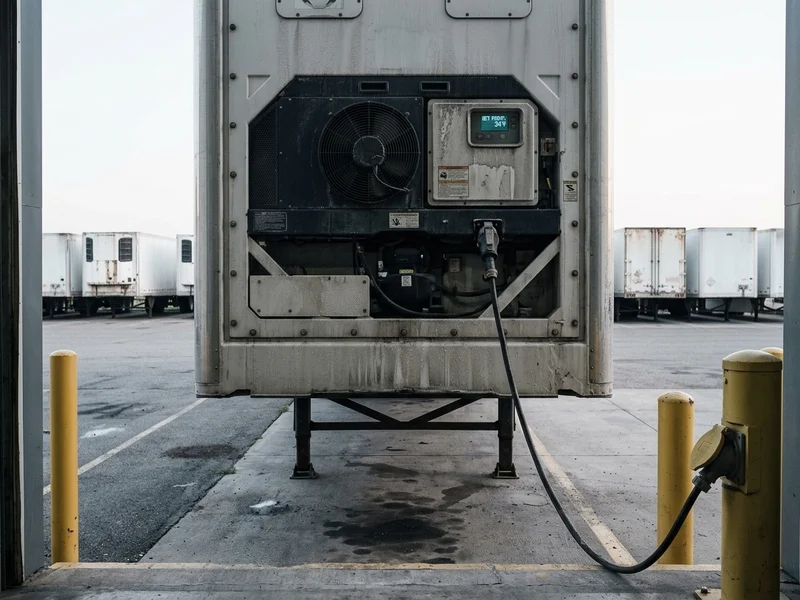
The cold chain does not pause at the gate
A refrigerated container coming off a ship needs power the whole way. On the road that means a genset on the chassis, not just a reefer box, and it is the single most common thing missed when a reefer is quoted as an ordinary container.
Tell us it is a reefer when you ask for the rate rather than when the driver arrives. It changes the chassis, it adds the genset, and it changes what the move costs. Give us the set point too, and whether it runs continuous or cycle.
Where reefer actually lives on this coast
Port Everglades carries more than 2,000 reefer outlets. Tropical Shipping at the Port of Palm Beach carries more than 350 plugs and anchors the Bahamas and Caribbean trades, so a reefer at Palm Beach is almost certainly there.
Inland, the decision is whether to keep the freight in the ocean box or transload it to a refrigerated trailer. Transloading ends per diem and gets the container back, but it is a temperature-controlled handling job rather than a simple restack, and it needs a dock that can do it properly.
The genset, and the pre-trip that goes with it
A genset is a diesel generator that hangs on the chassis or clips under the container and keeps the refrigeration unit running while the box is on the road. It carries its own fuel, and how long it will run depends on how much is in the tank, which is why a reefer that is going to sit somewhere gets checked rather than assumed. A box on a chassis with no genset under it is a well insulated box and nothing more.
Before a loaded reefer leaves, the unit gets a pre-trip. It is started, the set point is confirmed against what the booking says, the supply and return air readings are compared, and the airflow is looked at, because a unit can run perfectly and still deliver warm freight if the air cannot get around the load. A unit that will not hold its set point is a problem worth finding at the terminal rather than at the consignee, and that is the whole reason for doing it there.
Set point, continuous and cycle
The set point is the temperature the unit is asked to hold, and it belongs on the rate request alongside the container number and the line rather than being discovered by a driver at the gate. Frozen and chilled are not interchangeable settings, and a box asked to hold a chilled set point on freight that should be frozen arrives out of spec no matter how well the machinery ran.
Continuous means the unit runs all the time and holds a tighter band, which is what fresh produce, flowers and anything with a narrow tolerance usually need. Cycle means it starts and stops between a cut-in and a cut-out temperature, which burns less fuel and lets the box drift a few degrees in between. Frozen freight is generally fine on cycle. Chilled freight with a tight spec is generally not. Say which the booking calls for, because setting it correctly at the start is not the same thing as changing it halfway through a move.
Pre-cooling, terminal plugs, and the timing of a reefer pre-pull
A refrigeration unit holds a temperature. It does not pull one down quickly through a full load of stacked cartons. So the freight goes in already at temperature and the box goes in already pre-cooled, and the unit spends the trip maintaining rather than fighting. Loading warm freight into a cold container and expecting the machinery to fix it is the most common way a temperature-controlled load fails, and it fails quietly, on a chart nobody reads until there is a claim.
At the terminal the box sits on a plug. The moment it comes off that plug it needs the genset, so the two ends of the power have to meet without a gap in between, and that is what makes the timing on a reefer pre-pull different from a dry box. A pre-pull still stops demurrage, but a loaded reefer has to stay powered while it waits, which means fuel, a place to sit and somebody watching it. How long it will wait therefore gets agreed before the pull rather than after. If the honest answer is several days, emptying the container is usually the better move than powering it.
What it costs
The other half of the cold chain
Equipment
Ports
Questions
Straight answers
Does a reefer container need a genset for drayage?
Yes, if it has to stay powered, and that is the single most common thing missed when a reefer is quoted as an ordinary container. A refrigerated container coming off a ship needs power the whole way, and on the road that means a genset on the chassis rather than just a refrigerated box. Say it is a reefer when you ask for the rate rather than when the driver arrives: it changes the chassis, it adds the genset, and it changes what the move costs.
What do you need to know about the temperature setting?
The set point, and whether the unit runs continuous or on cycle. Send both with the container number and the line at the rate request. Continuous holds a tighter band and burns more fuel; cycle is cheaper and lets the box drift between cut-in and cut-out, which is fine for some freight and out of spec for others. Anything with a narrow tolerance is worth flagging plainly, because that is where the difference between the two settings decides whether the load arrives in condition.
Which South Florida port handles the most reefer containers?
Port Everglades carries more than 2,000 reefer outlets, which makes it the center of gravity for refrigerated boxes on this coast. Tropical Shipping at the Port of Palm Beach carries more than 350 plugs and anchors the Bahamas and Caribbean trades, so a reefer at Palm Beach is almost certainly there. PortMiami handles refrigerated traffic too. As with any container, which terminal yours sits at follows the booking rather than your preference, so the line is the field that answers it.
Should I transload a reefer container or keep the freight in the box?
It depends on the distance and how long the box would otherwise be out. Transloading into a refrigerated trailer ends per diem and gets the container back to the line, which matters most on a long inland run. Staying in the ocean box avoids a handling step, which matters most on a short local delivery. Either way, moving refrigerated freight between a container and a trailer is a temperature-controlled handling job rather than a simple restack, so it needs a dock that can do it properly.
Can a reefer container be pre-pulled and held?
A pre-pull stops demurrage on a reefer the same way it does on a dry box, but a loaded reefer has to stay powered while it waits, so how long it can wait and where has to be settled before the pull rather than after. Per diem keeps running until the box goes back empty either way. If the line's clock is the one hurting, the answer is to empty the container, by devanning it at the dock or by transloading into a refrigerated trailer for the inland leg.
How do I get a rate?
Send the lane, the equipment, the container size and the port, and we come back with a number. Quotes and dispatch run 24 hours a day at quotes@dariaslogistics.com.
What does a drayage quote actually include?
The move itself, plus the accessorials people get surprised by later: chassis, pre-pull, per diem, demurrage, detention and storage. We would rather name them up front than add them to an invoice.