Service
Inland and intermodal container moves in Florida
Container on chassis beyond the local radius, statewide, including intermodal pulls off the FEC and CSX ramps.
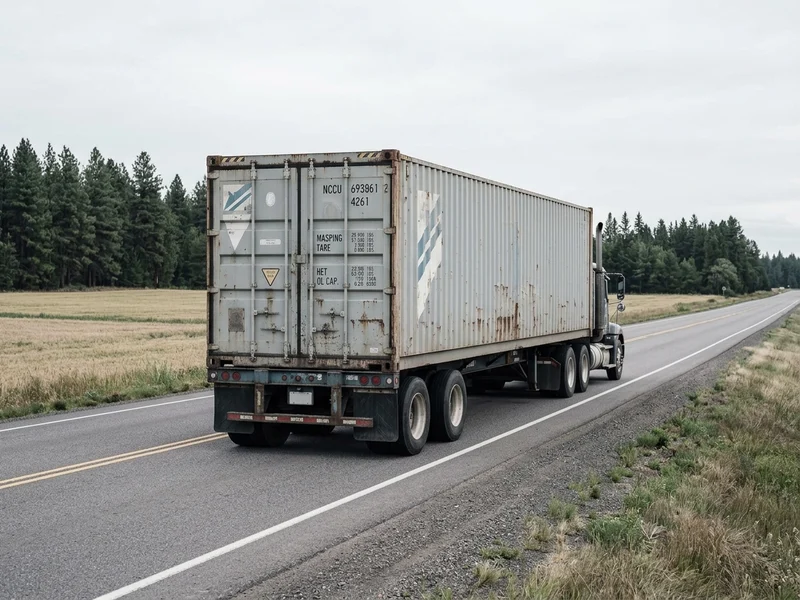
Container on a chassis, past the local radius
Sometimes the box has to stay sealed: bonded freight moving in-bond, cargo that cannot be handled twice, a consignee who wants the original container at their door. That is a straight container move statewide, on our chassis rather than the terminal's.
It is a legitimate move and we do it. It is also the more expensive shape most of the time, and it is worth knowing why before you choose it.
The cost is the clock, not the miles
While the container is on the road it belongs to the shipping line, and per diem runs the entire time: out to the delivery, waiting to unload, and all the way back to the port empty. A long inland run can spend more on box time than on trucking.
Transloading avoids that by returning the container early and putting the freight on a domestic trailer for the long leg. Unless the seal has to stay on or the freight cannot be handled again, transload is usually the cheaper answer, and we would rather tell you that than quote the more expensive move.
The Hialeah ramps, and what an intermodal pull involves
The FEC and CSX ramps sit 5 to 8 road miles from the Hialeah Gardens yard, which makes a ramp pull one of the shortest runs on the board. A pull is not simply a drive out there, though. The box has to be available and the release has to be in place before a truck is any use, and then the truck ingates, is matched to the container, picks up a chassis if one is not already under the box, and outgates with the paperwork that records what left and in what condition.
Ramps run their own free time and their own clock, so a container sitting on a rail ramp has a last free day exactly as one on a marine terminal does, counted by the ramp's rules rather than the line's. Send the container number, the line and the ramp with the request. A pull that pairs with a devan or a transload at a dock a few miles away is usually the cheapest shape of all, because the empty goes back nearly as fast as the loaded box came off.
When the seal stays on, and when it should not
A seal stays on for a reason, or it comes off for a better one. Freight travelling in-bond under a customs bond stays sealed to its destination. A consignee who wants the original container at their own door gets it. Cargo that cannot be handled twice, stacked to the roof, fragile, or loaded in a way that will not survive a restack, is the third genuine case, and it is more common than people think on machinery and on anything crated to fill the box.
Outside those, opening the box early is usually the cheaper move, and the reason is simply that the line's equipment stops travelling. If the seal has to stay on, say so at the request rather than later, because it is the one field that decides whether the job is quoted as a container move or as a transload plus a truckload. Guessing at it produces the wrong number, and it produces it in both directions.
Statewide, and how the days add up
Past the tri-county radius the same box on the same chassis will go anywhere in Florida: up the east coast, across to Tampa and the Gulf, into central Florida and out to the panhandle. Distance on its own is rarely the obstacle. What decides the shape of the move is how many days the container is going to be out of the port's hands.
Count them honestly rather than optimistically. A delivery four hours away is a day out, a day at the consignee if they cannot turn it quickly, and a day back, and every one of those is per diem whether the truck is rolling or parked at a dock waiting on a crew. A multi-day move can spend more on box time than on trucking, which is why the free days you have left matter as much as the delivery address does. Send both and the cheaper of the two shapes comes back, rather than the one the request happened to be written as.
What it costs
Equipment
Ports
Questions
Straight answers
When does the container have to stay sealed the whole way?
When the seal genuinely has to stay on: bonded freight moving in-bond, cargo that cannot be handled twice, or a consignee who wants the original container at their door. Those are real reasons and the move is a straight container run on a chassis, statewide, including pulls off the FEC and CSX ramps. Outside those cases the box usually comes off early, because keeping it sealed means keeping the line's equipment out on the road, and that is what the extra cost is paying for.
Why is an inland container move more expensive than a truckload?
Because the cost is the clock, not the miles. While the container is on the road it belongs to the shipping line and per diem runs the entire time: out to the delivery, waiting to unload, and all the way back to the port empty. A long inland run can spend more on box time than on trucking. Transloading avoids that by returning the container early and putting the freight on a domestic trailer for the long leg, which is usually the cheaper answer and the one worth quoting.
Do you pull containers off the FEC and CSX rail ramps?
Yes. The Hialeah rail ramps sit 5 to 8 road miles from the Hialeah Gardens yard, which makes an intermodal pull one of the shortest runs on the board and a natural pairing with a transload or a devan at the same dock. Send the container number, the line and the ramp with the request. Whether the box then goes inland on a chassis or the freight comes out and goes on a trailer is the decision worth making before the pull rather than after it.
How far inland will a container on a chassis go?
Statewide, well past the local tri-county radius, and the distance itself is rarely the obstacle. What decides it is how long the line's box will be out and whether per diem on those days costs more than the handling a transload would cost. Send the delivery address, the free days you have left and whether the seal has to stay on, and the cheaper of the two shapes gets quoted rather than whichever one the request happened to be written as.
What is the difference between drayage and an inland container move?
Distance, mostly, and what distance does to the arithmetic. Drayage is the short run between a terminal, a rail ramp or a river berth and a warehouse or a door inside the local radius. An inland container move is the same box on the same chassis going well beyond that, statewide, where per diem accumulates over days rather than hours. The two are quoted differently because box time rather than mileage is what moves the number on the longer one.
How do I get a rate?
Send the lane, the equipment, the container size and the port, and we come back with a number. Quotes and dispatch run 24 hours a day at quotes@dariaslogistics.com.
What does a drayage quote actually include?
The move itself, plus the accessorials people get surprised by later: chassis, pre-pull, per diem, demurrage, detention and storage. We would rather name them up front than add them to an invoice.