Service
Container yard storage in Miami
Five acres of yard for containers that need somewhere to be. Loaded or empty, grounded or sitting on a chassis, for a night or for a season. The reason to put one here rather than anywhere is that the truck that brings it and the truck that takes it away are the same operation, so a stored box is one phone call from moving again.
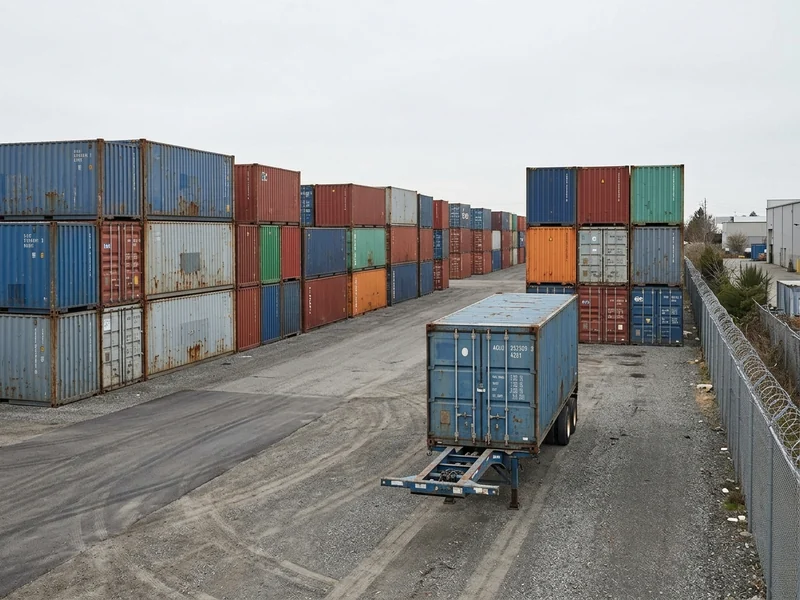
Grounded or on a chassis, and why it matters more than it sounds
A container on the ground is cheaper to store and slower to move. Getting it back on the road means a lift, which means a machine and a slot, and that is time you do not control on the morning you need it.
A container left on a chassis is ready to leave. Hook and go, no lift, no waiting. It costs more because the chassis is doing nothing else while it sits, and on a long stay that adds up faster than most people expect.
The right answer depends on one question nobody asks early enough: do you know when it leaves? A box with a date goes on a chassis if the date is close and on the ground if it is not. A box with no date goes on the ground, because paying chassis rent against an unknown is how a cheap decision becomes an expensive one.
That choice is worth making deliberately at drop rather than discovering at pickup. It is also worth revisiting: a box that has been on a chassis for three weeks waiting on a consignee is usually the wrong way round.
The reason a yard next to a drayage fleet is different
Most yard storage is a parking space. You bring the box, it sits, you come back for it, and moving it is your problem at both ends.
Here the moving is not a separate problem. The same operation pulls it off the terminal, puts it in the yard and takes it wherever it goes next, which means one conversation rather than three and one invoice instead of a chain of them.
It also means the yard understands what the box is doing rather than only where it is. A container waiting on a customs release is a different animal from one waiting on a consignee, and both are different from an empty waiting to go back. Those need different handling and different urgency, and a yard that only rents space treats all three the same.
What the yard is usually solving
A last free day arriving before anyone is ready. Pull the box, put it in the yard, stop demurrage. That is a pre-pull, and it is the most common reason a container ends up here.
A consignee who cannot take delivery yet. Their dock is full, their crew is out, their warehouse is not ready. The box waits somewhere cheaper than a chassis outside their gate.
An empty that cannot go back. A depot that is full, a line with no appointment, a return window that closed. Per diem runs while that plays out, and where the box waits changes what the wait costs.
Seasonal volume, staged equipment, freight held on someone else's decision. Most yard storage is a plan interrupted, which is why the useful question is never how much per day but how long is this actually going to be.
What is on the yard, and what is not
Five acres, secured and fenced, with the containers stored on it and the drayage network working out of the same operation. Loaded or empty, twenty foot, forty, forty-five.
It is a yard and not a warehouse, which is a real distinction rather than a wording one. Freight that needs to come out of the box, be counted, racked or handled goes to the dock instead, and that is a different service with different pricing. A container that simply needs to exist somewhere until it moves again belongs on the yard.
If you are not certain which of those you have, describe the freight and the deadline rather than the equipment. The answer is often that the box goes on the yard now and the freight comes out of it later, in that order, and that sequence is usually the cheapest one.
What to tell us when you call
The container number and whether it is loaded or empty, because an empty on a return clock is a different job from a loaded box waiting on a consignee.
Roughly how long, honestly rather than optimistically. It decides grounded against chassis, and that decision is most of the cost.
Where it is now and where it goes next, if that is known. If it is not known, say so, because a box with no destination is a normal thing to store and pretending there is a date is how the wrong equipment gets committed.
And if there is a clock running on it, a last free day, a return window, a per diem meter, say that first. It changes the order everything happens in.
Equipment
Ports
Questions
Straight answers
Can a loaded container be stored on a chassis?
Yes, and whether it should is the question worth answering at drop rather than at pickup. A box left on a chassis is ready to leave: hook and go, no lift, no waiting on a machine. It costs more, because the chassis is doing nothing else while it sits, and on a long stay that adds up faster than most people expect. A loaded box with a known date close by belongs on a chassis. A loaded box waiting on something nobody can date belongs on the ground.
How long can a container sit on the yard?
For a night or for a season. Five acres of secured, fenced yard in Hialeah Gardens, with no requirement to commit to a length of stay before the box arrives. What the honest answer to how long changes is the equipment, not the welcome: grounded for an open-ended wait, on a chassis for a short one. It is worth revisiting too. A box that has been sitting on a chassis for three weeks waiting on a consignee is usually the wrong way round, and nobody notices unless somebody looks.
Can you store an empty container the line will not take back?
Yes, and it is a common reason a box ends up on the yard. A depot that is full, a line with no return appointment, a return window that closed while the paperwork caught up. Per diem keeps running while that plays out, so where the empty waits changes what the wait costs rather than whether it costs anything. Say it is an empty on a return clock when you set it up, because that is a different job from a loaded box waiting on a consignee and it gets watched differently.
Is container yard storage the same as warehouse storage?
No, and the distinction is real rather than a matter of wording. A yard stores the container. A warehouse stores the freight. If the goods need to come out of the box, be counted, racked or handled, that is dock work, and it is a different service with different pricing. If the box simply needs to exist somewhere until it moves again, it belongs on the yard. Often the right sequence is both: the box goes on the yard now and the freight comes out of it later.
Do I have to arrange my own trucking to get a box into the yard?
No. The same operation that pulls the box off the terminal, the rail ramp or the river berth puts it in the yard and takes it wherever it goes next, which is one conversation instead of three and one invoice instead of a chain of them. That is the difference between this and a parking space. It also means a stored box is one call from moving again, which matters most on the morning somebody finally has room for it.
How do I get a rate?
Send the lane, the equipment, the container size and the port, and we come back with a number. Quotes and dispatch run 24 hours a day at quotes@dariaslogistics.com.
What does a drayage quote actually include?
The move itself, plus the accessorials people get surprised by later: chassis, pre-pull, per diem, demurrage, detention and storage. We would rather name them up front than add them to an invoice.