Service
FTL nationwide, from Miami
Full truckload out of South Florida to all 48 states.
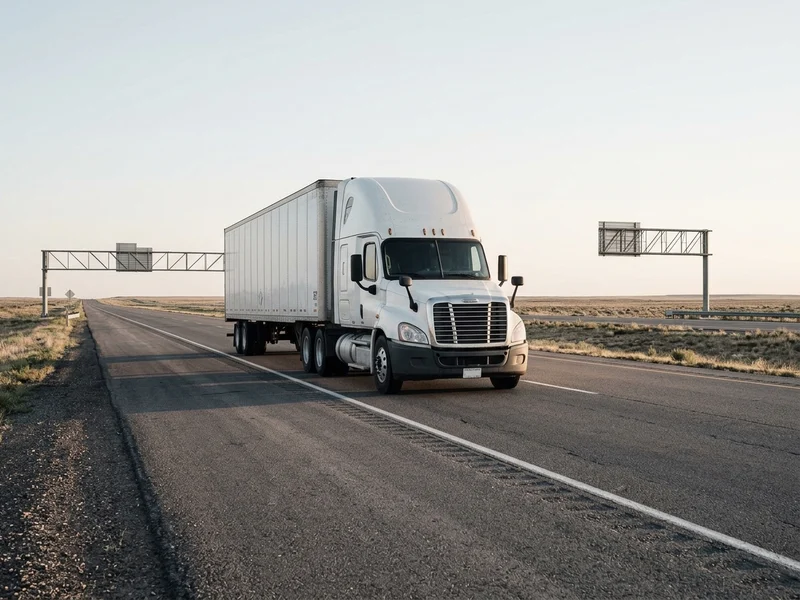
Out of South Florida, to all 48
A full truckload is yours alone: it loads, it drives, it delivers, and it does not sit in a terminal waiting for the rest of a trailer to fill up. For anything time-sensitive or fragile, that lack of handling is most of the value.
Florida geography makes this its own problem. Almost everything leaving the state travels north through a narrow corridor before it goes anywhere, so a run out of Miami carries several hundred miles before it is really on its way. Honest transit times start from that fact rather than from a mileage calculator.
If it came out of a container, transload first
Freight arriving by sea and heading a long way inland should usually come out of the ocean box before the long run. It returns the container, ends per diem, and stops the inland leg paying container and chassis rates for the privilege of staying in a box.
If the freight genuinely has to stay in the container the whole way, that is an inland container move, and it is priced differently. We will say which one is cheaper for your load rather than quoting whichever you happened to ask for.
How a truckload out of Florida is really scheduled
A run north starts with the corridor. Out of Miami the first leg is several hundred miles before the map opens up, so the first day usually ends somewhere in north Florida or south Georgia rather than at a state line that feels further along. Driver hours set the rest of it. A legal day is a legal day, and a lane that reads as two days on a mileage calculator is often two and a bit once the hours, the fuel stops and the traffic around Orlando and Jacksonville are counted in.
The far end is the other half of the schedule. A delivery with a firm appointment window has to be planned backwards from that window, and an appointment missed by an hour is frequently an appointment lost for a day. A receiver that takes freight first come, first served is easier to hit and harder to promise, because the queue is whatever it is on the morning. Say which one you have at the request stage and the transit time that comes back is one that can be held to.
Dry van, reefer or flatbed, and drop against live load
Truckload is the service, not the trailer. Most of it runs in a 53ft dry van, which suits palletized and cartoned freight and closes at both ends. Temperature-controlled freight goes in a reefer trailer, which is the same truckload move with a set point on it and a unit running the whole way. Anything that has to be loaded from the side or the top, or is too tall or too wide for a van, goes on open deck. The freight decides the trailer, and that decision is far cheaper made before dispatch than after a truck is standing at your dock.
Live load means the trailer waits at your dock while it is loaded and leaves when it is done. A drop trailer is left with you, loaded on your own time and collected later, which suits a shipper whose loading takes half a day and a dock that cannot hold a truck that long. A drop costs equipment time and a live load costs waiting time, so which is cheaper depends on how fast your dock actually moves rather than on how fast it is supposed to.
What travels with the load on paper
The bill of lading is the document the freight moves on: what it is, how many pieces, who shipped it, who receives it and the condition it was in when it was collected. It is signed at both ends, and the signature at delivery is what closes the move. If anything is short or damaged, it gets noted on the delivery receipt at the time. A note written then is a claim. The same note written a week later is an argument.
A purchase order number or a reference belongs on it too, because most receivers will not book in a delivery they cannot match to an order on their own system. Sealed trailers get a seal number recorded at loading and checked against the seal at delivery. None of this is paperwork for its own sake. It is the record that says the load arrived as it left, and it is the only thing that settles the question when somebody says otherwise.
Long-haul lanes out of Miami
Equipment
Ports
Questions
Straight answers
How long does a truckload from Miami to the rest of the country take?
Longer than a mileage calculator suggests, and the reason is geography rather than service. Almost everything leaving Florida travels north through a narrow corridor before it goes anywhere, so a run out of Miami carries several hundred miles before it is really on its way. Honest transit times start from that fact. A full truckload does help: it loads, drives and delivers without sitting in a terminal waiting for the rest of a trailer to fill, which is most of the value on anything time-sensitive.
What is the difference between FTL and LTL?
A full truckload is yours alone. It loads, it drives, it delivers, and nothing else shares the trailer. LTL freight moves through terminals and gets handled at each one while the rest of the load is assembled around it. For fragile freight, for anything on a deadline, and for anything expensive to have rehandled, that lack of handling is most of what you are buying. For a few pallets going a short distance the arithmetic often goes the other way, and it is worth asking which.
Should I transload before a long truckload run?
Usually yes, if the freight arrived by sea. Taking it out of the ocean box returns the container, ends per diem, and stops the inland leg paying container and chassis rates for the privilege of staying in a box. Freight can often be restacked to fill a trailer better than it filled the container, and that is where more of the saving comes from. If the seal genuinely has to stay on, that is an inland container move instead, and it is priced differently.
Do you run truckloads to all 48 states?
Yes, out of South Florida to all 48. A run can start at the Hialeah Gardens dock or at your own, and freight arriving through PortMiami, Port Everglades or the Port of Palm Beach can be devanned or transloaded first and then go straight out on the long leg from the same place, which saves a set of moves nobody enjoys paying for. What decides the rate is the lane, the weight, the trailer and the pickup and delivery windows.
What do you need to quote a full truckload?
Pickup and delivery addresses, the pickup and delivery windows, the commodity, the weight, and how it is packaged: pallets, crates or floor loaded, and how many. Say whether either end has a dock or needs the truck to bring its own unloading, because that changes the equipment rather than just the price. If the freight is temperature-controlled or placarded, say so at the request stage: both change which trailer and which driver the load needs.
How do I get a rate?
Send the lane, the equipment, the container size and the port, and we come back with a number. Quotes and dispatch run 24 hours a day at quotes@dariaslogistics.com.
What does a drayage quote actually include?
The move itself, plus the accessorials people get surprised by later: chassis, pre-pull, per diem, demurrage, detention and storage. We would rather name them up front than add them to an invoice.