Service
Fret réfrigéré
Température contrôlée, du genset du port à la remorque terrestre.
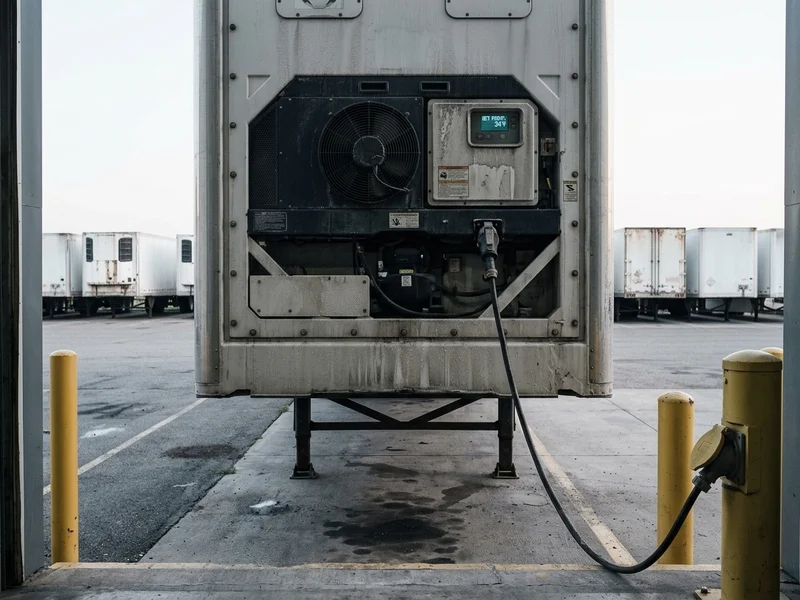
La chaîne du froid ne s'arrête pas au portail
Un conteneur réfrigéré qui descend d'un navire a besoin de courant sur tout le trajet. Sur la route, ça veut dire un genset sur le châssis, pas seulement une caisse reefer, et c'est la chose la plus souvent oubliée quand un reefer est chiffré comme un conteneur ordinaire.
Dites-nous que c'est un reefer au moment de demander le tarif, pas quand le chauffeur arrive. Ça change le châssis, ça ajoute le genset, et ça change ce que le déplacement coûte. Donnez-nous aussi la consigne de température, et si ça tourne en continu ou en cycle.
Où vit vraiment le réfrigéré sur cette côte
Port Everglades compte plus de 2,000 prises reefer. Tropical Shipping au Port of Palm Beach compte plus de 350 prises et tient les routes des Bahamas et des Caraïbes, donc un reefer à Palm Beach est presque sûrement là.
Vers l'intérieur, la décision est de garder la marchandise dans la caisse maritime ou de faire un transload sur une remorque frigorifique. Le transload met fin au per diem et rend la caisse, mais c'est une manutention sous température dirigée plutôt qu'un simple réempilage, et ça demande un quai capable de le faire correctement.
What it costs
The other half of the cold chain
Équipements
Ports
Questions
Réponses directes
Does a reefer container need a genset for drayage?
Yes, if it has to stay powered, and that is the single most common thing missed when a reefer is quoted as an ordinary container. A refrigerated container coming off a ship needs power the whole way, and on the road that means a genset on the chassis rather than just a refrigerated box. Say it is a reefer when you ask for the rate rather than when the driver arrives: it changes the chassis, it adds the genset, and it changes what the move costs.
What do you need to know about the temperature setting?
The set point, and whether the unit runs continuous or on cycle. Send both with the container number and the line at the rate request. Continuous holds a tighter band and burns more fuel; cycle is cheaper and lets the box drift between cut-in and cut-out, which is fine for some freight and out of spec for others. Anything with a narrow tolerance is worth flagging plainly, because that is where the difference between the two settings decides whether the load arrives in condition.
Which South Florida port handles the most reefer containers?
Port Everglades carries more than 2,000 reefer outlets, which makes it the center of gravity for refrigerated boxes on this coast. Tropical Shipping at the Port of Palm Beach carries more than 350 plugs and anchors the Bahamas and Caribbean trades, so a reefer at Palm Beach is almost certainly there. PortMiami handles refrigerated traffic too. As with any container, which terminal yours sits at follows the booking rather than your preference, so the line is the field that answers it.
Should I transload a reefer container or keep the freight in the box?
It depends on the distance and how long the box would otherwise be out. Transloading into a refrigerated trailer ends per diem and gets the container back to the line, which matters most on a long inland run. Staying in the ocean box avoids a handling step, which matters most on a short local delivery. Either way, moving refrigerated freight between a container and a trailer is a temperature-controlled handling job rather than a simple restack, so it needs a dock that can do it properly.
Can a reefer container be pre-pulled and held?
A pre-pull stops demurrage on a reefer the same way it does on a dry box, but a loaded reefer has to stay powered while it waits, so how long it can wait and where has to be settled before the pull rather than after. Per diem keeps running until the box goes back empty either way. If the line's clock is the one hurting, the answer is to empty the container, by devanning it at the dock or by transloading into a refrigerated trailer for the inland leg.
Comment obtenir un tarif ?
Envoyez la route, l'équipement, la taille du conteneur et le port, et nous revenons avec un chiffre. Tarifs et répartition 24h/24 à quotes@dariaslogistics.com.
Que comprend vraiment un devis de drayage ?
Le déplacement lui-même, plus les accessoires qui surprennent après coup : châssis, pre-pull, per diem, demurrage, detention et stockage. Nous préférons les nommer d'entrée plutôt que les ajouter à une facture.