20' HC / 25G1
حاوية 20 قدماً high cube
غير شائعة بجانب الـ high cube مقاس 40، وتستحق الذكر لأن من يملك واحدة منها لا يكاد يجد أحداً يذكرها أصلاً.
من الخارج ومن الداخل والباب
شكلها
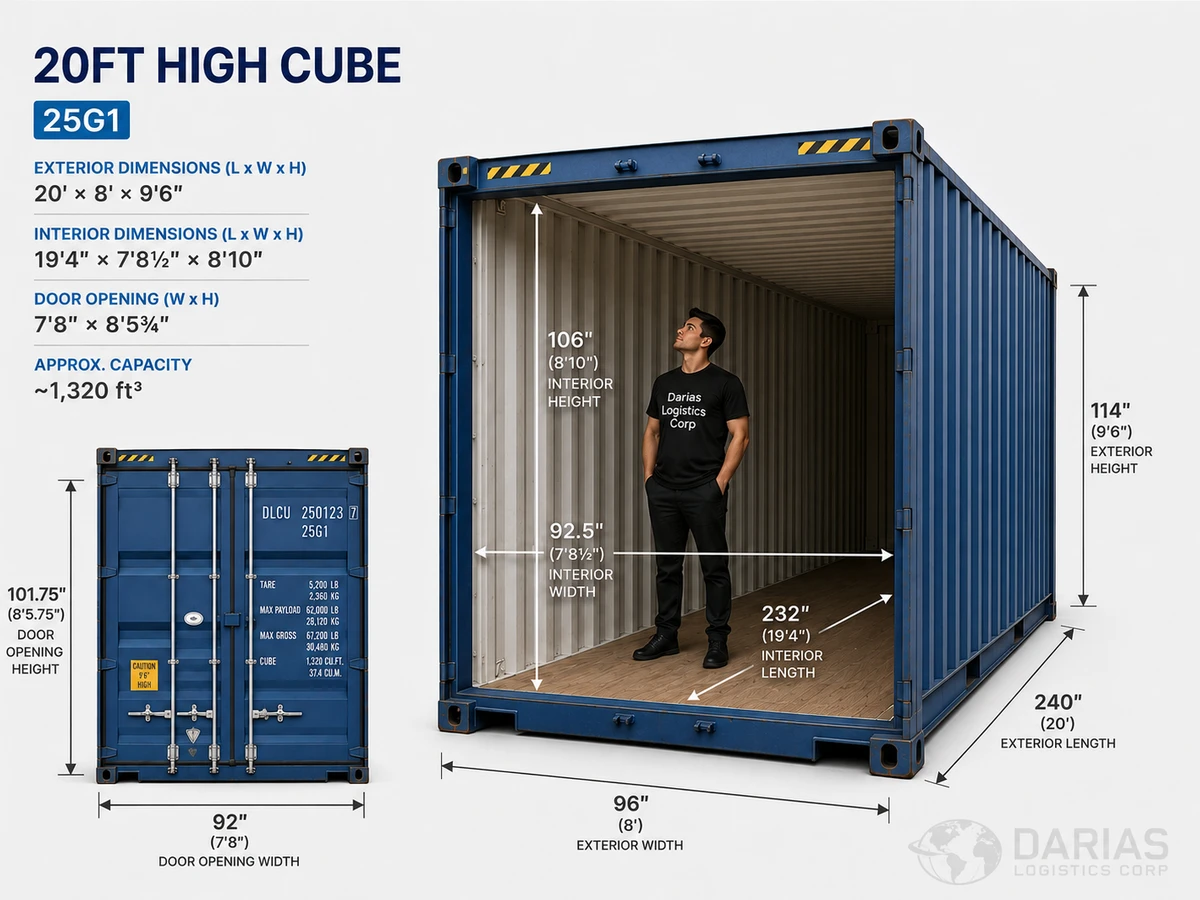
المواصفات
| القياس | حاوية 20 قدماً high cube |
|---|---|
| الطول الخارجي | 238.5″ 19′ 10.5″ |
| العرض الخارجي | 96″ 8′ |
| الارتفاع الخارجي | 114″ 9′ 6″ |
| الطول الداخلي | 232″ 19′ 4″ |
| العرض الداخلي | 92.5″ 7′ 8.5″ |
| الارتفاع الداخلي | 106″ 8′ 10″ |
| عرض الباب | 92″ 7′ 8″ |
| ارتفاع الباب | 101.75″ 8′ 5.75″ |
| الوزن الفارغ | 5,200 lb |
| أقصى حمولة | 62,000 lb |
| الوزن القانوني على الطريق | 38,000 lb |
| أقصى وزن إجمالي | 67,200 lb |
| السعة | 1,320 قدم³ |
| الشاسيه | Standard 20ft |
هذه أرقام اسمية لهذا النوع من المعدات. الحاويات الفعلية تختلف حسب المصنّع والخط الملاحي وسنة الصنع، والوزن الفارغ مطبوع على باب الوحدة التي تصلك. أرسل لنا رقم الحاوية ونتحقق من الوحدة الفعلية.
What a 20ft high cube is
A 20ft high cube is the short dry box with an extra foot of headroom. The footprint is the same as a standard 20, about 19 ft 10.5 in long and 8 ft wide, but it stands 9 ft 6 in tall outside instead of 8 ft 6 in. Inside that gives roughly 19 ft 4 in by 7 ft 8.5 in by 8 ft 10 in, and around 1,320 cu ft against the standard box's 1,172. The door opening is about 7 ft 8 in wide by 8 ft 5.75 in tall.
The figures here are nominal for the type rather than measurements of a particular unit. The extra steel costs a little weight, so a typical tare is around 5,200 lb where a standard 20 sits near 4,850, and the stencil on the door of the box you are actually given is the number to work from when the load is close to a limit.
When the extra foot is worth it
The high cube earns its keep on freight that is tall rather than heavy. Machinery on a skid, crated equipment, palletized goods that want a second tier, anything that ends up an awkward few inches over 7 ft 10 in and would otherwise be shipped on its side or split across two boxes. One extra foot of height on the same floor plan is often the difference between one container and two.
It is not the answer to a weight problem. The road limit does not improve with height, and the taller box is slightly heavier empty, so a dense load is still better off in a standard 20. It is also not the answer to a length problem: if the freight is long as well as tall, the 40ft high cube gives the same headroom over twice the floor, and on the South Florida trades a 45 gives more again.
What people get wrong: the height is the whole load, not the box
Florida's legal travel height is 13 ft 6 in, and the number that has to clear it is everything from the road up: the chassis deck, then the 9 ft 6 in of container standing on it. A 20ft high cube rides inside that on ordinary routes, which is why the standard 20ft chassis is the normal answer here and no gooseneck trick is needed. The clearances that catch people are local: a warehouse canopy, an older overpass, a low dock door on the delivery side.
The second thing people get wrong is the door. Interior height is about 8 ft 10 in and the opening is roughly four inches less, so a crate measured against the ceiling can still refuse to go through the end. Measure the load on its pallet or skid, since the pallet counts, and check the width at the same time: 7 ft 8 in of opening does not take two 48 in pallet edges side by side.
What to send to get it booked
Name the size code as well as the size. A box described only as a 20 is planned as a standard 20, and the high cube is uncommon enough that the assumption is reasonable until you correct it. Send the container number, the steamship line and the terminal, because those decide the gate requirement and the appointment before anything else does.
Then the delivery address, the last free day, and the cargo weight as it reads on the bill of lading. If the load is tall enough that you are counting inches, add the cargo height on its pallet and the height of the door it has to go through at the far end. If it is heavy as well, say so, since a 20 of either height needs a tri-axle and a permit once the cargo passes roughly 38,000 lb.
Work it out first
تخرج من
تذهب إلى
أسئلة
إجابات مباشرة
What is the difference between a 20ft high cube and a 20ft standard?
One foot of interior height, and nothing else that matters. Both are about 19 ft 10.5 in long and 8 ft wide outside, both hold roughly the same weight on the road, and both sit on the same 20ft chassis. The high cube stands 9 ft 6 in tall outside instead of 8 ft 6 in, which gives about 8 ft 10 in inside against 7 ft 10 in and lifts capacity from 1,172 to 1,320 cu ft. Empty, it weighs a few hundred pounds more.
How tall is a 20ft high cube inside?
About 8 ft 10 in of nominal interior height, with the door opening a little under that at roughly 8 ft 5.75 in. The door is the figure that decides whether something goes in, since anything loaded through the end has to clear the header and the sill rather than the ceiling. If your cargo is close to either number, measure the crate with its skid or pallet included, because the pallet is part of the height.
Will a 20ft high cube clear a 13 ft 6 in bridge in Florida?
Almost always, but the check is the combination and not the box. Florida's legal height is 13 ft 6 in, and what has to clear it is the chassis deck plus the 9 ft 6 in container sitting on it. A standard 20ft chassis carries a high cube inside that limit on ordinary routes. The places to look twice are low canopies, older overpasses on a local approach and the customer's own dock door, which is often the tightest opening on the trip.
Are 20ft high cubes hard to find?
They are uncommon, which is worth knowing before you plan around one. The 40ft high cube is everywhere and the 20ft version is not, so availability follows the line and the trade rather than the season. If you have one arriving, say the size code on the booking, because a box described only as a 20 gets planned as a standard 20 and the difference shows up when someone measures the load height at the dock.
ما القياسات الداخلية لـ حاوية 20 قدماً high cube؟
الطول والعرض والارتفاع من الداخل مذكورة في جدول المواصفات في هذه الصفحة، إلى جانب القياسات الخارجية وقياس فتحة الباب. وفتحة الباب هي التي تقرر إن كانت الآلة تدخل أم لا، وهي أصغر من الحيز الداخلي.
ما الشاسيه الذي يحتاجه حاوية 20 قدماً high cube؟
Standard 20ft. نحن نحضر الشاسيه معنا، فلا يتوقف الحجز على ما هو متوفر في المحطة ذلك الصباح.
هل تنقلونه بوزن زائد؟
نعم، على الشاسيه الصحيح وبالتصريح الصحيح. الوزن الزائد حديث منفصل عن مقاس الحاوية، وللموانئ حدودها الخاصة فوق حدود الولاية.
من أين تسحبون حاوية 20 قدماً high cube؟
Port of Miami, Port Everglades, Port of Palm Beach, POMTOC, South Florida Container Terminal, Seaboard Marine, Florida International Terminal, Port Everglades Terminal, Crowley, King Ocean, MSC, Tropical Shipping, Antillean Marine, FEC Port Everglades ICTF, FEC Hialeah rail ramp and CSX ramp.
ما هو الـ last free day؟
آخر يوم يمكن أن تبقى فيه حاويتك داخل المحطة قبل أن تبدأ رسوم التخزين. إذا تجاوزته، يبدأ الـ demurrage بالتراكم يومياً، ولهذا فإن الـ pre-pull أرخص من الانتظار في أغلب الحالات.
ما هو الـ pre-pull؟
نسحب الحاوية من المحطة قبل أن تكون جاهزاً لها ونحفظها في ساحة. هذا يوقف الـ demurrage بأسعار المحطة، ويرفع الضغط عن جدول الاستلام عندك.
ما الفرق بين الـ demurrage والـ per diem والـ detention؟
ثلاثة رسوم مختلفة من جهات مختلفة. الـ demurrage هو المحطة تحاسبك على بقاء البضاعة داخل البوابة بعد المدة المجانية. الـ per diem هو الخط الملاحي يحاسبك على بقاء حاويته خارج المحطة بعد المدة المجانية. الـ detention هو وقت الناقل، ويُحتسب حين ينتظر السائق عند رصيفك بعد انتهاء النافذة المجانية. وقد تجري كلها في وقت واحد، وهكذا تصبح الفاتورة سيئة بسرعة.
كيف أحصل على سعر؟
أرسل الخط، والمعدة، ومقاس الحاوية، والميناء، ونرد عليك برقم. التسعير والتشغيل على مدار 24 ساعة على quotes@dariaslogistics.com.
ما الذي يشمله عرض سعر الـ drayage فعلاً؟
النقلة نفسها، إضافة إلى الرسوم الإضافية التي يفاجأ بها الناس لاحقاً: الشاسيه، والـ pre-pull، والـ per diem، والـ demurrage، والـ detention، والتخزين. نفضّل تسميتها من البداية على إضافتها إلى فاتورة.