خدمة
Fulfillment and distribution
Goods arrive by sea in one large piece and leave in many small ones. Between those two facts sit the things that decide whether it works: stock counted at unit level rather than by pallet, something that says an order happened, and a container that has to be emptied and returned before per diem eats the margin. Here is how that path actually runs, and what to have ready before it starts.
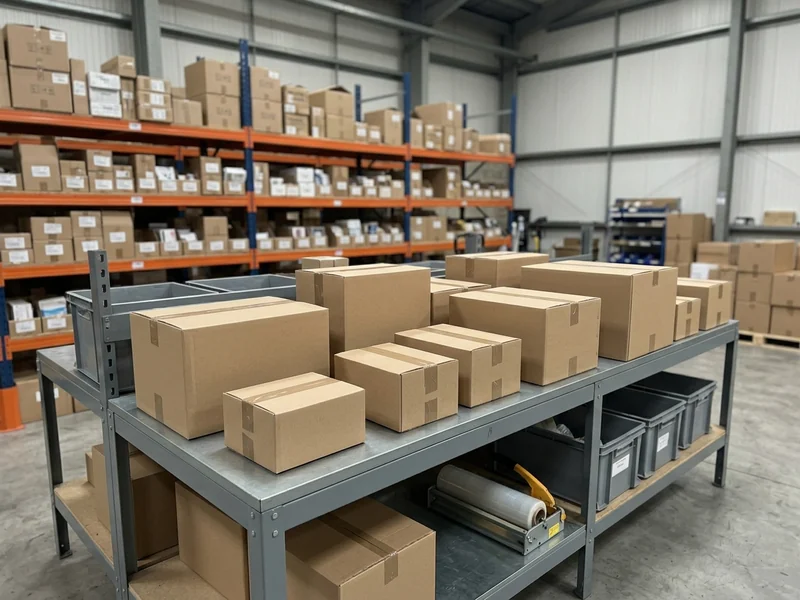
The unit of work changes, and that is the whole problem
Freight arrives as a shipment. It leaves as an order. Everything difficult about fulfillment lives in that sentence.
A shipment is counted in pallets and cartons, and a warehouse that handles freight knows where a pallet is. An order is counted in units, and answering it needs stock recorded at unit level: not four pallets of SKU-A, but forty-seven pieces on a shelf, decremented every time one leaves. That is a different kind of record and it is the thing to establish first, before anything else about a fulfillment arrangement is worth discussing.
The second requirement is a feed. Something has to say an order happened, whether that is a connection to a sales channel, a file each morning, or an email. It matters less which than that it exists and is agreed in advance.
The third is the label. Small parcels leave on parcel carriers, which is a different set of accounts and rates from freight, and whose accounts they are is a question worth settling on day one rather than in week three.
Two different businesses wear the same word
Direct-to-consumer means single units to a doorstep on a parcel carrier, with the volume and the returns rate that implies. It is what most people mean by fulfillment and it is a software business as much as a warehouse one.
Business to business means cases and pallets to a retailer, a distributor or a dealer, released on order rather than on a shipment. Same building, same shelf, completely different outbound. It also comes with retailer compliance: routing guides, ASN and EDI messages, on-time-in-full measurement, chargebacks when the pallet is built wrong or the label is in the wrong place.
Which one you are is the first question, because the answer changes the systems, the packaging and the cost. Imported goods far more often need the second than people expect: the container did not arrive so that a hundred consumers could each get one, it arrived so that a distribution network could be refilled.
The container end, which nobody plans for
Every fulfillment conversation starts at the shelf and works forwards. For imported goods it should start at the terminal and work in, because that end carries the costs nobody budgets.
The box has to come off the terminal before demurrage runs. It has to be emptied, which for a floor-loaded 40ft is a crew and a day rather than a forklift and an hour. The goods have to be counted as they come out, because a discrepancy found at the container is a claim and the same discrepancy found six weeks later on a shelf is an argument. Then the empty has to go back, and per diem runs the whole time it does not.
Do that near the port and the container is emptied and returned the same day. Do it at a fulfillment warehouse an hour inland and you have paid for a second move, a longer per diem clock, and a devanning crew who do this less often.
This is the part of the path most fulfillment arrangements handle worst, and it is entirely solvable by deciding it early.
What happens to the goods between the box and the order
Received against the paperwork and counted, with discrepancies photographed while the container is still there.
Put away, which is where unit-level stock actually begins: a location recorded against a quantity, so a pick has somewhere to go.
Prepared, which is the work that varies most. Cases opened and rebuilt into what the destination sells: retail-ready packs, multipacks, bundles, poly bagging, kitting several items into one sellable unit, and relabelling for the market the goods are entering. If the receiver has a packaging spec or a routing guide, that document decides most of this, and it is worth sending before the goods arrive rather than after.
Then picked, packed and released, and afterwards the part everyone forgets to ask about: returns, which for consumer goods are not an edge case but a percentage.
What to have ready before you ask
A rough unit count and how many SKUs, because everything about the arrangement scales off that.
Whether the orders are consumer parcels or cases and pallets to businesses, and if there is a retailer involved, their routing guide.
How the order information would reach a warehouse: a sales channel, an EDI relationship, a spreadsheet, or nothing decided yet, which is a perfectly normal answer.
How the goods arrive. If the answer is a container at PortMiami or Port Everglades, say so early, because the container end is the half that gets planned last and costs the most when it goes wrong.
Send those and the conversation starts in the right place rather than three emails in.
المعدات
الموانئ
أسئلة
إجابات مباشرة
Do you do fulfillment for Amazon FBA prep?
Yes. FBA prep is done here every day: cases opened and rebuilt, poly bagging, bundling into multipacks, relabelling, and building cartons or pallets to a written spec. Marketplace requirements change, so send the current spec and the labelling rules you have been given and the job is built to them before anything ships. A spec read in advance is worth more than an assurance.
What is the difference between fulfillment and warehousing?
The unit of work. Warehousing counts pallets and cartons and knows where a pallet is. Fulfillment counts units and has to answer an order, which needs stock recorded at unit level: not four pallets of one item, but forty-seven pieces on a shelf, decremented every time one leaves. That is a different kind of record and it is the thing to establish first. Everything else about a fulfillment arrangement, the packaging, the labels, the carrier accounts, follows from getting that part right.
How do orders reach the warehouse?
Something has to say an order happened, and it matters less which form that takes than that it exists and is agreed in advance. A connection to a sales channel, an EDI relationship, a file each morning, or an email with a list on it are all workable shapes. What does not work is starting without deciding, because the gap shows up in week three as orders sitting unreleased. Say what you already use, or say that nothing is decided yet, which is a perfectly normal answer at the start.
Can you pack to a retailer's routing guide?
Yes. Send the routing guide before the goods arrive and it decides most of the work: how the pallet is built, where the label goes, what the carton marks say, which carrier is routed and what the delivery window is. Retailer programs also carry ASN and EDI messages, on-time-in-full measurement and chargebacks when a pallet is built wrong, so the document is worth reading together early rather than discovering at the first shipment. Each requirement is confirmed against the guide before the first shipment leaves.
What happens to returns?
For consumer goods returns are not an edge case, they are a percentage, and they are worth planning at the same time as the outbound rather than after the first month. A returned unit arrives, gets checked against what it should be, and then goes one of three ways: back into sellable stock, into a repack or relabel so it can be sold again, or aside as damaged. Decide in advance who makes that call and on what rule, because the rule is what keeps a returns pile from becoming permanent storage.
كيف أحصل على سعر؟
أرسل الخط، والمعدة، ومقاس الحاوية، والميناء، ونرد عليك برقم. التسعير والتشغيل على مدار 24 ساعة على quotes@dariaslogistics.com.
ما الذي يشمله عرض سعر الـ drayage فعلاً؟
النقلة نفسها، إضافة إلى الرسوم الإضافية التي يفاجأ بها الناس لاحقاً: الشاسيه، والـ pre-pull، والـ per diem، والـ demurrage، والـ detention، والتخزين. نفضّل تسميتها من البداية على إضافتها إلى فاتورة.