Destination
Miami to Ocala
Horse country and heavy equipment both. Ocala takes a lot of oversize agricultural and machinery freight, so this lane sees more step deck and lowboy than most Florida runs.
Get a quote
Tell us the port, the box and the delivery address and we will price Ocala both ways where it is worth it.
Or email quotes@dariaslogistics.com.
Last free day today or tomorrow?
The clock runs at the port, not on the road
Demurrage starts at the terminal the day after your last free day, whether the freight is going five miles or five hundred. We pre-pull the container onto the yard first and run to Ocala when you are ready, rather than letting the box sit at the terminal earning charges while the receiver sorts out a door.
Through, or transloaded
Two ways to run Ocala
Through on a chassis. The container itself goes to Ocala. Simplest when the receiver can turn it around quickly, because the box, the chassis and the per diem clock all travel with it.
Transloaded to a trailer. The freight comes out of the container at the warehouse and onto a trailer. The empty goes back to the line in Miami the same week, and the 320-mile run is not paying container and chassis rates. Past about 250 miles this is usually the cheaper answer, which is why we quote both.
The run from the port to Ocala
Ocala is about 320 road miles from PortMiami, up the Florida Turnpike and on to I-75, and transit is next day. It is one of the long Florida lanes, far enough that how the freight travels matters more than which road it takes to get there.
Both modes get priced. Running the container through means the box is away from the port for days and paying chassis and per diem the whole time. Transloading at the Hialeah Gardens warehouse near the port puts the load on a trailer and sends the empty back to the line, which is usually the cheaper answer at this distance. The exception is freight that has to stay in the box, and that gets quoted too.
Delivering in Ocala
Ocala is the seat of Marion County, on I-75 in central Florida, horse country and heavy equipment country at the same time. A lot of the freight coming here is oversize agricultural gear or machinery, so this lane runs step deck and lowboy more than most Florida runs do. For those loads the ground at the delivery and the machine waiting to take the piece off matter far more than any dock.
For a container, send the container number, the steamship line, the last free day and the delivery address. For machinery, send the length, width, height and actual weight, because those four numbers decide the trailer, the route and the permits.
What runs it
Everything we run
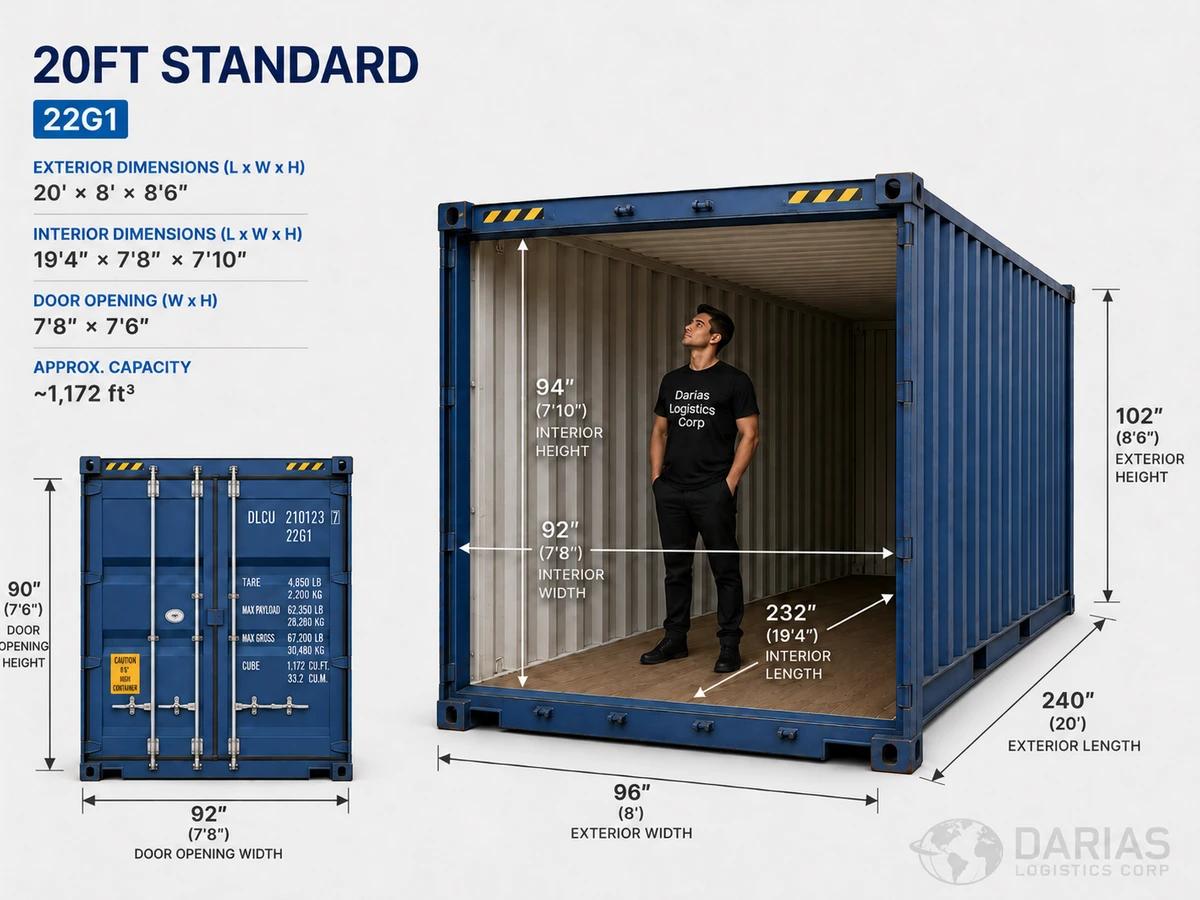
20ft standard
20' GP / 22G1
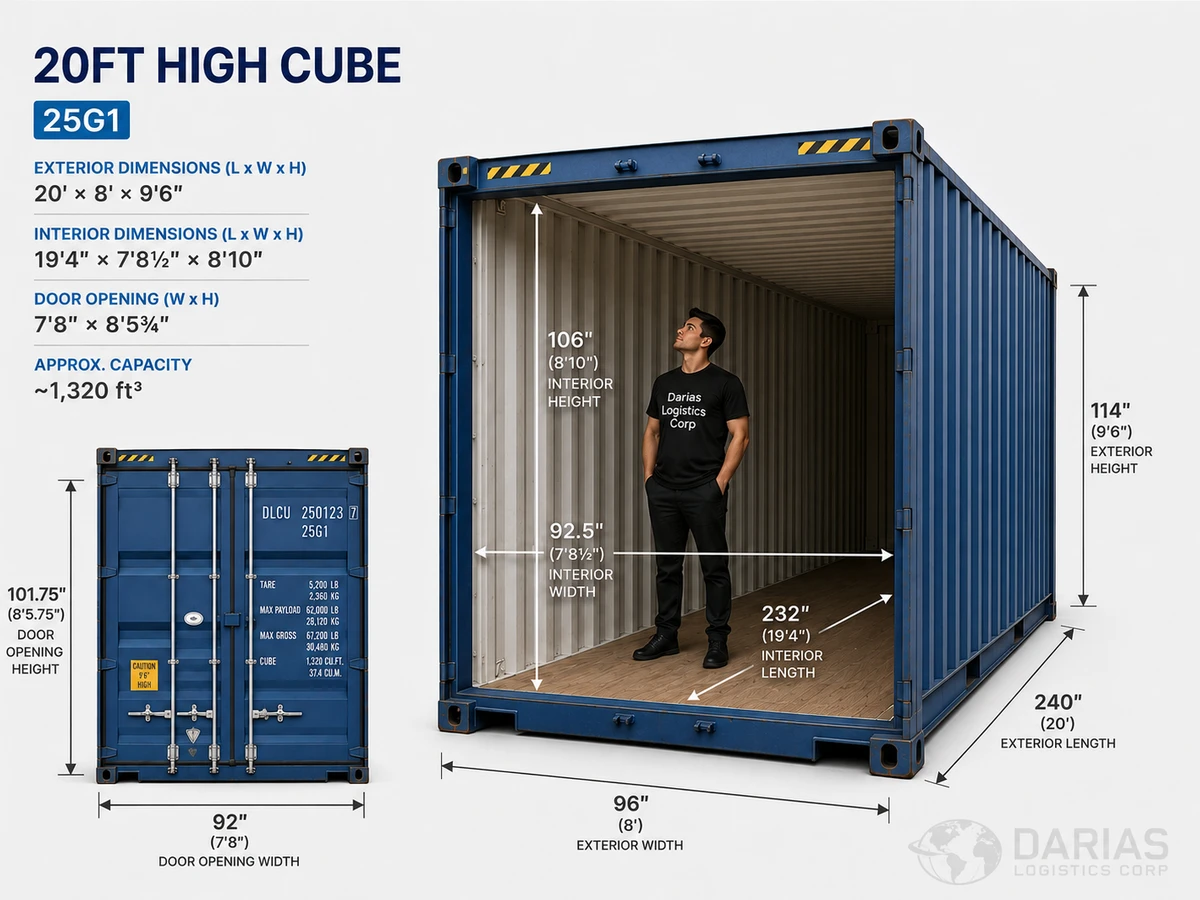
20ft high cube
20' HC / 25G1
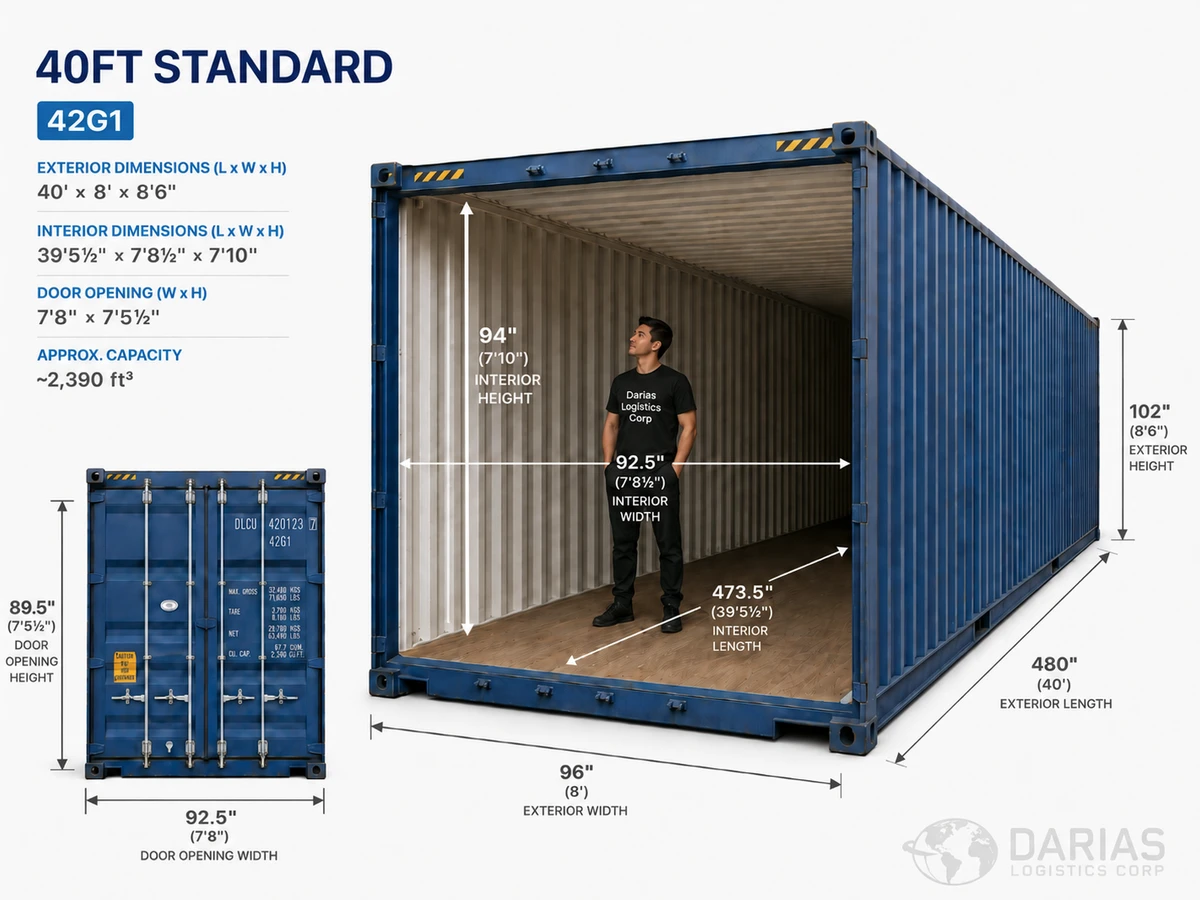
40ft standard
40' GP / 42G1
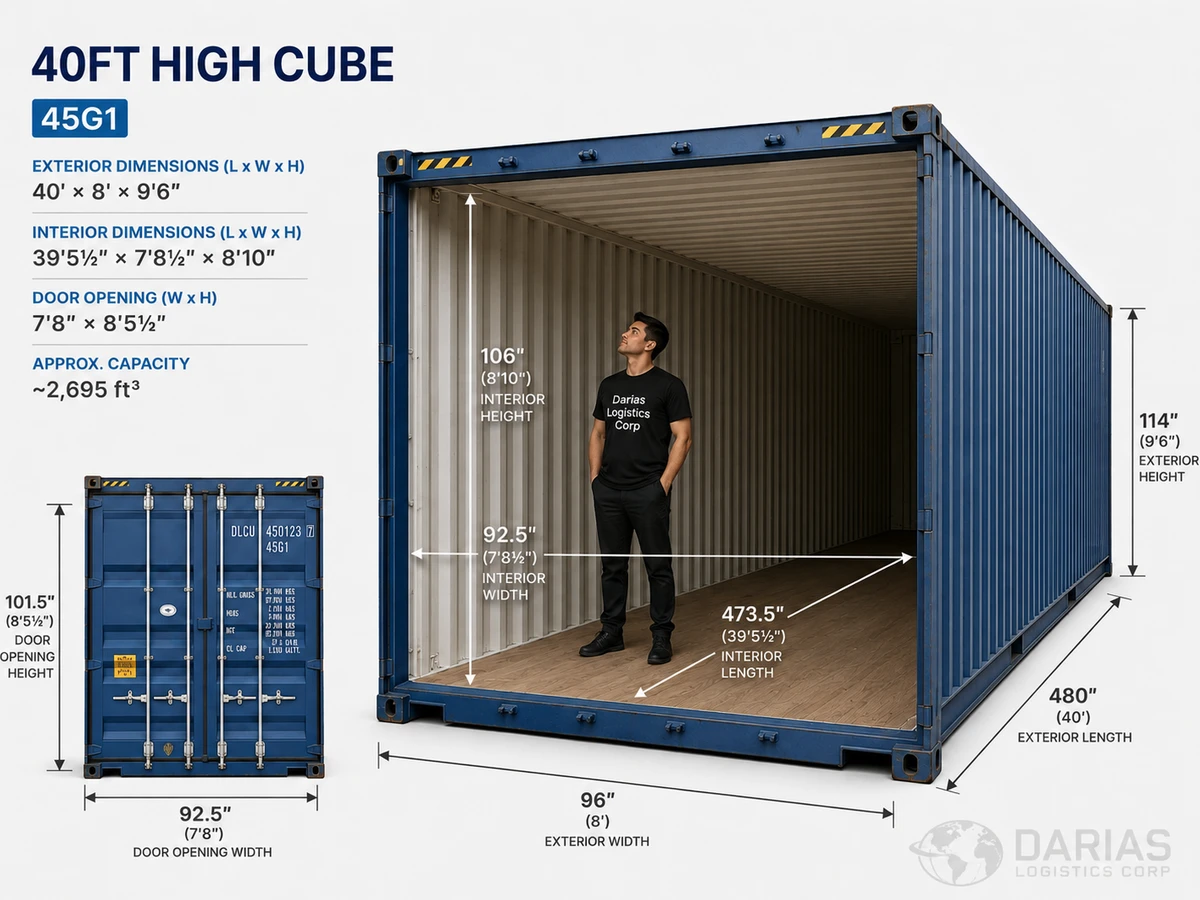
40ft high cube
40' HC / 45G1
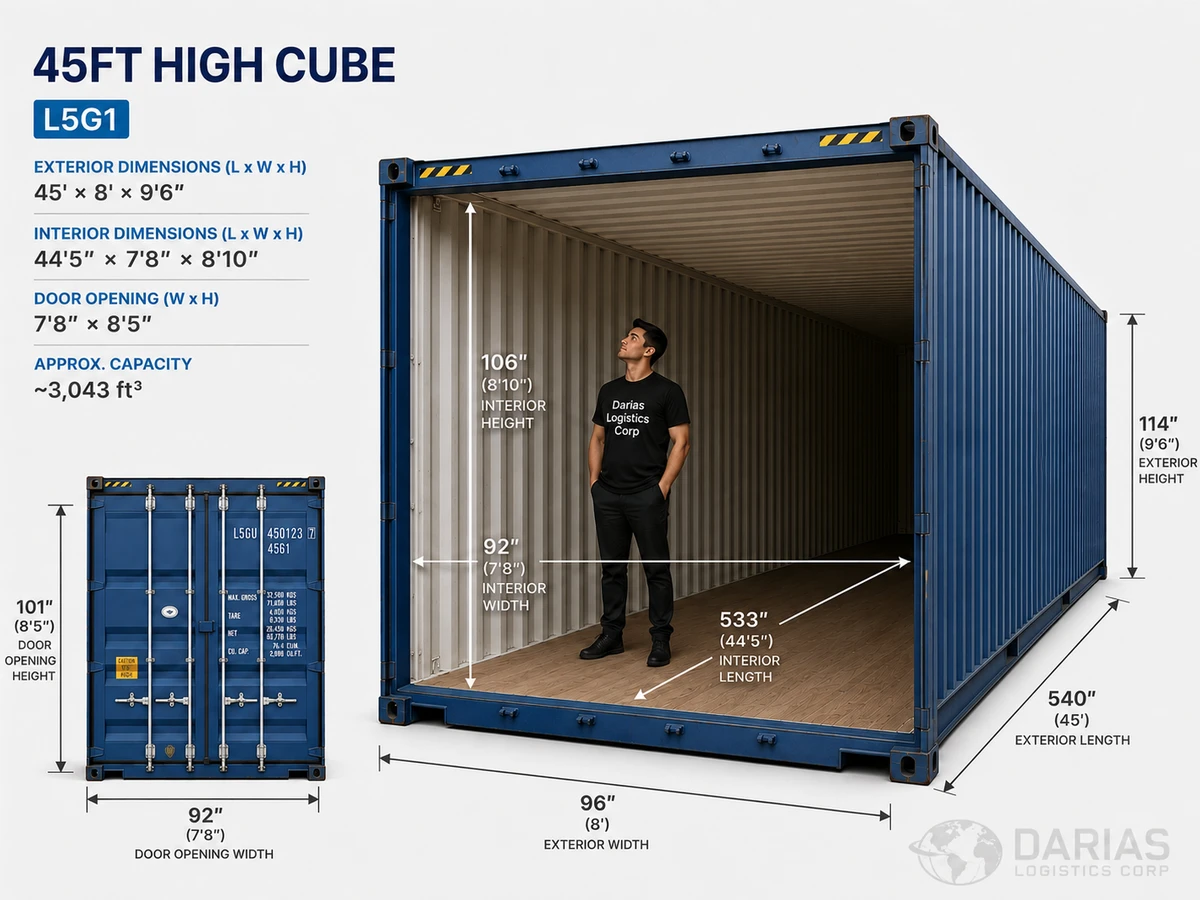
45ft high cube
45' HC / L5G1
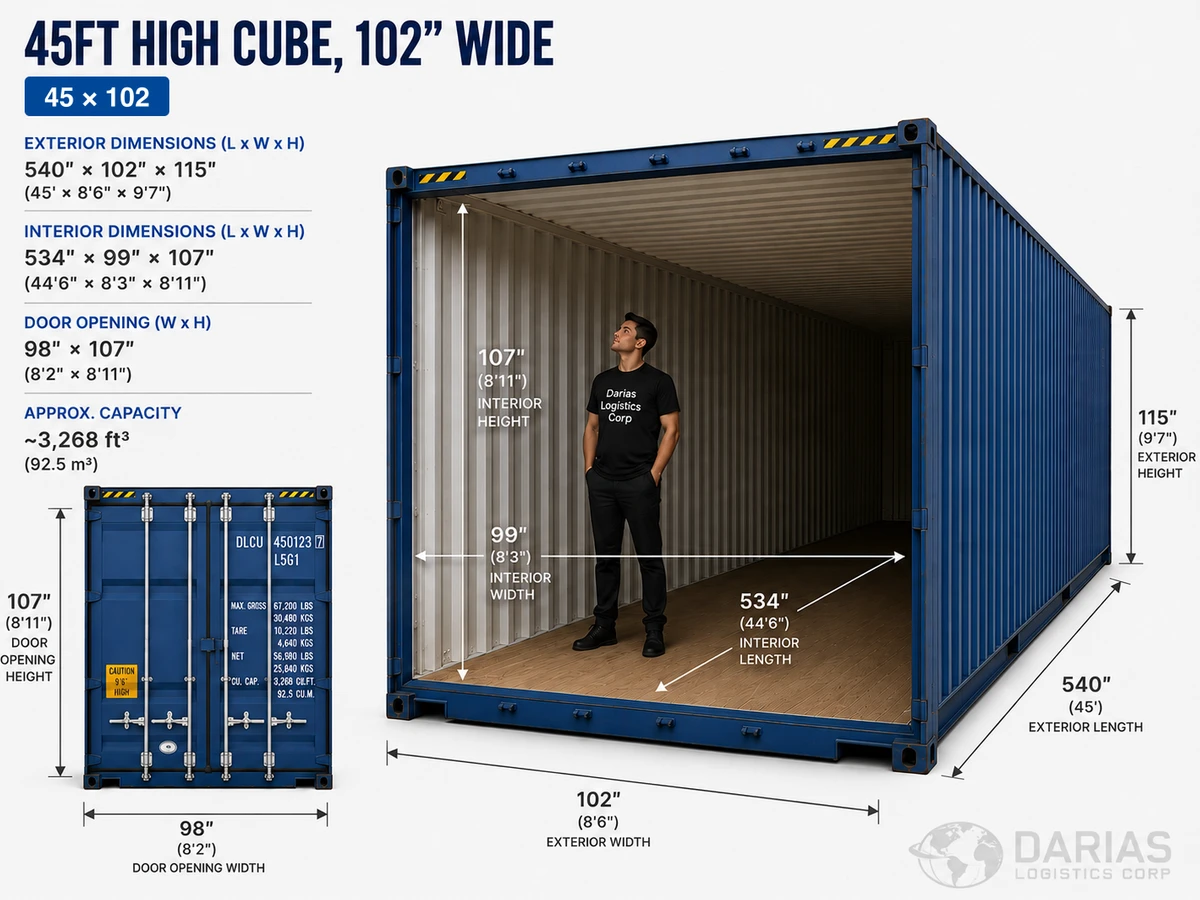
45ft high cube, 102in wide
45' HC wide body, 102in
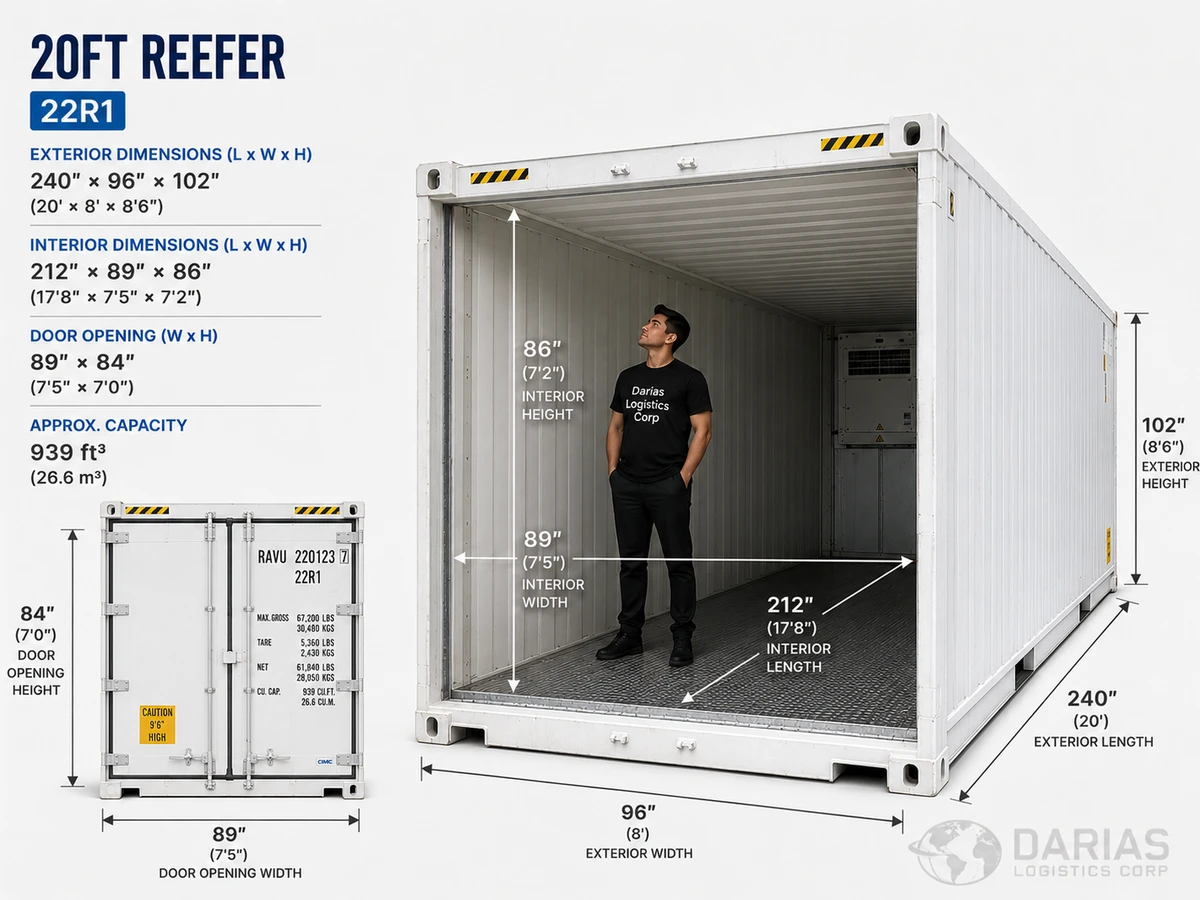
20ft reefer
20' RF / 22R1
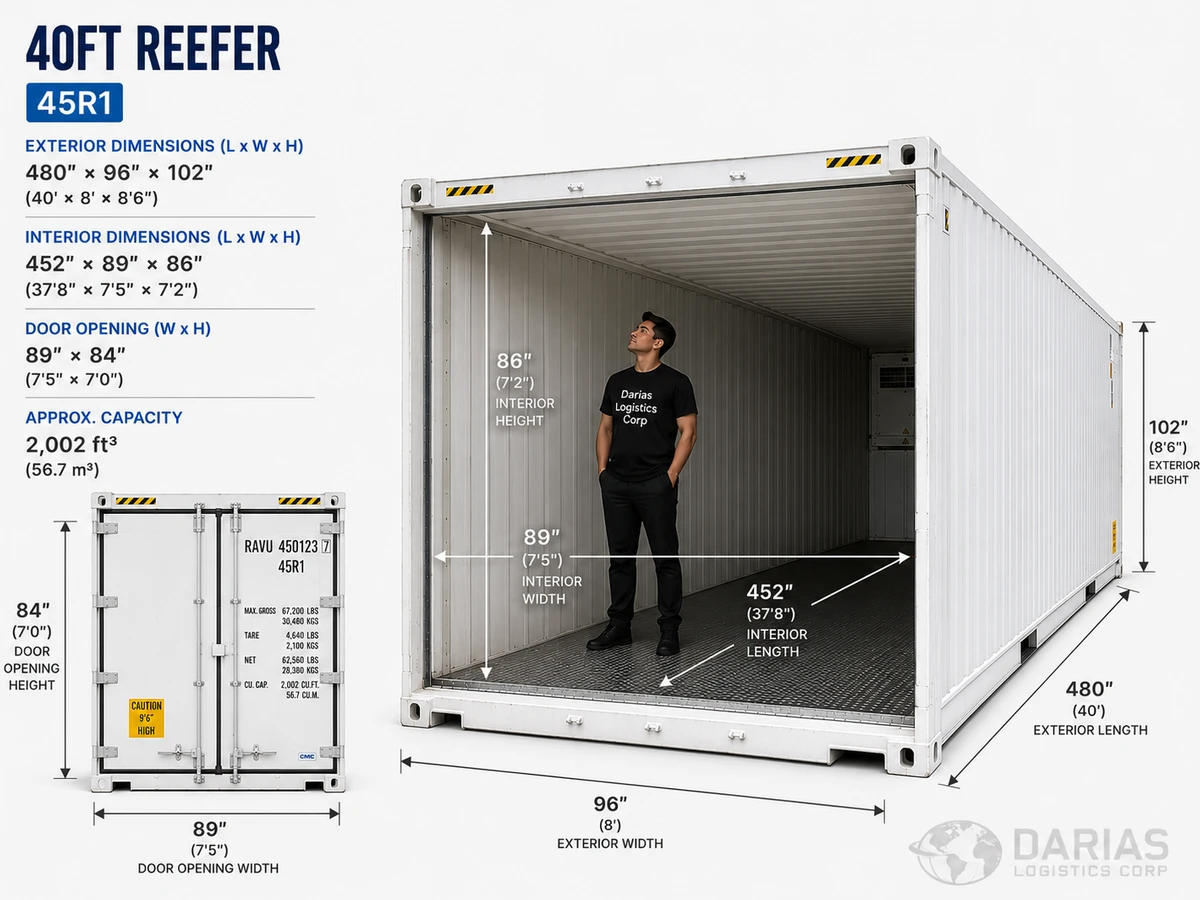
40ft reefer
40' RF / 42R1
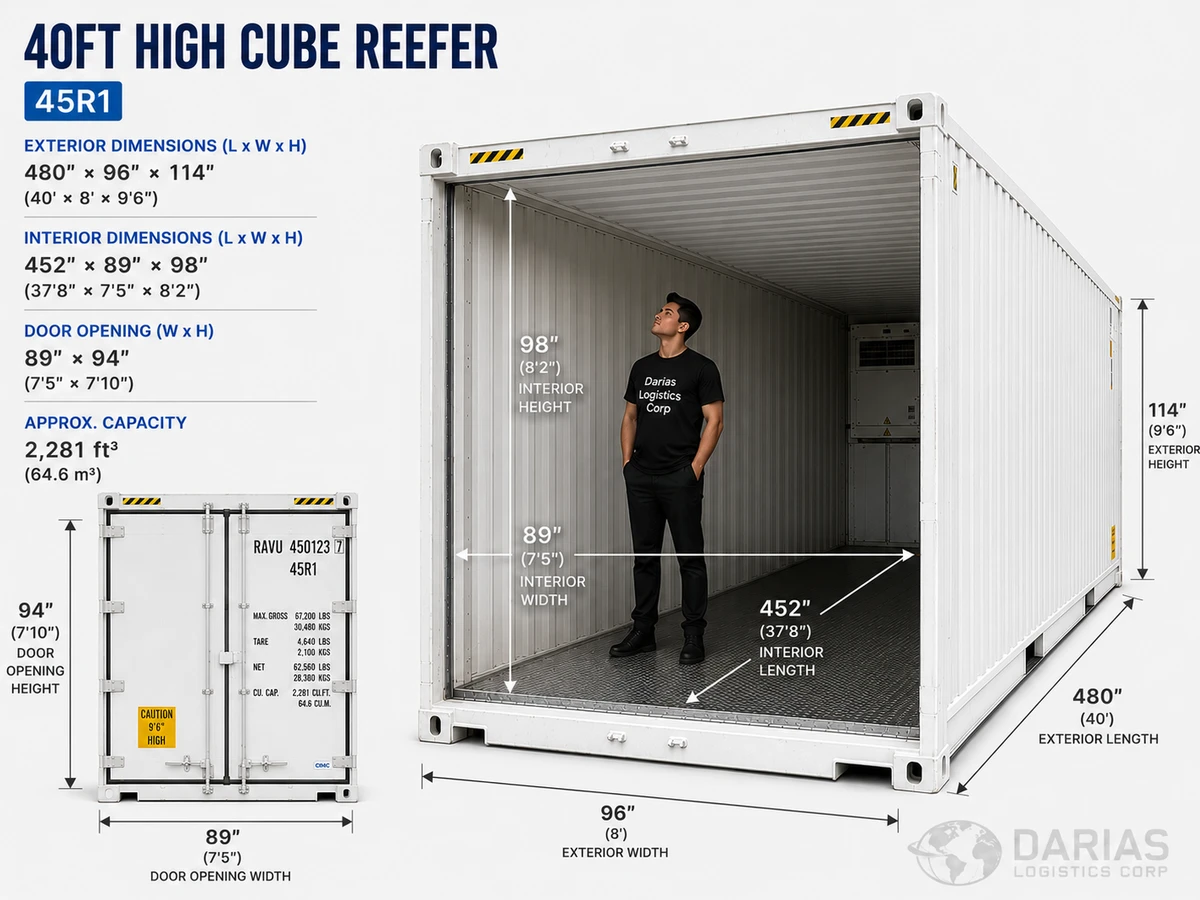
40ft high cube reefer
40' RH / 45R1
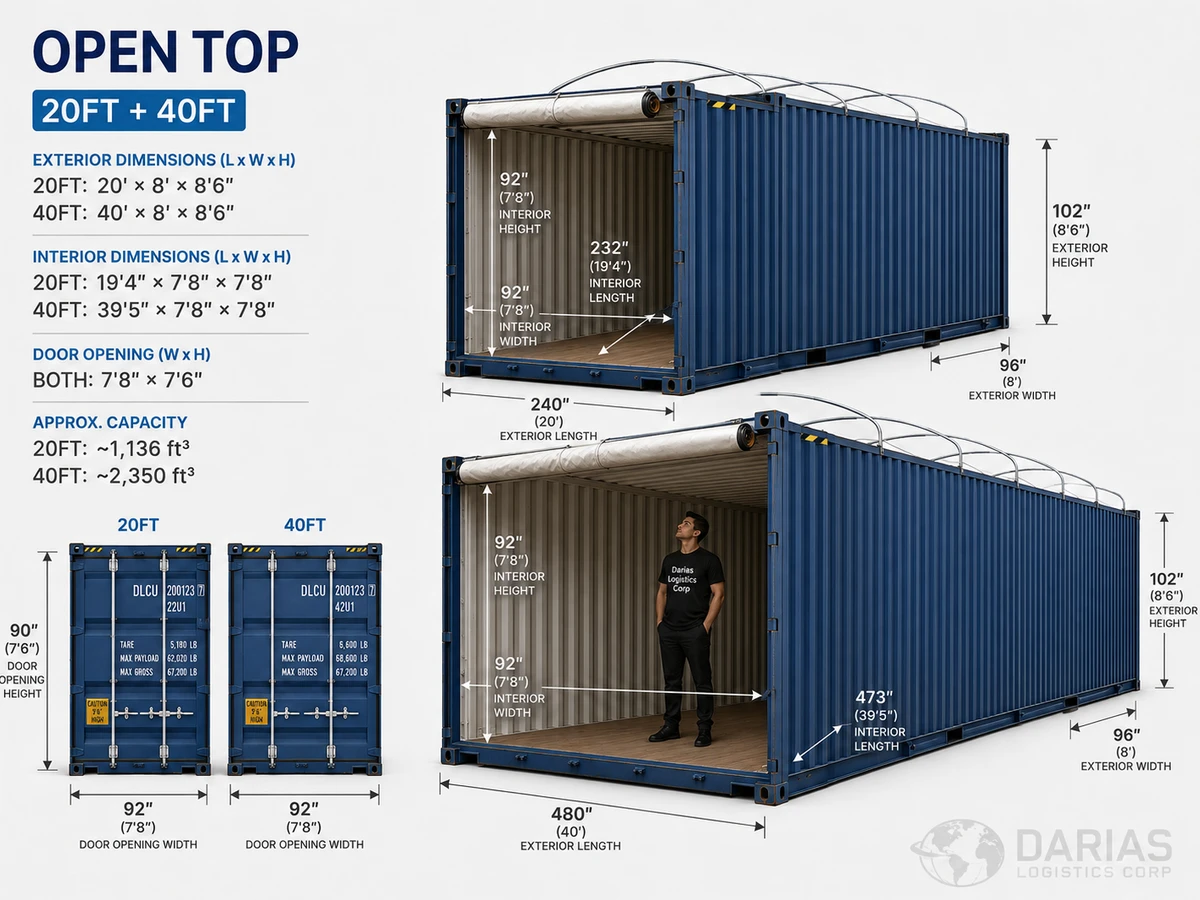
Open top
20' 22U1 / 40' 42U1
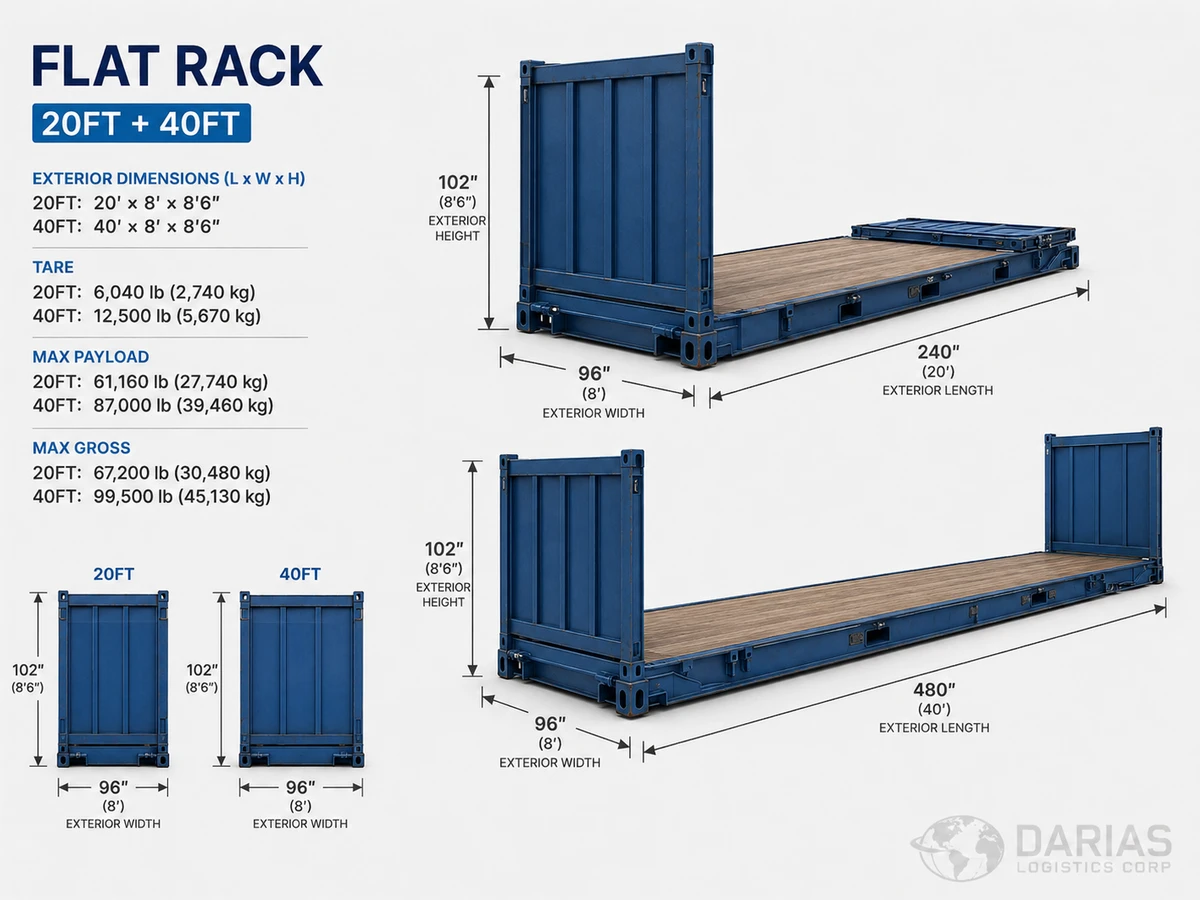
Flat rack
20' / 40' FR
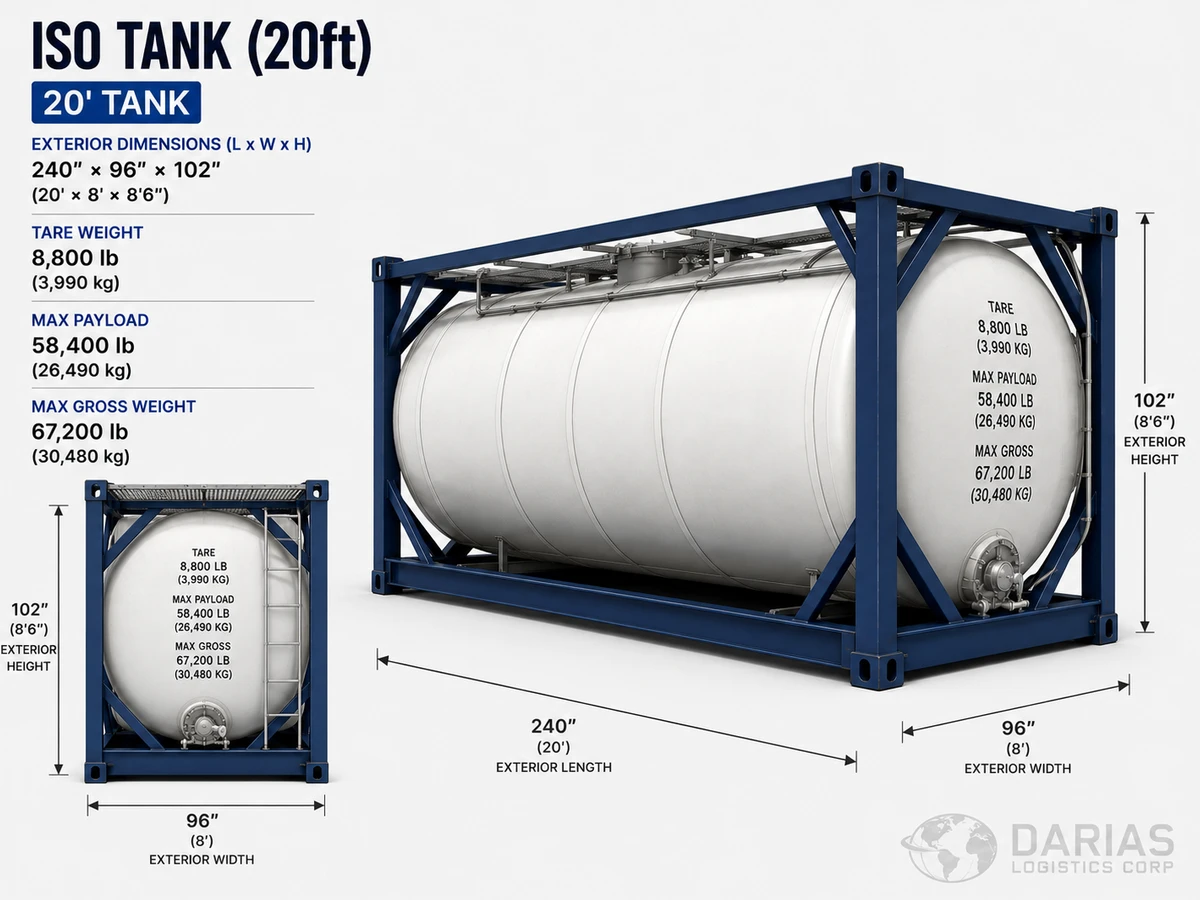
ISO tank
20' tank
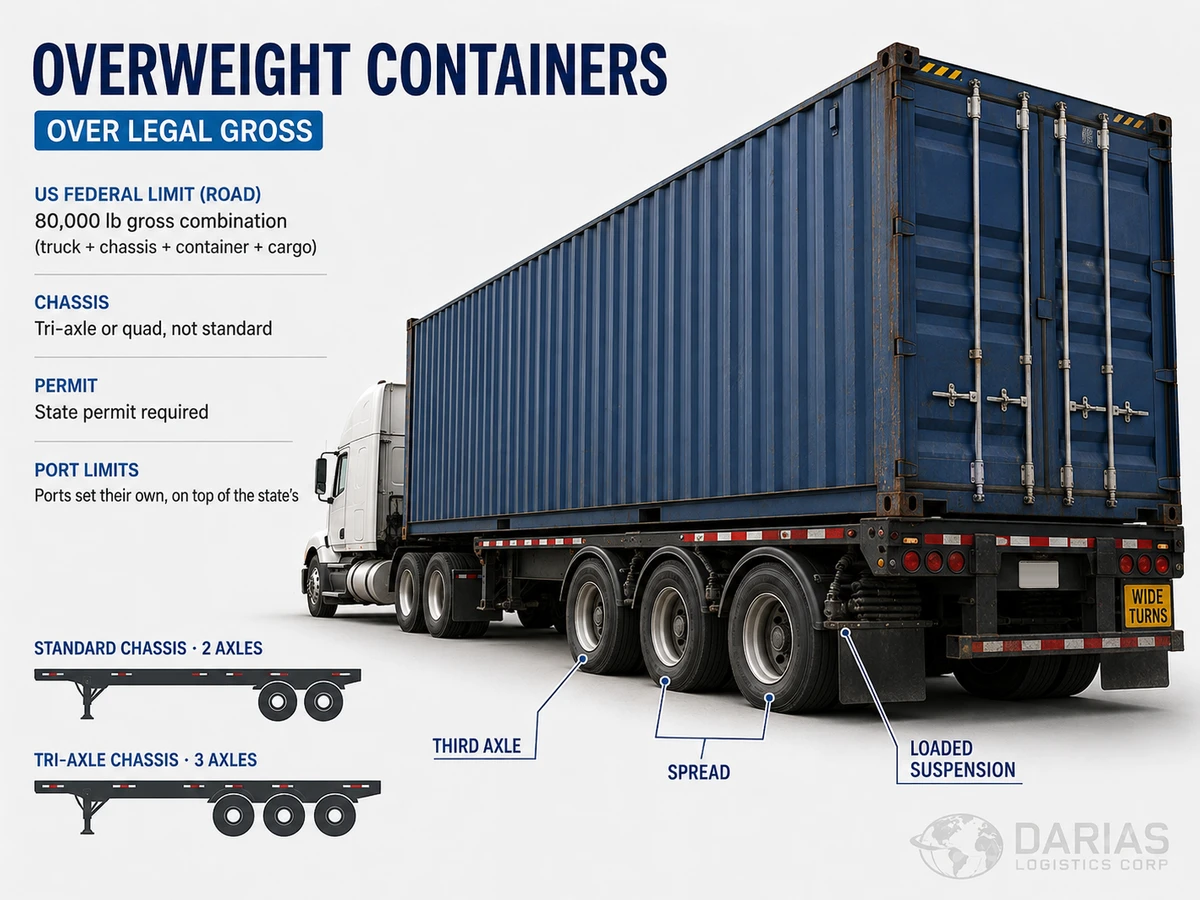
Overweight containers
any, over legal gross
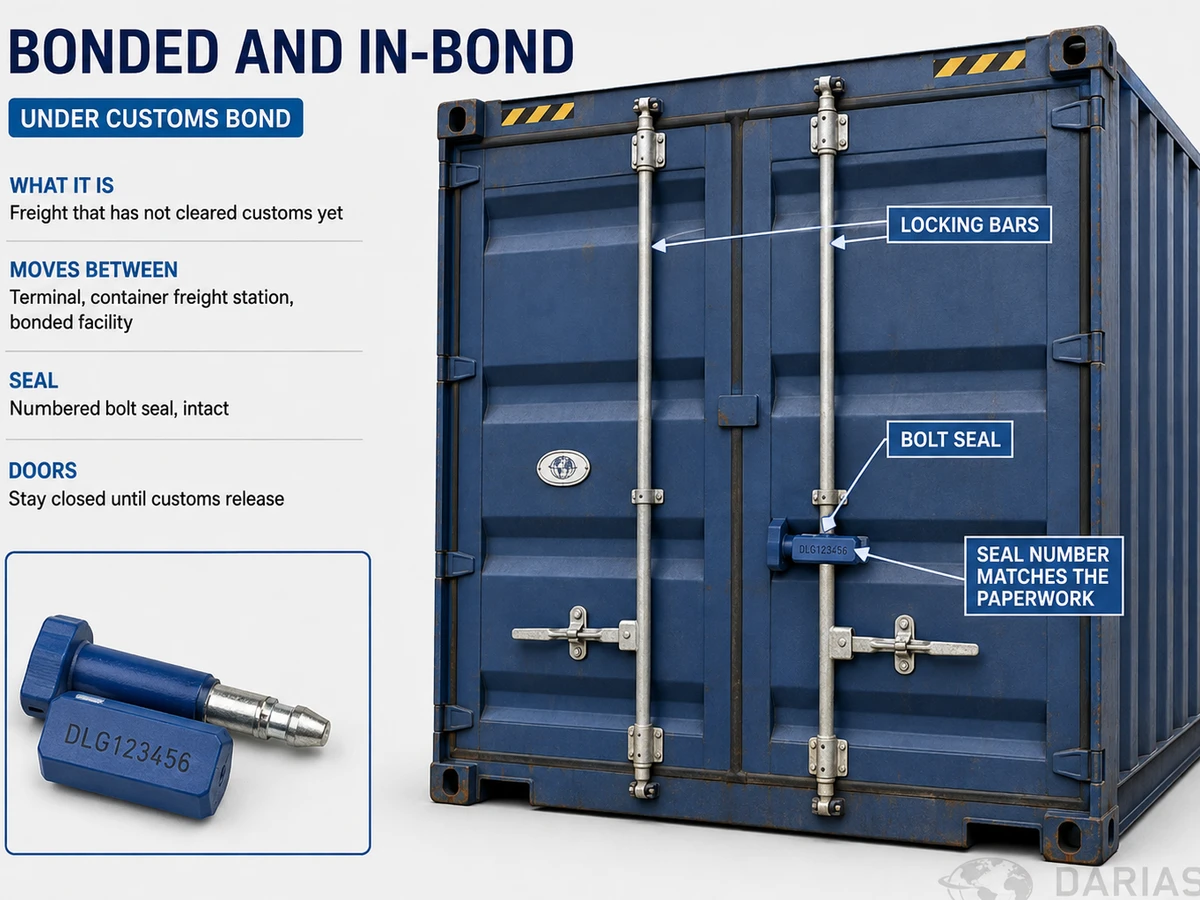
Bonded and in-bond
any, under customs bond
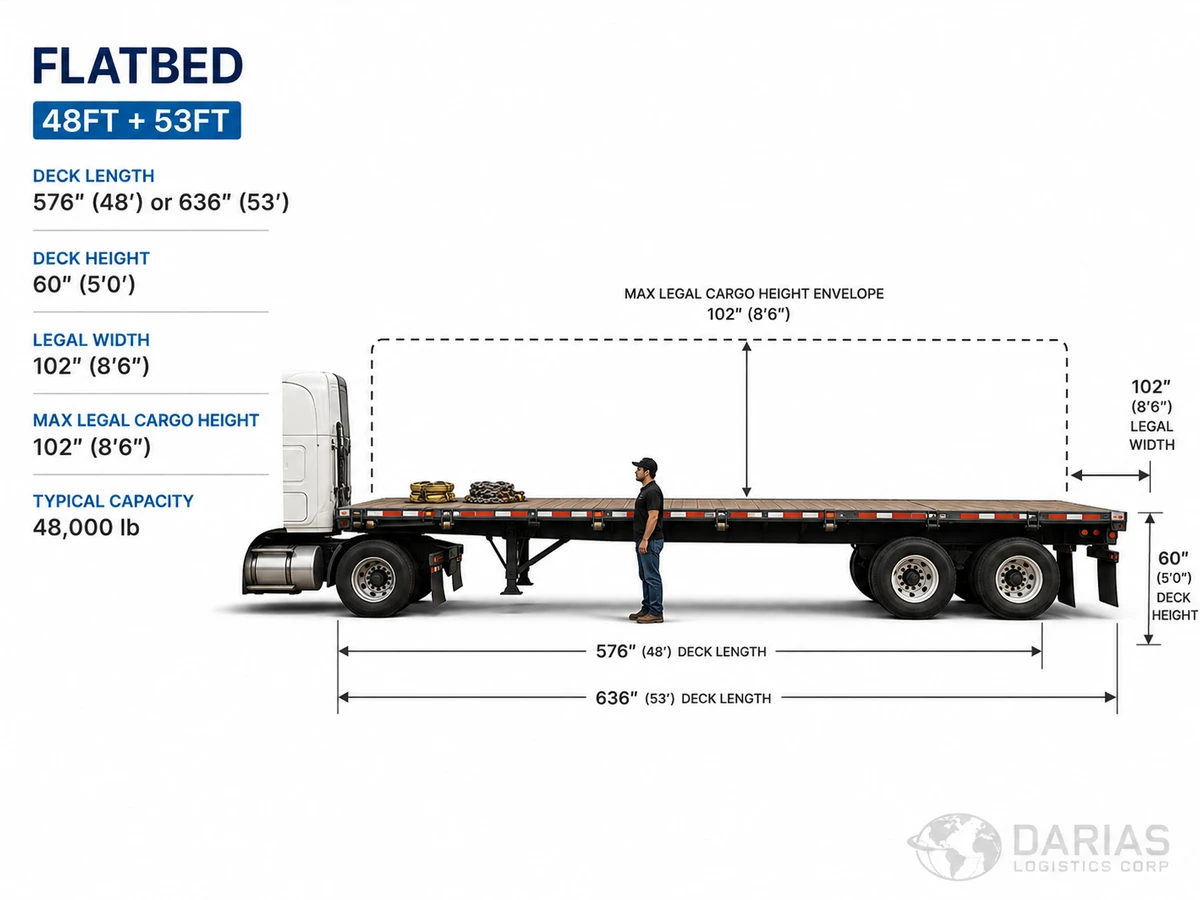
Flatbed
The default open deck, in 48ft and 53ft. Loads from the side, the top or the back, and anything over 8ft 6in of cargo height starts needing a permit.
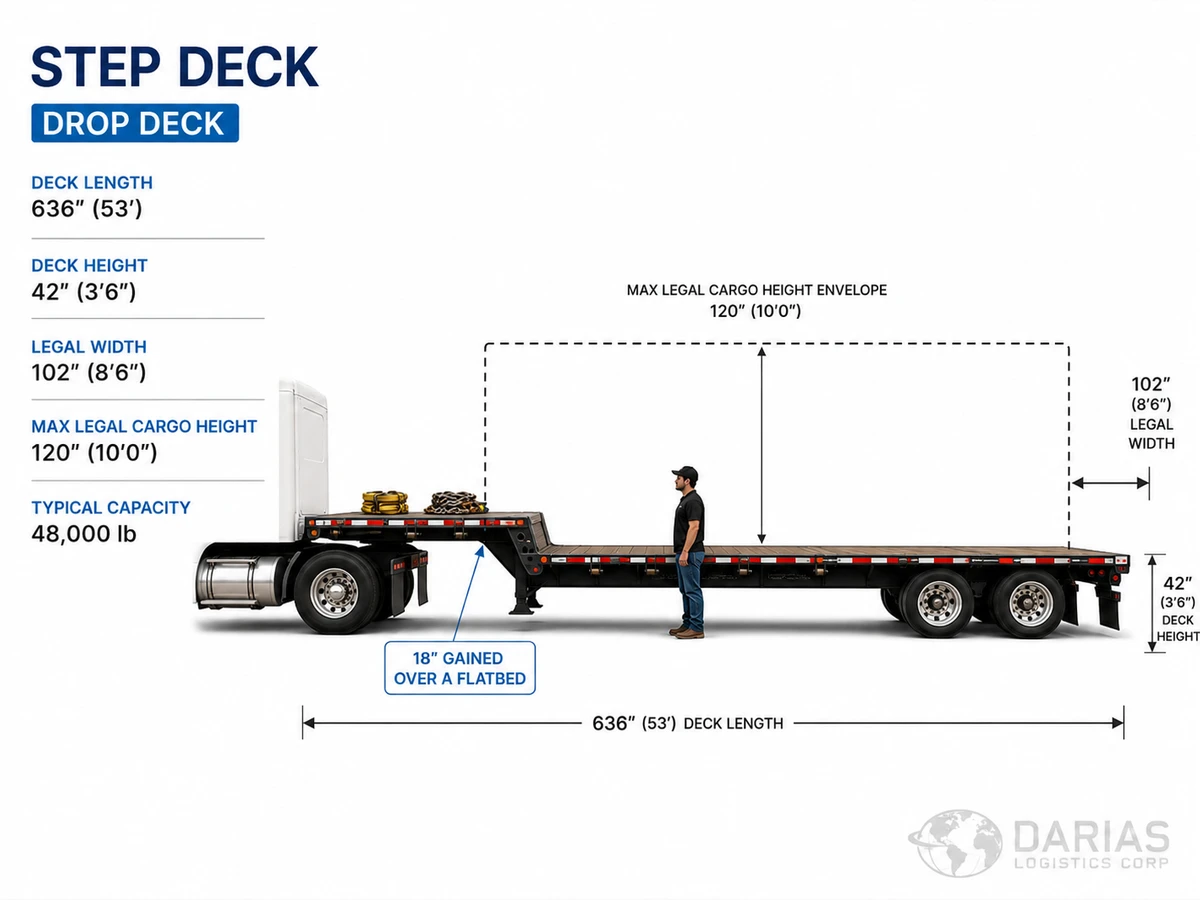
Step deck
A dropped main deck buys about 18 inches of legal cargo height over a flatbed. Also called a drop deck.
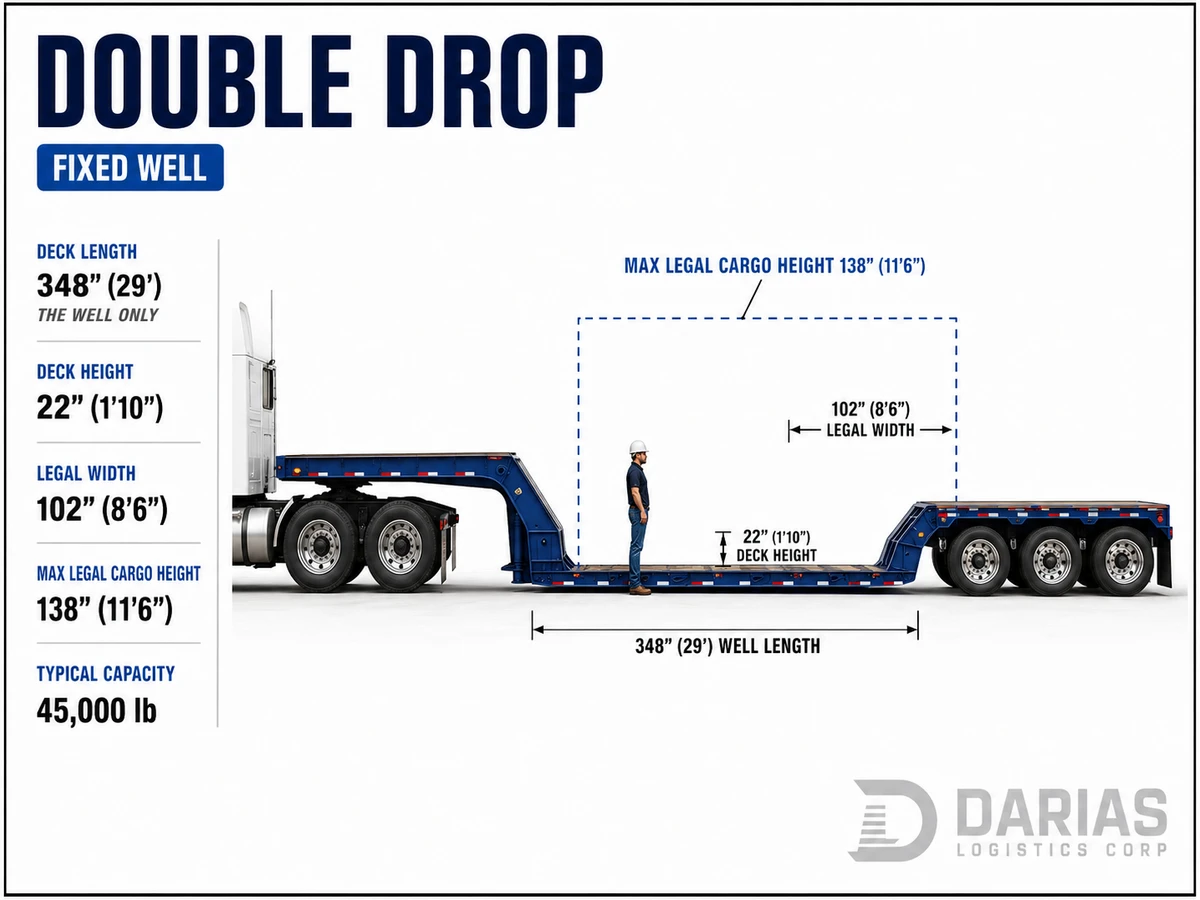
Double drop
A fixed well between two raised decks, for tall freight that does not need to be driven on.
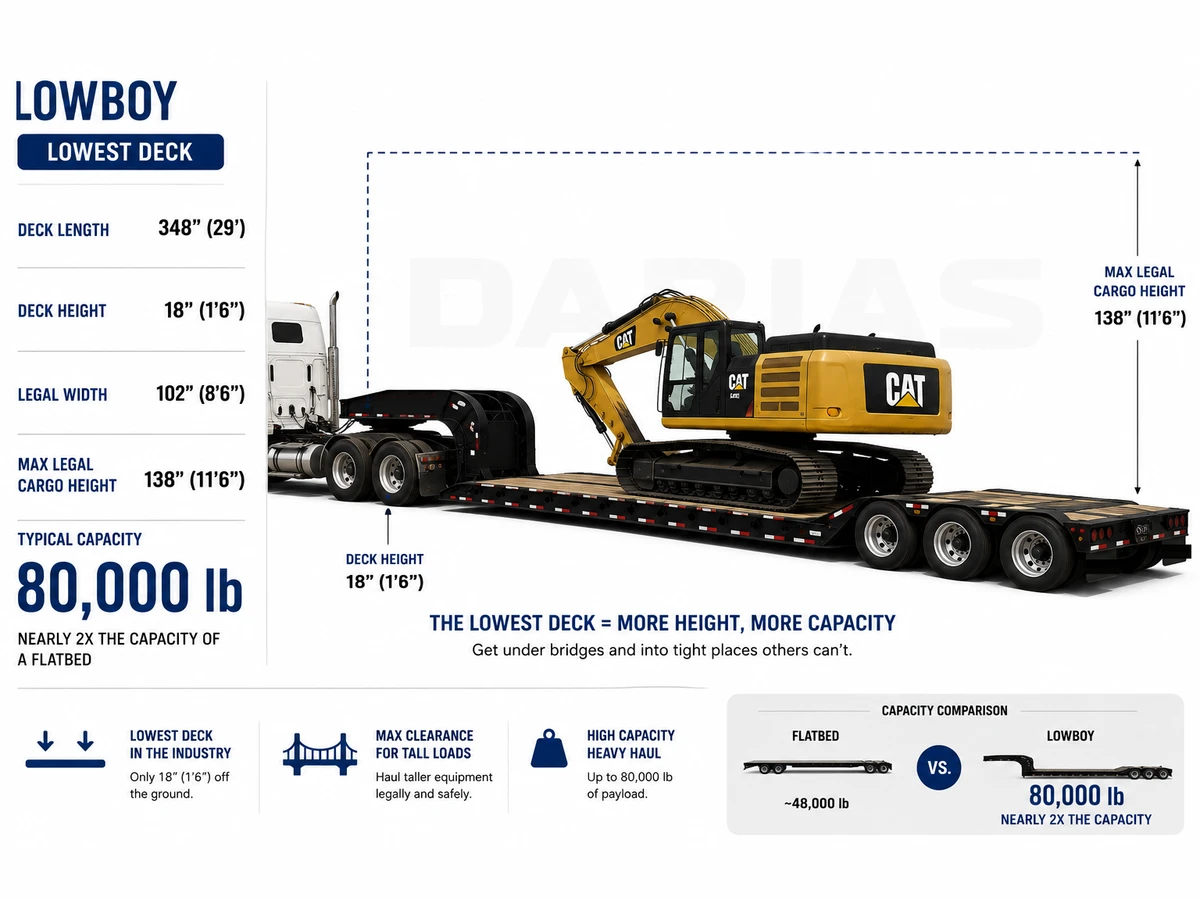
Lowboy
The lowest deck there is, for tall and heavy machines. Short well, so length is usually the constraint rather than weight.
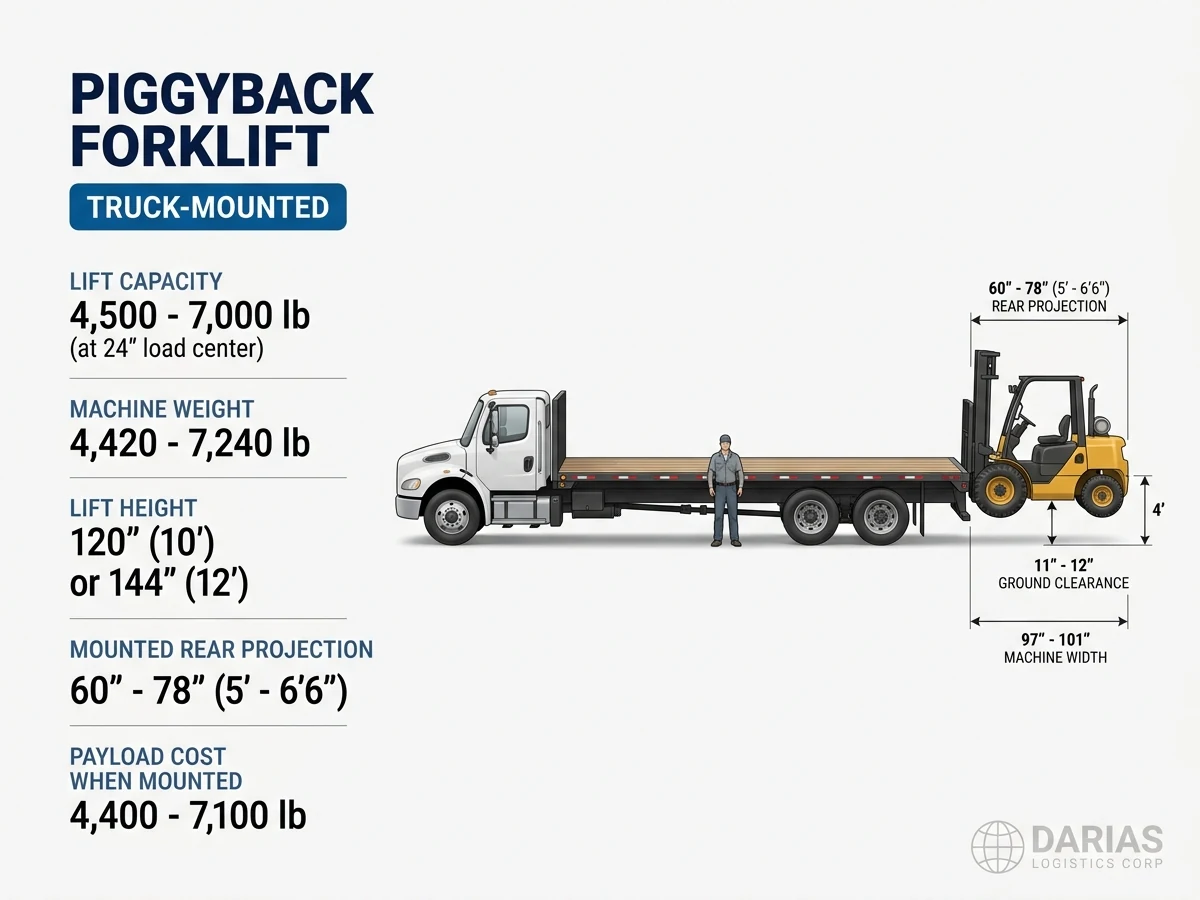
Piggyback forklift
A rough-terrain forklift that rides on a mounting kit at the rear of the flatbed and unloads where there is no dock and no site equipment. The freight pays for it twice: in the surcharge and in the payload its weight displaces, which is why it is quoted only where it saves more than it costs.
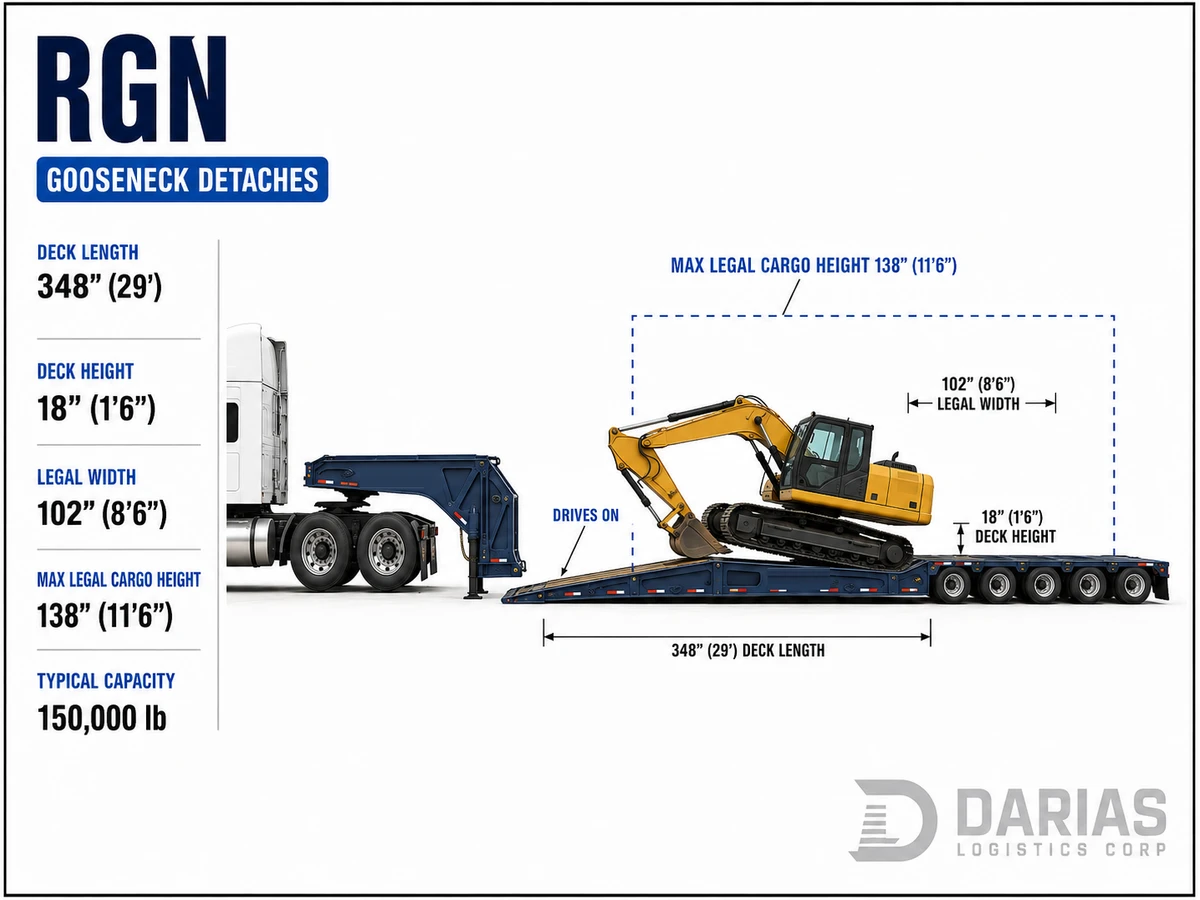
RGN, removable gooseneck
The gooseneck detaches so the deck becomes a ramp and the machine drives on. Extendable and multi-axle versions carry the heaviest and longest loads we handle.
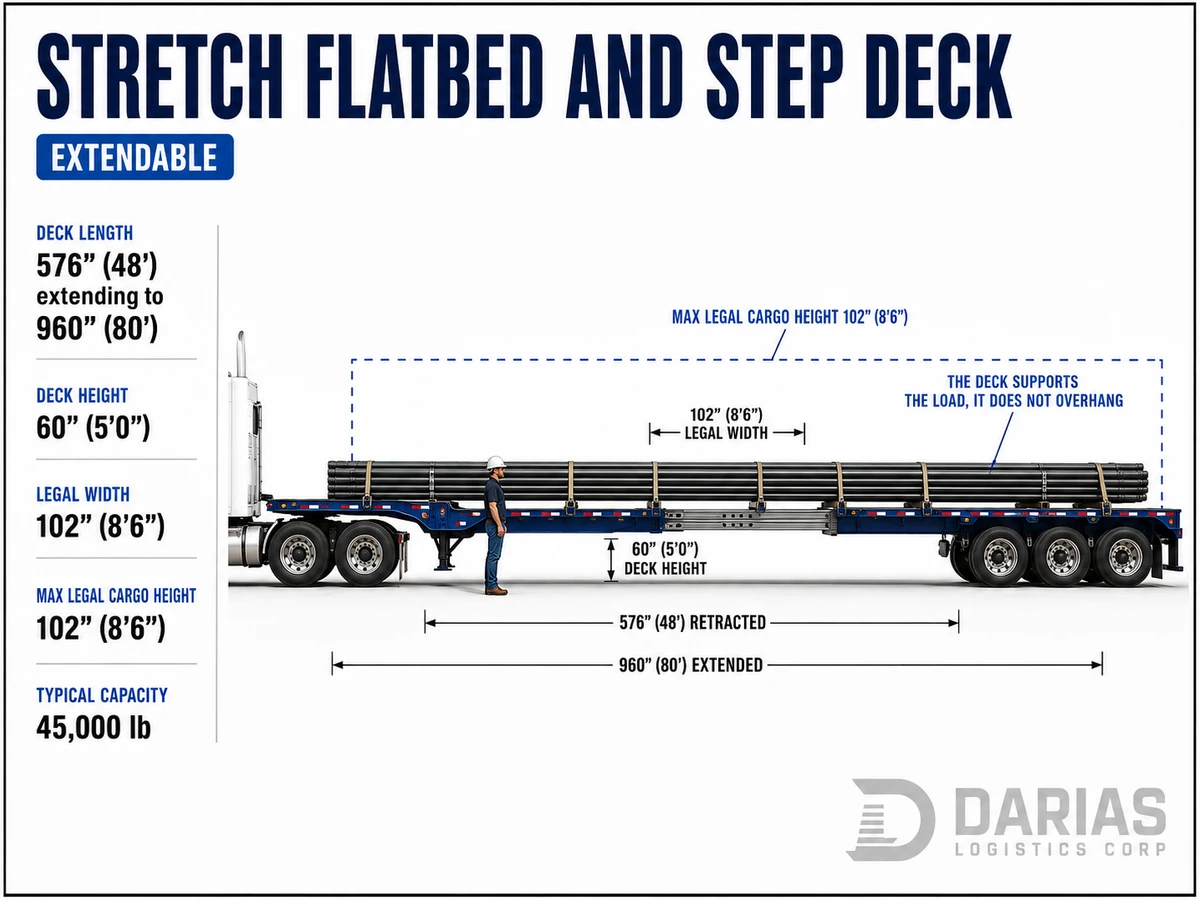
Stretch flatbed and step deck
Extendable decks for freight that is legal on weight but far too long, like beams, blades and pipe. The deck stretches to support the load rather than letting it overhang.
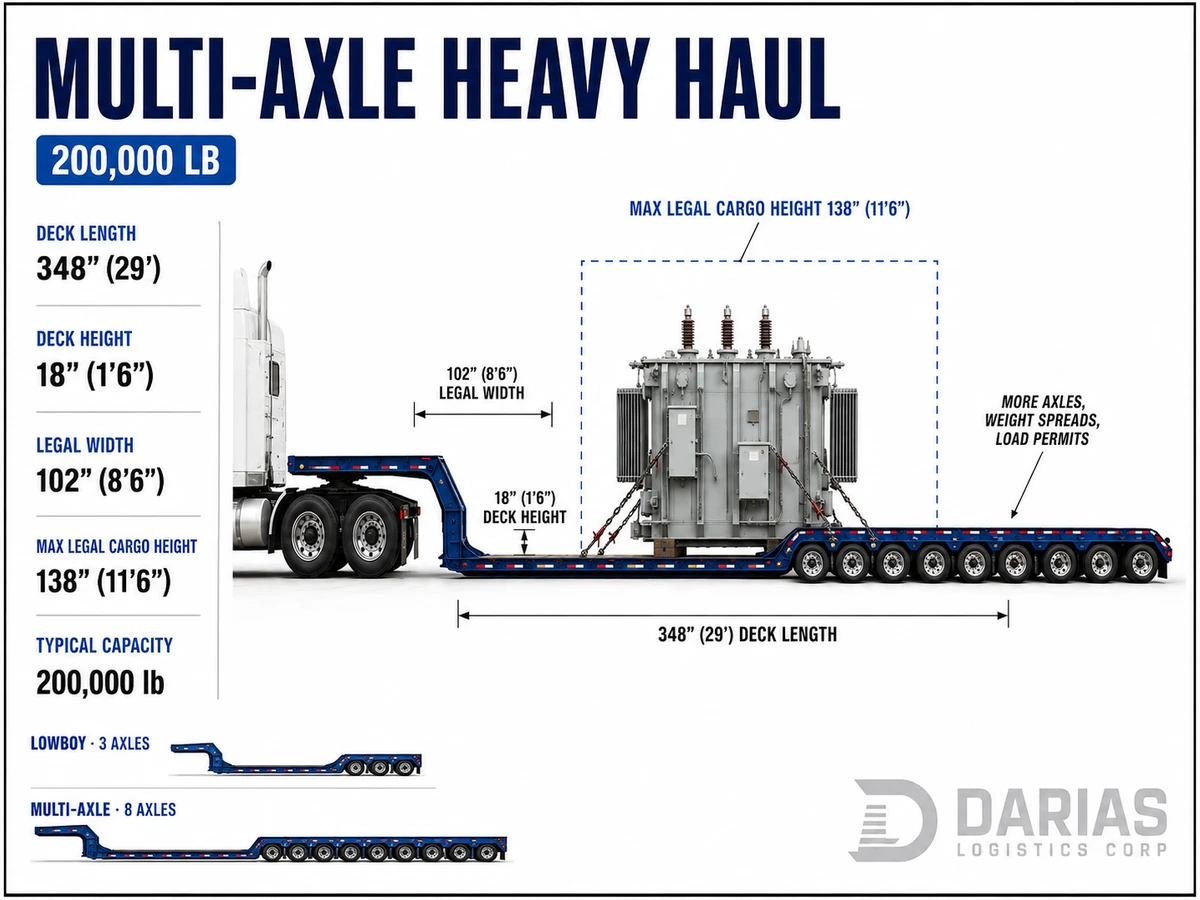
Multi-axle heavy haul
More axles under the same deck, so the weight spreads far enough to permit. This is where transformers, presses and plant equipment ride.
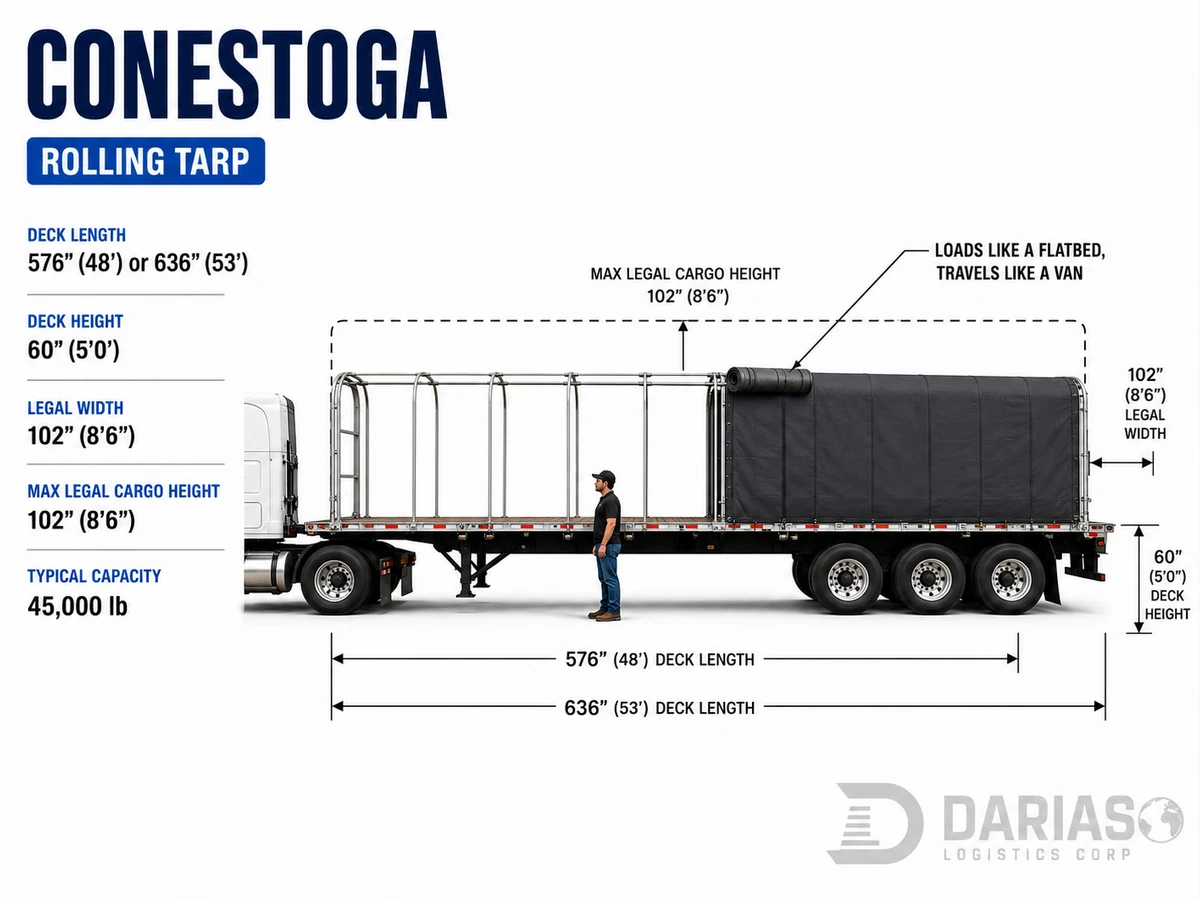
Conestoga
A rolling tarp on a frame, so freight loads from the side like a flatbed but travels covered like a van. No tarping crew, no weather risk.
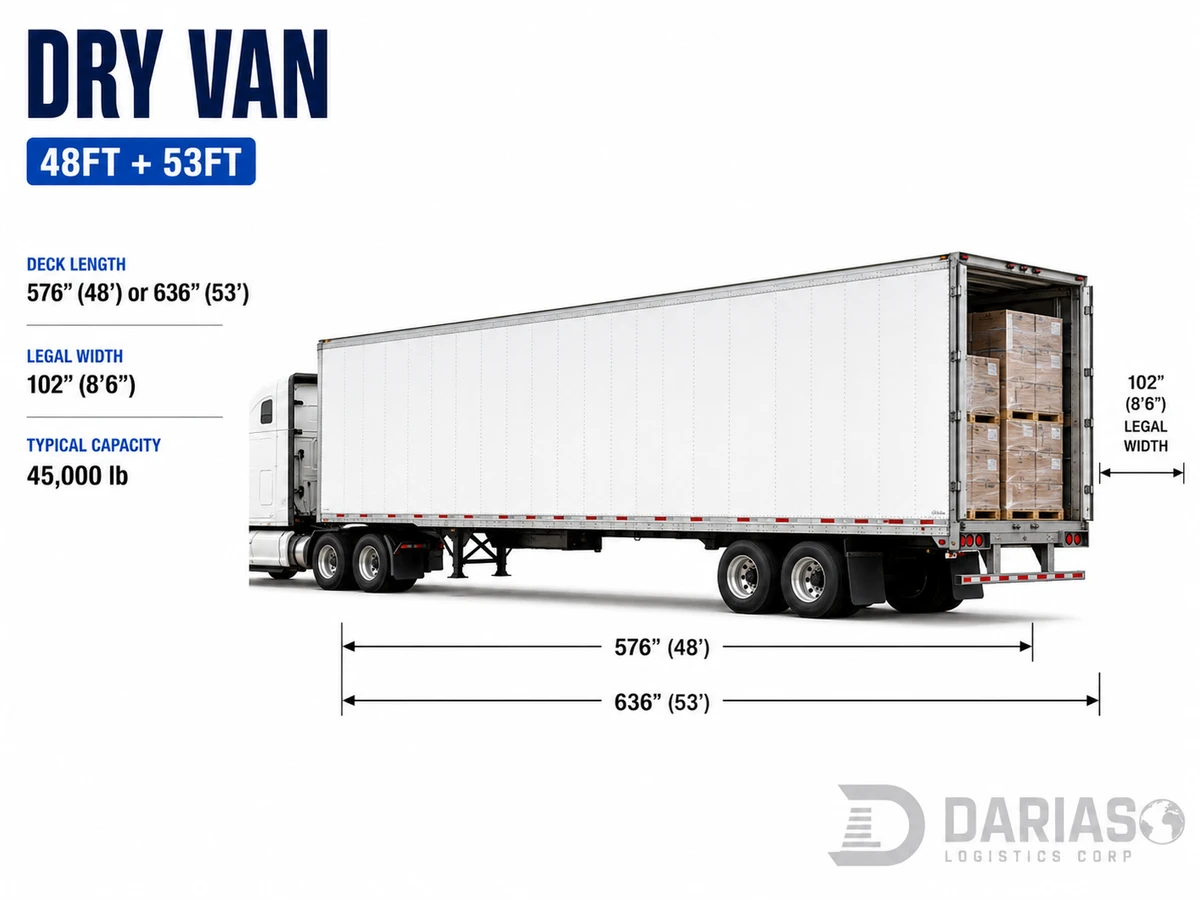
Dry van
Enclosed, palletized freight, in 48ft and 53ft. The default for anything transloaded out of a container for an inland run.
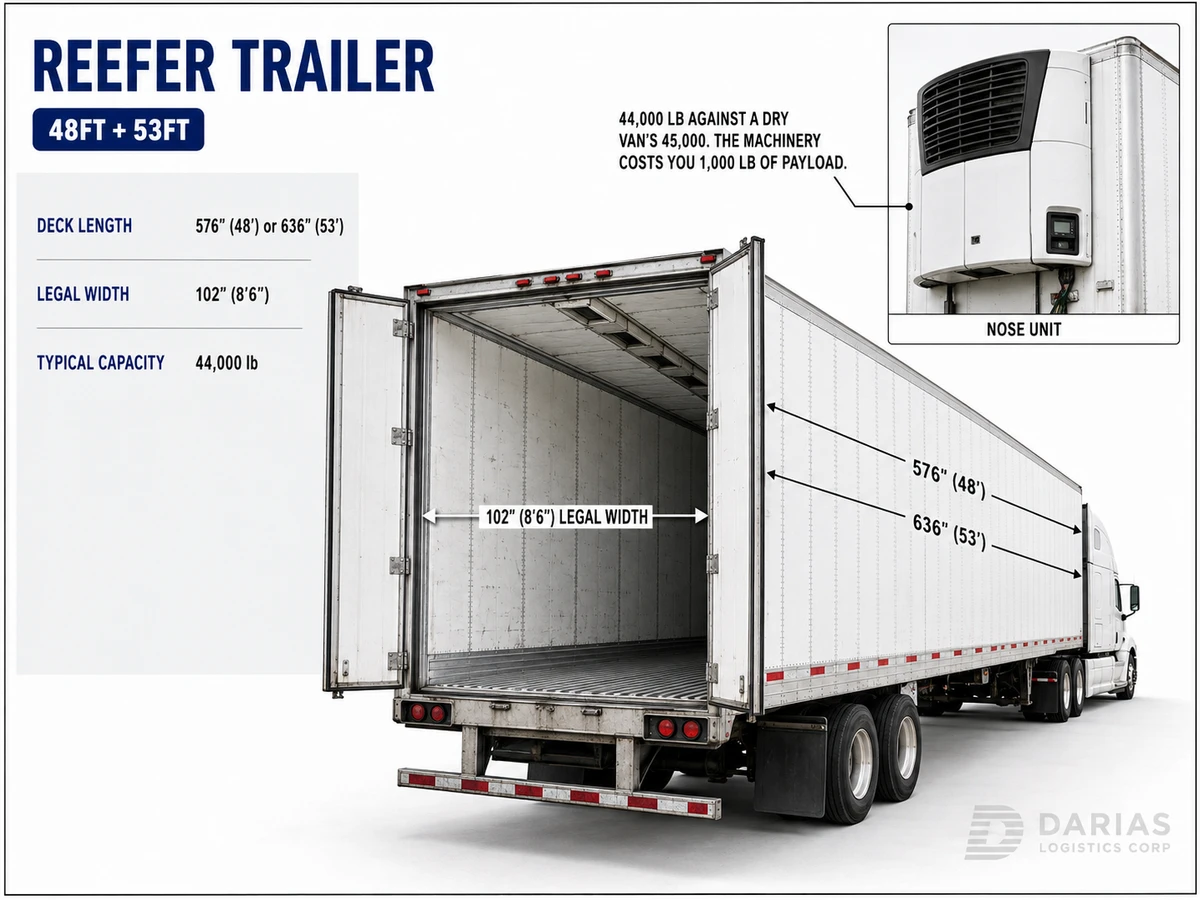
Reefer trailer
Temperature-controlled van, in 48ft and 53ft. What a reefer container becomes when the freight transloads for an inland run.
Before it leaves Hialeah Gardens
One warehouse in Hialeah Gardens, over 50 dock doors
Everything that happens off the chassis happens here, in Hialeah Gardens, a short run from the ports, before the freight goes anywhere. Transload, cross-dock, storage, or shipping and receiving in your name. On Ocala it is often what makes the lane cheaper, because the empty goes straight back to the line in Hialeah Gardens instead of travelling.
What lands on the invoice
- Chassis
- The trailer the container rides on. If it is not where the container is, that is a chassis split and an extra trip.
- Pre-pull
- Collecting the box before you are ready, to stop terminal storage running. Almost always cheaper than the demurrage it avoids.
- Demurrage
- The terminal charging you for cargo sitting inside the gate past the last free day.
The rest of it
Questions
Straight answers
Can oversize machinery be moved from the Miami ports to Ocala?
Yes, and it is a normal part of this lane. Ocala takes a lot of agricultural and construction equipment, which rides a step deck or a lowboy rather than sitting in a container. Height and width set the route and the permits, and both take time to arrange, so send the dimensions and the real weight as early as you can rather than on the day the machine has to move.
Is 320 miles too far to send the container itself to Ocala?
Not impossible, just usually not the cheapest. The box would be away from Miami for days with the chassis and per diem running the whole time, while the steamship line still expects it back. Transloading near the port ends that clock early and a trailer carries the freight north. It is priced both ways, and freight that has to stay sealed is the case where sending the box wins.
How long does it take to get freight from Miami to Ocala?
Next day, over roughly 320 road miles. That is the drive; the bigger variable is usually the terminal appointment at the Miami end, not the road.
Should my container go through to Ocala, or be transloaded?
We price it both ways. Roughly: under 250 miles the container usually runs through, past that transloading tends to win because the empty goes back to the line instead of travelling.
Anything particular about the Ocala lane?
Horse country and heavy equipment both. Ocala takes a lot of oversize agricultural and machinery freight, so this lane sees more step deck and lowboy than most Florida runs.
Do you go beyond Florida?
Yes, all 48 states, generally transloaded to a trailer first.
What is the last free day?
The last day your container can sit inside the terminal before storage charges start. Miss it and demurrage begins accruing daily, which is why a pre-pull is almost always cheaper than waiting.
What is a pre-pull?
We collect the container from the terminal before you are ready for it and hold it on a yard. It stops demurrage running at terminal rates and it takes the pressure off your receiving schedule.
How do I get a rate?
Send the lane, the equipment, the container size and the port, and we come back with a number. Quotes and dispatch run 24 hours a day at quotes@dariaslogistics.com.
What does a drayage quote actually include?
The move itself, plus the accessorials people get surprised by later: chassis, pre-pull, per diem, demurrage, detention and storage. We would rather name them up front than add them to an invoice.