Service
Importing food into Miami, with an FDA-registered warehouse
Yes, we handle imported food. The warehouse is an FDA-registered food facility and TSA certified, dry food is stored by the pallet at ambient temperature, and chilled or frozen containers travel on a genset and wait on a plug in the yard.
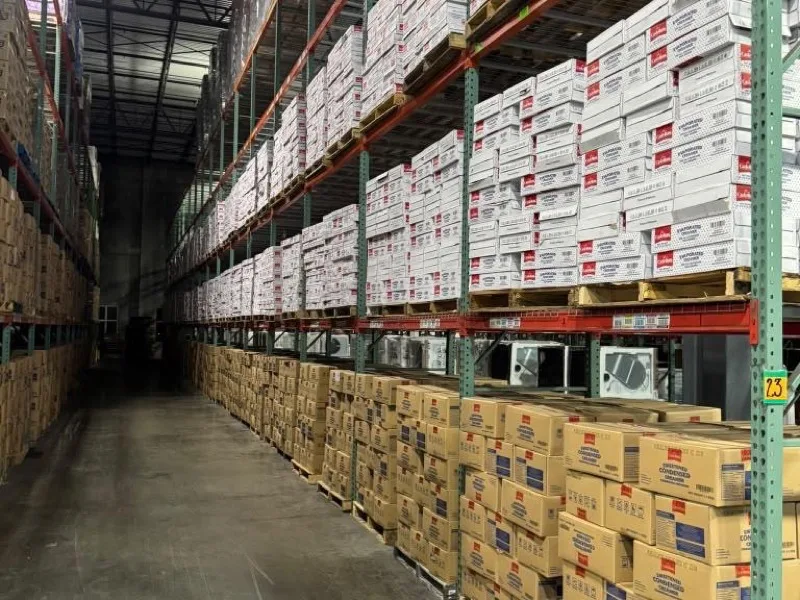
What we do with imported food
If your food lands at PortMiami or Port Everglades, we take it from the terminal to wherever it needs to go. Jarred, canned and bottled goods, packaged dry goods and beverages can come to the warehouse in Hialeah Gardens, which is an FDA-registered food facility and TSA certified. They are unloaded, counted, put on pallets if they arrived loose, and stored by the pallet until your orders call for them.
Food that has to stay cold stays in its refrigerated container, called a reefer. It travels with a genset and can wait in the yard on a plug until your cold room or your customer has space. And if your own building is ready, the container simply goes there. Either way you deal with one desk, from the terminal to the delivery.
What FDA registered means, and what it does not
A facility that holds food for people in the United States generally has to register with FDA, and that includes a warehouse. So it is a fair question to ask anyone who wants to store your product.
Now the honest limit. Registered means FDA has the facility on file. FDA's own rule says a registration number does not in any way convey FDA's approval or endorsement of a facility or its products, and FDA does not issue registration certificates. So we say registered and never approved, and we would be careful with anybody who tells you a warehouse is FDA approved.
It does not cover your side of things either. FDA says it is not authorized to approve, certify or license individual food importers, and it does not approve shipments ahead of time. Making sure the food is safe, sanitary and correctly labeled for the United States stays with the importer.
Dry food in the warehouse
Storage here is ambient, meaning the temperature of the building, with no refrigeration. That suits food that is shelf stable in its packaging. Storage is billed by the pallet and by the month, so a dozen pallets for six weeks is a normal booking.
Food often ships floor loaded, which means cartons stacked by hand from floor to roof with no pallets. Check with your supplier before the box sails, because a floor loaded container is a crew's work rather than a forklift's. When it arrives, the count and condition are recorded at the door, with photographs of anything that looks wrong, and you get that record.
The floor runs on Manhattan Active Warehouse Management, so every pallet has a position and every pick leaves a record. There is no customer portal: orders come in by email or a daily file, and the record of each shipment comes back to you.
Food that has to stay cold
We move it on a reefer. A reefer container leaves the terminal with a genset, a diesel generator that keeps the cooling running on the road. If your cold room is full or your customer cannot receive yet, the container can wait in the yard on a reefer plug, running on electricity, and go back out on the genset when there is room.
Two things to plan around. The warehouse is ambient, so chilled and frozen food waits in its reefer and not on a rack. And the last free day applies to a reefer too, with a power bill running beside it. Food that is cold and late has two problems at once, so tell us early and we will check the date the terminal shows for your container.
The temperature is yours to set, because you know the product. Send the set point with the container number, and say whether the unit runs continuous or on cycle. If the food is going far inland, it can move from the container into a refrigerated trailer, which sends the shipping line's box home early.
The paperwork food carries, and who handles it
Food has a filing most other cargo does not. Prior notice must be submitted and confirmed by FDA before the shipment arrives, and for food coming by water that means no less than 8 hours before arrival by water. Food that arrives without it, or with notice that is wrong or late, can be refused. Refused food is held, and it cannot be delivered to you.
Customs clearance for imported food is handled for you: the entry and the prior notice are filed by the licensed customs broker we work with, arranged together with the truck. If you already have a customs broker, they keep that work and we run alongside them.
What stays with the importer
The Foreign Supplier Verification Program, known as FSVP, belongs to the US owner or consignee of the food, and with some exceptions FDA requires one for each food and each foreign supplier. The facilities abroad that make, pack or store the food generally have to be registered with FDA as well, so ask your supplier before the first order. Meat, poultry and egg products can answer to USDA instead of FDA, so tell us exactly what the product is and we will route it.
This is a plain summary to help you ask the right questions, not legal advice. FDA's own pages, listed at the bottom, are the authority. Tell us what the product is and we will route it.
If FDA holds your container
When FDA wants to examine or sample a shipment, it sends a Notice of FDA Action saying which lines of the entry must be held. Those lines must stay put until FDA releases them. If product from them has already left the port-of-entry area, FDA can ask Customs to demand it back. Only the lines named in the notice have to wait.
The clock does not wait with you. POMTOC's tariff says demurrage keeps running through government holds and transfers to an inspection site, and a reefer also needs power the whole time. A release does not close the file forever either: FDA says it does not rule out action later if a problem is found.
The filing side of a hold goes through the customs broker, who deals with the agency. The moving side is ours: taking the container where it has to go and delivering it once it is released. A reefer on hold still needs power, so tell us early. Tell us the day the notice arrives, so the truck is planned before the release comes.
What to tell us in the first message
What the product is and how it is packed. Whether it is dry, chilled or frozen, and the set point if it is cold. The container number, the shipping line and the last free day. Where it needs to end up. Whether you already have a customs broker.
Send it in English or Spanish. A rough answer to each is enough to start, and the rate comes back in writing.
Where to act on this
Where this comes from
- FDA, Importing Food Products into the United States
- 21 CFR 1.225: who must register a food facility
- 21 CFR 1.242: a registration number is not FDA approval
- FDA on registration certificates and private businesses
- FDA, Prior Notice of Imported Foods
- 21 CFR 1.279: when prior notice must be submitted
- 21 CFR 1.283: food with no prior notice or inadequate prior notice
- FDA, Foreign Supplier Verification Programs (FSVP)
- FDA, Examination and Sample Collection of Imported Products
- FDA, Entry Review
- USDA FSIS, importing meat, poultry and egg products
- POMTOC tariff (demurrage during government holds)
- Florida International Terminal tariff (demurrage during customs holds)
Equipment
Ports
Questions
Straight answers
Is there an FDA-registered warehouse near PortMiami for imported food?
Yes. The warehouse in Hialeah Gardens, about 20 road miles from PortMiami and 25 from Port Everglades, is an FDA-registered food facility and TSA certified. Dry, shelf stable food is stored there by the pallet at ambient temperature. Darias Logistics Corp also handles the drayage from the terminal.
Does FDA registered mean FDA approved?
No. Registered means FDA has the facility on file. FDA's rule says a registration number does not convey FDA's approval or endorsement of a facility or its products, and FDA does not issue registration certificates. Be careful with anyone who describes a warehouse as FDA approved.
Do you handle refrigerated and frozen food? Do you have cold storage?
Our warehouse is ambient, so there is no cold storage there. We move chilled and frozen containers on a genset, and they can wait plugged in at the yard until your cold room has space. Cold food stays in its reefer rather than going on a rack. Send the set point and how long it has to hold, and we will tell you how it can be handled.
Who files FDA prior notice for my food shipment?
It is handled for you if you want it to be: the prior notice and the customs entry are filed by the licensed customs broker we work with, arranged together with the truck. If you have your own customs broker, they file it.
How early does FDA prior notice have to be filed for an ocean shipment?
For food arriving by water, the prior notice must be submitted and confirmed by FDA no less than 8 hours before arrival (21 CFR 1.279(a)). That is the legal minimum, and food arriving without proper notice can be refused and held. Send us the vessel and the arrival date and we arrange the filing so it is in with time to spare.
Does the terminal's free time stop during an FDA hold?
No. POMTOC's tariff says demurrage continues through government holds and transfers to an inspection site, charged to the cargo side. A reefer also needs power the whole time. Tell us the day the Notice of FDA Action arrives, so the move is planned before the release comes.
Do I need an FSVP to import food?
FDA requires the importer to have a Foreign Supplier Verification Program for each food and each foreign supplier, with limited exceptions, and the importer means the US owner or consignee of the food. That program stays with you. Tell us what the product is and we will route it.
How do I get a rate?
Open the quote form and tell us your email and where the container is going. The pickup terminal and the container size help if you know them, and we come back with a number in writing. We usually reply the same business day.
What does a drayage quote actually include?
The move itself, plus the accessorials people get surprised by later: chassis, pre-pull, per diem, demurrage, detention and storage. We would rather name them up front than add them to an invoice.